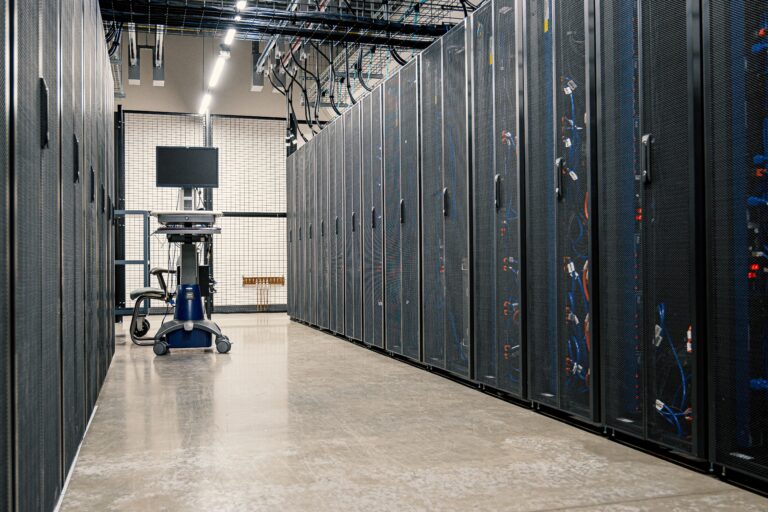
For nearly two decades, data center development has moved beyond physical infrastructure built with conventional materials like steel toward modern industry standards that are dynamic, intelligent, and sustainable.
Aluminum has replaced steel, a material recognized for its lighter weight, greater precision, and modularity. Aluminum has emerged as the new standard, offering advantages for both the construction and operation of modern data centers.
The Growing Shift to Aluminum in Data Centers
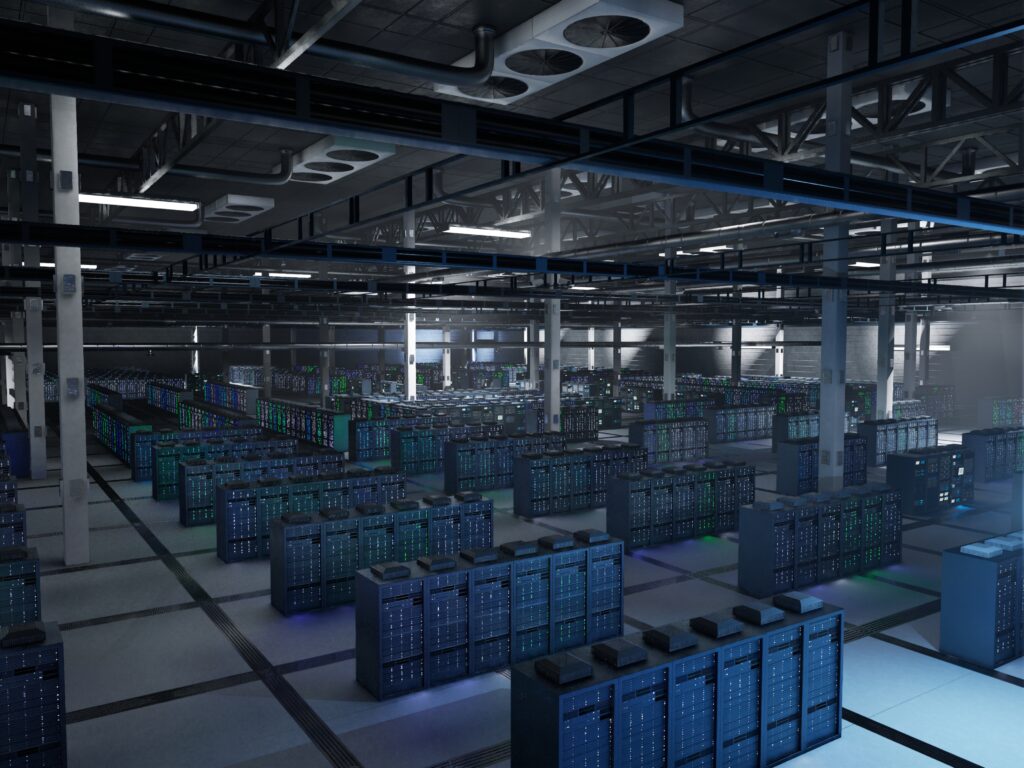
When considering modern data center standards, four primary pillars serve as a benchmark:
- Physical infrastructure: The building foundation, multi-layered physical security, rack layout, and backup power supply.
- System architecture: The design of IT networks, servers, storage, and software or hardware redundancy systems.
- Thermal management: Airflow regulation and precision cooling methods, such as Hot/Cold Aisle Containment or liquid cooling.
- Local regulations: Compliance with regional laws and standards, including data sovereignty rules, fire safety standards, and environmental permits.
Among these four pillars, conventional steel covers only physical infrastructure because it cannot absorb internal heat. By contrast, aluminum fulfills two critical roles at once.
It serves as both physical infrastructure and a cooling-system component while also indirectly supporting the other two pillars.
Comparing Key Data Center Materials: Aluminum, Steel, and Copper
The shift in industry standards is no coincidence. Aluminum offers distinct technical and economic advantages over the other two primary materials, steel and copper.
Comparison Parameters | Aluminum (Modern Standard) | Steel (Conventional) | Copper (Specific Thermal) |
| Metal Category | Non-Ferrous Metals | Ferrous Metals | Non-Ferrous Metals |
| Weight Ratio | Very Lightweight | Very heavy | Very heavy |
| Flexibility & Assembly | Highly Flexible and Modular | Rigid | Rigid and Less Adaptable |
| Thermal Conductivity | High (~200–237 W/m·K) | Very Low (~15–50 W/m·K) | Very High (~390–400 W/m·K) |
| Corrosion Resistance | 100% Rust-Proof | Prone to Corrosion | Corrosion-Resistant with Surface Discoloration |
| Cost Efficiency (CAPEX & TCO) | Optimal (Balance of Price & Performance) | Low Initial Cost (CAPEX), but High TCO | High Cost |
| Data Center Pillar Scope | Four Pillars (Direct & Indirect) | External Physical Structure Only | Specific Thermal Management Only |
Why Has Aluminum Become a Key Material in Modern Data Center Components?
Aluminum is lightweight, strong, and highly thermally conductive. Its use across industrial, commercial, and architectural sectors offers several key benefits:
1. Rapid Modular Installation to Accelerate Business
Aluminum’s modular extrusion (T-Slot) design significantly reduces on-site construction time. This allows data center facilities to be completed and operational much faster, ensuring a quicker time-to-market and enabling earlier revenue generation.
2. Optimize Budgets and Building Safety
Aluminum is both lightweight and exceptionally strong. Compared to steel, it offers equivalent structural strength at a fraction of the weight.
This drastically reduces a building’s dead load, enhances seismic resilience, and lowers structural capital expenditure (CAPEX) without compromising structural integrity or load-bearing capacity.
3. Readiness for AI Trends and Thermal Efficiency
Aluminum’s superior thermal conductivity makes it vital for thermal management systems in AI-driven data centers, from heat sinks and heat exchangers to liquid-cooling components and aisle-containment frames.
4. Precision Manufacturing for Lower TCO and Sterility
Aluminum is naturally rust-resistant and non-magnetic. Its precise extrusion dimensions provide comprehensive protection and efficiency within server environments, including:
- Shielding data signals from electromagnetic interference;
- Ensuring cleanroom-standard hygiene by eliminating the risk of rust particles;
- Facilitating the creation of airtight aisles to prevent air leakage;
- Reducing energy consumption for cooling;
Lowering long-term operational costs (Total Cost of Ownership/TCO) by eliminating the need for anti-rust maintenance or repainting.
5. ESG & Eco-friendly Building Standards
High durability, corrosion resistance, and 100% recyclability without any loss in quality make aluminum one of the most environmentally friendly materials in modern industry.
This, in turn, supports green building certifications, such as LEED and BREEAM, and helps meet the ESG targets set by global investors.
Key Aluminum Components for Data Centers
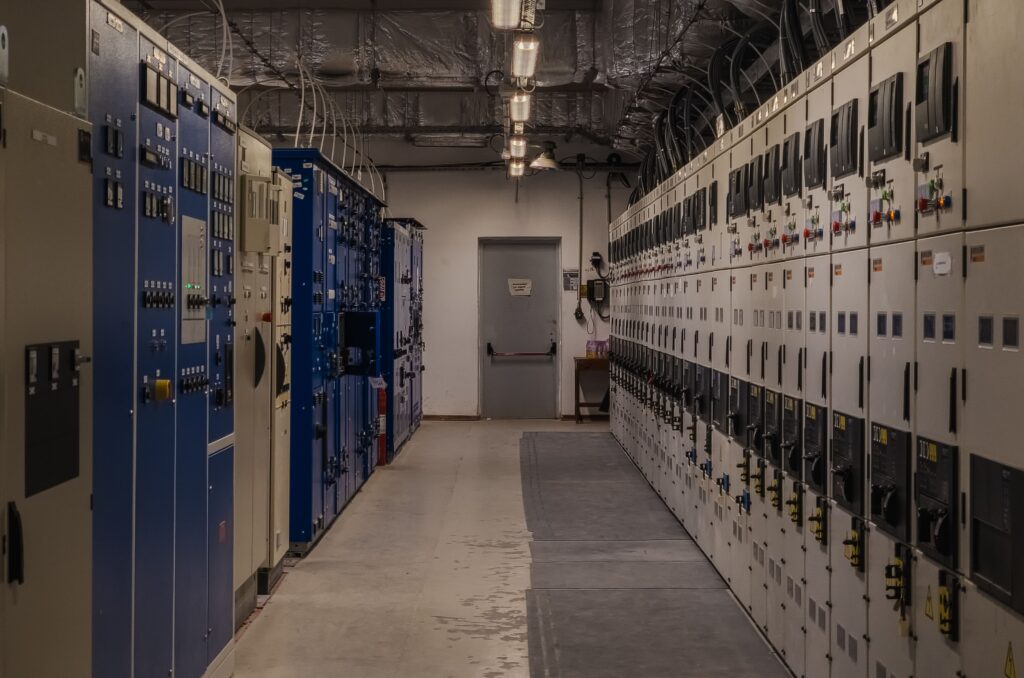
Due to their lightweight, robust, and thermally conductive nature, the application of aluminum components in data centers encompasses various areas within these vital facilities, including the following:
1. Hot and Cold Aisle Containment
Enclosed aisle containment systems in server environments require a framework, typically made of aluminum, to maintain low temperatures. The aluminum frame precisely partitions cold supply air from hot exhaust air, preventing them from mixing.
Aluminum is an efficient material for this purpose, as it allows for an airtight seal. Furthermore, optimally isolated aisle containment significantly reduces energy consumption.
2. Server Racks & Enclosures
To make server racks and enclosures easy to assemble, modify, and relocate while supporting heavy loads and maintaining a sterile server room environment, aluminum extrusions offer T-Slot profiles.
The T-Slot aluminum profile is shaped like the letter “T.” These profiles meet the same standards for straightness and load-bearing capacity as conveyor profile systems.
The assembly process doesn’t require welding, which can compromise a server room’s sterility with sparks or metal debris. Instead, technicians simply bolt the components together. This makes dismantling and reassembling the structure faster and easier.
3. Raised Floors/Understructure Grids
Aluminum extrusions are also utilized as understructure grids for raised floor systems. With its high strength-to-weight ratio, aluminum can support heavy server racks, UPS batteries, and mechanical equipment without exceeding the building’s structural load limits.
This modular grid system features adjustable height, allowing it to compensate for an uneven subfloor while creating a precise cavity that facilitates the smooth circulation of cold air from beneath the floor toward the server racks.
4. Structural Ceiling Grids
Aluminum grid systems (such as the Tate Grid) are installed in the ceilings of primary server rooms (data halls). They serve as an alternative to conventional steel construction, supporting heavy equipment, cooling systems, and cabling infrastructure.
In addition to supporting very heavy loads, an aluminum grid system is quick, practical, and clean to install, and it offers long-term flexibility because it can be modified.
5. Thermal Management and Cooling
Aluminum’s excellent thermal conductivity makes it a primary material for heat management and precision mechanical support in data centers. It plays a crucial role in keeping data servers within safe operating temperatures, even under heavy workloads.
Aluminum is utilized in various ways within thermal management systems, with the most vital components including:
- Heatsinks & Cold Plates: These attach to microprocessor surfaces (CPUs/GPUs) to absorb heat from the core before it spreads to other components.
- Heat Pipe Fins & Heat Exchangers: Aluminum is fashioned into tightly folded, thin sheets, which significantly expand the surface area available for cooling and heat dissipation.
- PCB Backing Plates: Installed behind circuit boards and high-power modules to ensure even heat distribution.
6. Connector & Cable Management Housings
Aluminum also addresses two critical challenges in modern data centers: extreme temperature management and power flow stability. Precision-machined (CNC) aluminum is used for the connector housing, protective casing, power module, and cable tray.
It serves a dual purpose: dissipating heat from high-frequency circuits and power converter modules while shielding data flows from electromagnetic interference (EMI), ensuring transmission signals remain smooth and stable.
How to Choose the Right Aluminum for Data Centers
Selecting the right aluminum for data centers calls for careful consideration. Here is a practical guide to follow:
Define Key Functions & Technical Specifications
Determine the aluminum profile specifications based on operational function. Distinguish between requirements for heavy-duty structural support (such as for raised floors) and thermal-electrical applications, which focus on high conductivity.
Select Alloy Series & Temper Level
Use 6000-series alloys, specifically 6061-T6 for structural load-bearing durability, or 6063-T5/T6 for the geometric flexibility precision components like heatsink and aisle containment partitions require.
Determine Corrosion-Protective Surface Finishes & Special Features
Apply an anodized finish for enhanced corrosion resistance and electrical insulation, or use an anti-static (ESD) powder coating to meet cleanroom sterility standards.
Ensure Quality Certification and Supply Chain Readiness
Choose materials with international certifications (ISO/ASTM/RoHS) from trusted suppliers, such as Exalum Metal, that maintain a library of precision die codes to speed procurement and reduce Total Cost of Ownership (TCO).
Aluminum Solutions for Data Centers from Exalum Metal
Sustainable data center planning must start at the source, with integrated, responsible suppliers.
To meet industrial, commercial, and architectural requirements, Exalum Metal offers a fully integrated, end-to-end in-house manufacturing process under one roof.
Exalum Metal supplies high-precision aluminum profiles for data center projects, including 6061, 6063, and 6065 series alloys, ensuring consistent tolerances from billet to final delivery.
If you are planning and looking for the right aluminum for data centers project, Exalum Metal is ready to assist by validating technical drawings and your project volume requirements.
Get in touch with the Exalum Metal team directly via our inquiry form, or click the “Contact Us” button below!