
Which Aluminum Alloy You Should Use
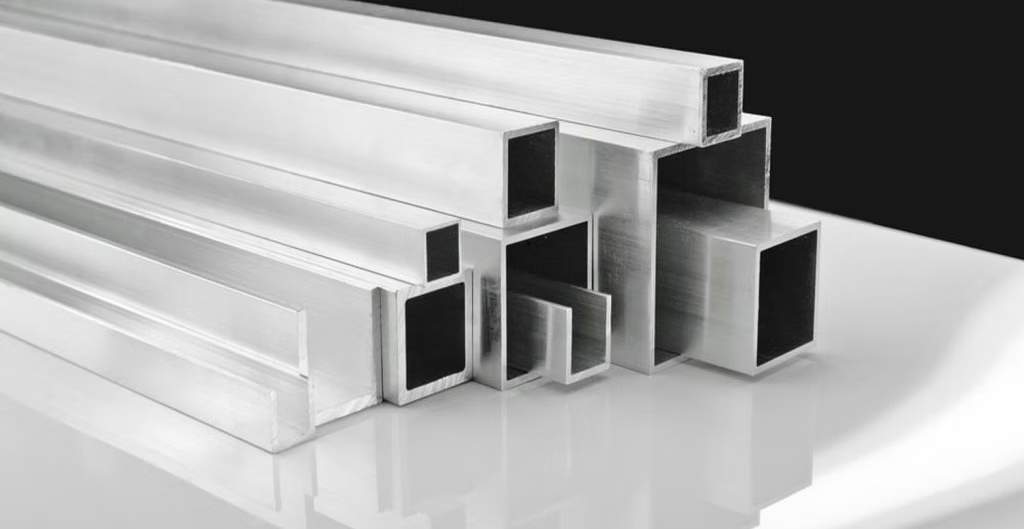
Aluminium alloys are highly valued across industries for their versatility and exceptional properties. Among the most popular are 6061 and 6063, often compared for their unique strengths. In this article, we explore the key differences between these alloys to help you decide which one best suits your needs.
Aluminium alloys are created by blending aluminium with elements like copper, magnesium, manganese, or silicon. These additions enhance aluminium’s properties, improving strength, hardness, machinability, and corrosion resistance, making it ideal for diverse applications.
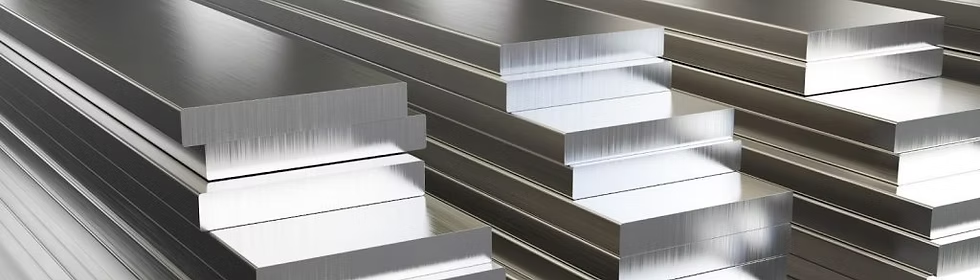
The 6061 aluminum alloy boasts greater strength and hardness than 6063, making it ideal for applications that demand high structural integrity and load-bearing capacity.
6061 aluminum alloy is widely used across various industries due to its strength and durability. It is ideal for structural components like aircraft parts, bicycle frames, automotive components, and machinery. Additionally, it plays a key role in constructing buildings, bridges, and marine structures.
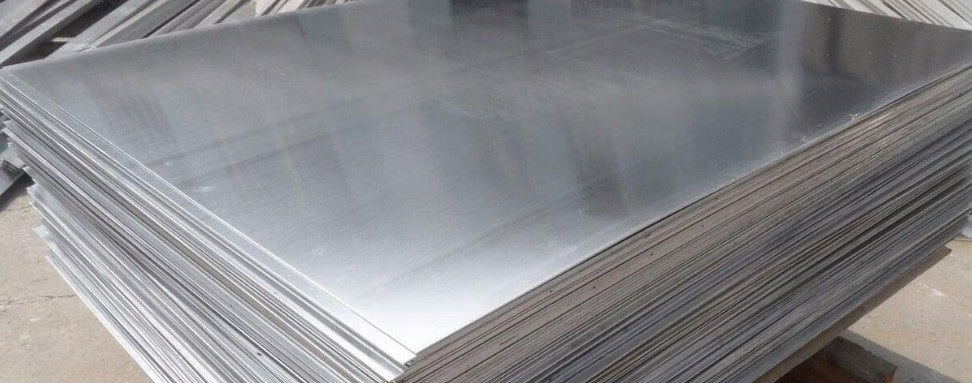
When comparing 6061 and 6063 aluminum alloys, several factors come into play. Let’s examine the key differences between these two alloys in terms of strength and hardness, machinability and weldability, corrosion resistance, surface finish, applications, and price and availability.
6061 aluminium alloy is a precipitation-hardened material primarily composed of aluminium, magnesium, and silicon. It offers outstanding strength, excellent corrosion resistance, and high weldability. Known for its structural integrity, it is widely used in applications demanding strength and durability.
6063 aluminium is an extrusion alloy with high silicon content, offering excellent formability and a superior surface finish. While slightly less strong than 6061, it provides outstanding corrosion resistance and is ideal for intricate shapes and designs. Its aesthetic appeal makes it a popular choice for applications where appearance matters.
Both 6061 and 6063 aluminum alloys offer good machinability, with 6061 being slightly easier to machine due to its higher strength. In terms of weldability, both alloys have similar properties, making them well-suited for various welding processes.
6063 aluminum alloy is commonly used in architectural and decorative applications because of its excellent formability and surface finish. It is often found in window frames, door frames, curtain walls, and other intricate extruded shapes.
The 6061 aluminum alloy boasts greater strength and hardness than 6063, making it ideal for applications that demand high structural integrity and load-bearing capacity.
In terms of price, 6061 and 6063 alloys are generally similar, with 6061 being slightly more expensive. However, availability can vary depending on the region and specific applications. It is recommended to consult with suppliers or experts to determine the availability and cost of these alloys in your area.
Both 6061 and 6063 aluminum alloys offer good machinability, with 6061 being slightly easier to machine due to its higher strength. In terms of weldability, both alloys have similar properties, making them well-suited for various welding processes.
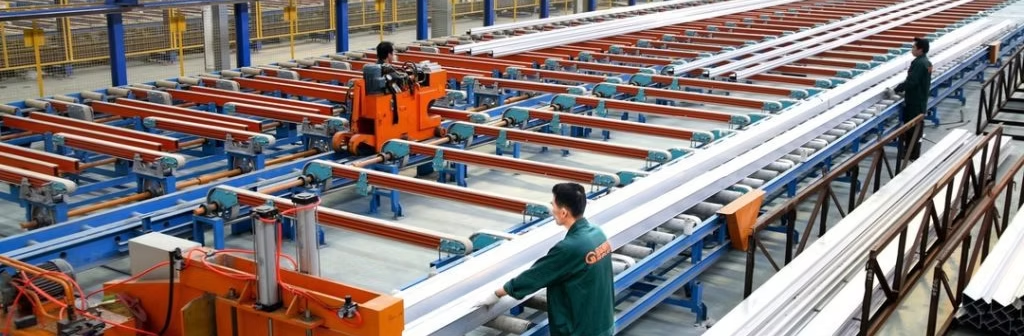
Both 6061 and 6063 aluminum alloys have unique properties suited to different applications. The choice between the two depends on the specific requirements of the project. If high strength and structural integrity are key factors, 6061 is the ideal option. However, if aesthetics and surface finish are more important, 6063 excels in these areas. When selecting the right alloy, it’s crucial to consider factors such as intended use, environmental conditions, and budget.