Ribbed Pipe
Ø = 20.00mm
T = 0.60/0.90mm
W= 0.113 Kg/m

A versatile solution with optimal strength and corrosion resistance for various industrial and construction needs. Designed to meet quality standards for excellent structural strength and superior finishing results.
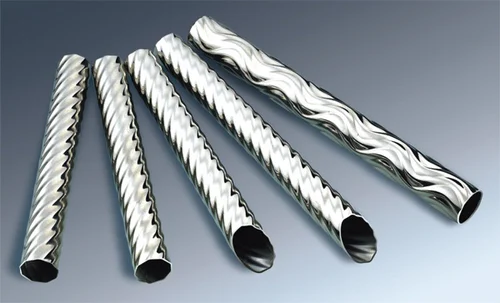
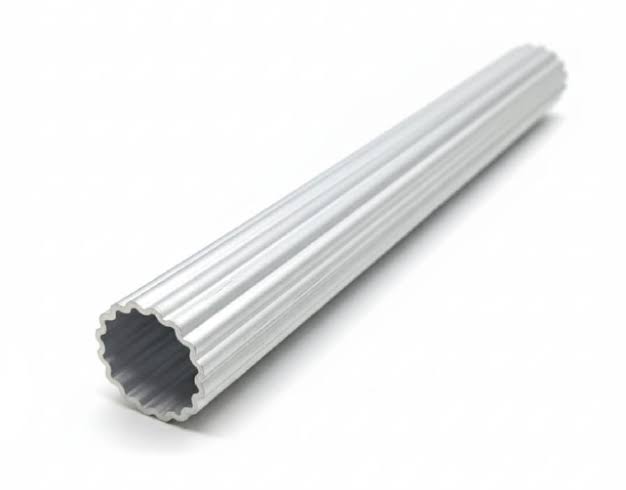
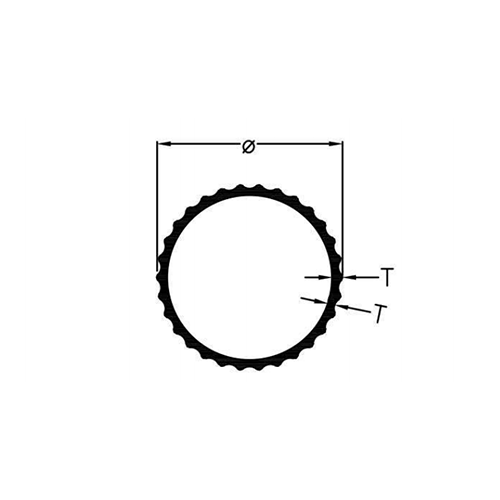
Ribbed Pipe
Ø = 20.00mm
T = 0.60/0.90mm
W= 0.113 Kg/m
Ribbed Pipe
Ø = 24.20mm
T = 0.70/1.20mm
W= 0.131 Kg/m
Ribbed Pipe
Ø = 24.20mm
T = 0.80/1.30mm
W= 0.180 Kg/m
Ribbed Pipe
Ø = 23.00mm
T = 0.60/0.90mm
W= 0.125 Kg/m
Ribbed Pipe
Ø = 24.00mm
T = 0.60/0.90mm
W= 0.130 Kg/m
Ribbed Pipe
Ø = 23.00mm
T = 0.55/0.95mm
W= 0.116 Kg/m

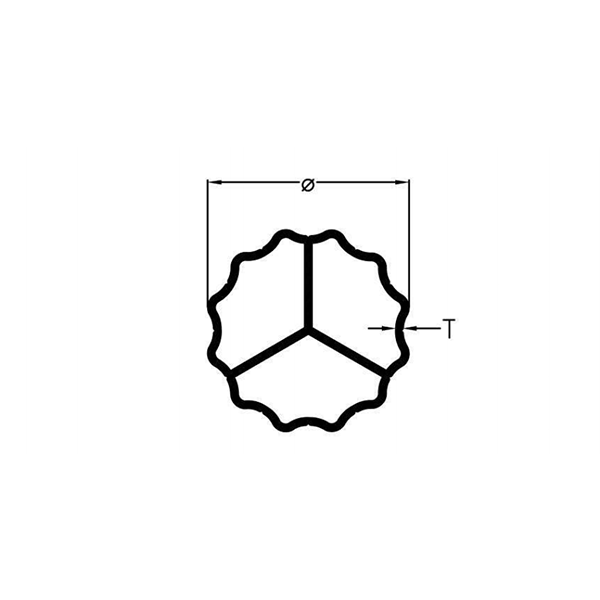
Decorative tubing 3-petal
Ø = 27.70mm
T = 1.00mm
W= 0.326 Kg/m
Ribbed Pipe
Ø = 25.20mm
T = 0.90/1.40mm
W= 0.223 Kg/m
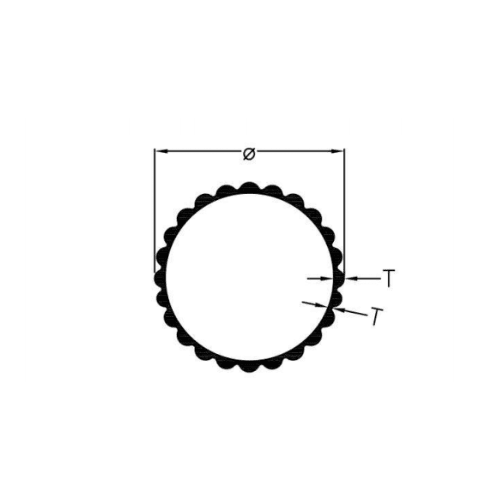
Ribbed, inner Pipe
Ø = 25.00mm
T = 0.50/1.40mm
W= 0.206 Kg/m
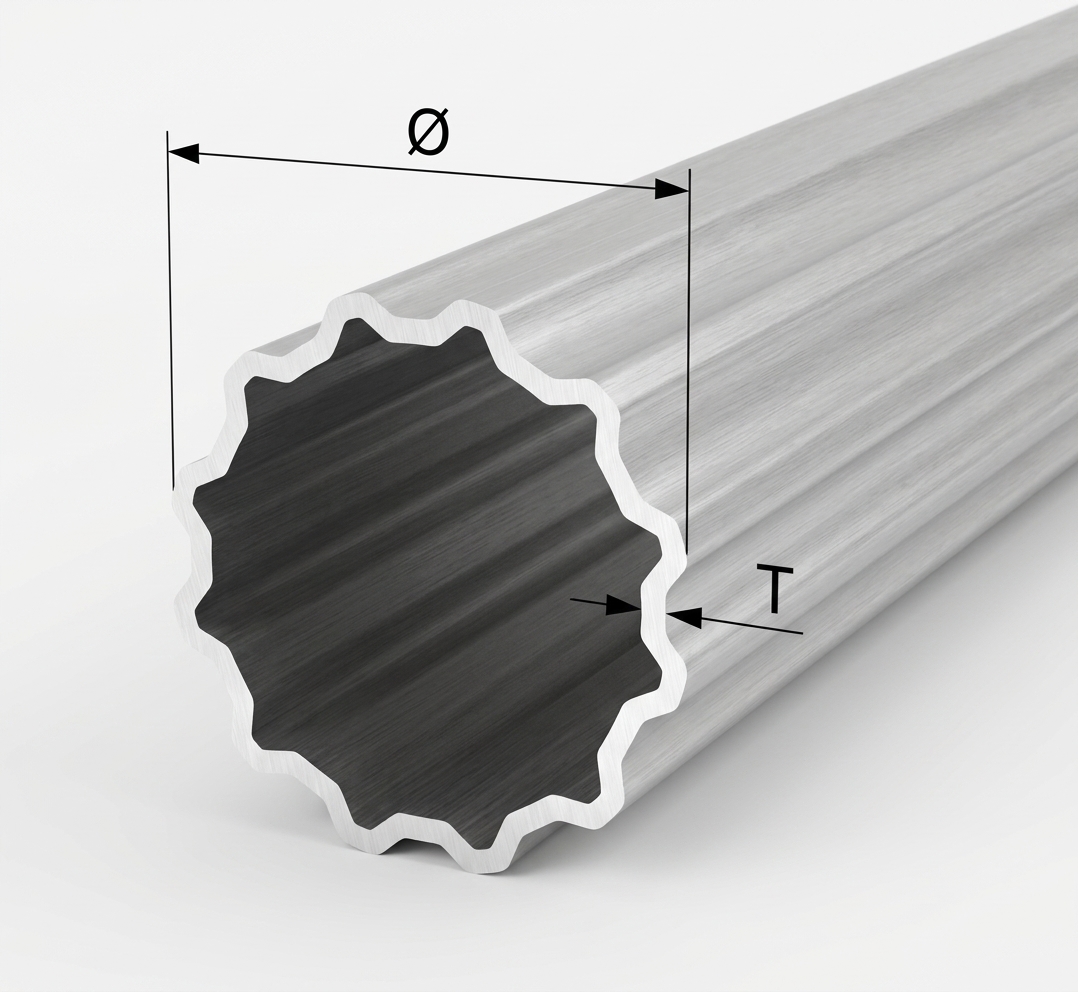
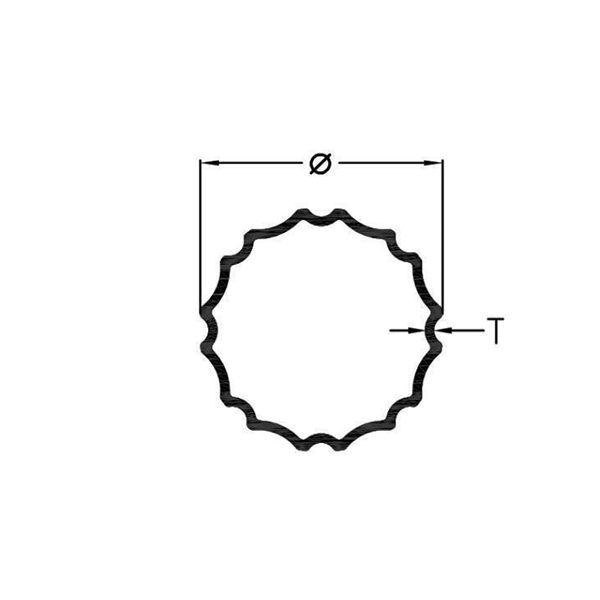
Wave
Ø = 25.00mm
T = 0.95mm
W= 0.210 Kg/m
Wave
Ø = 25.00mm
T = 1.00mm
W= 0.220 Kg/m
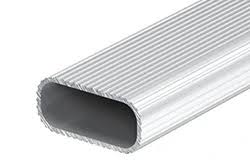
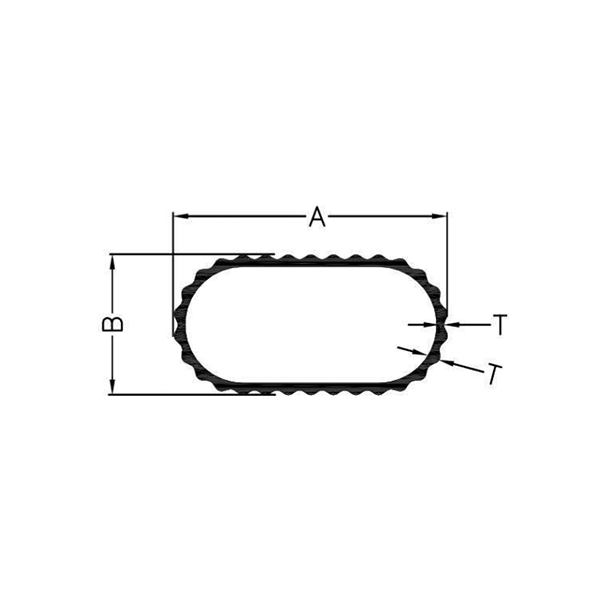
Oval Ribbed
A = 29.70mm
B = 15.10mm
T = 0.80/1.30mm B = 15.10mm
W= 0.205 Kg/m
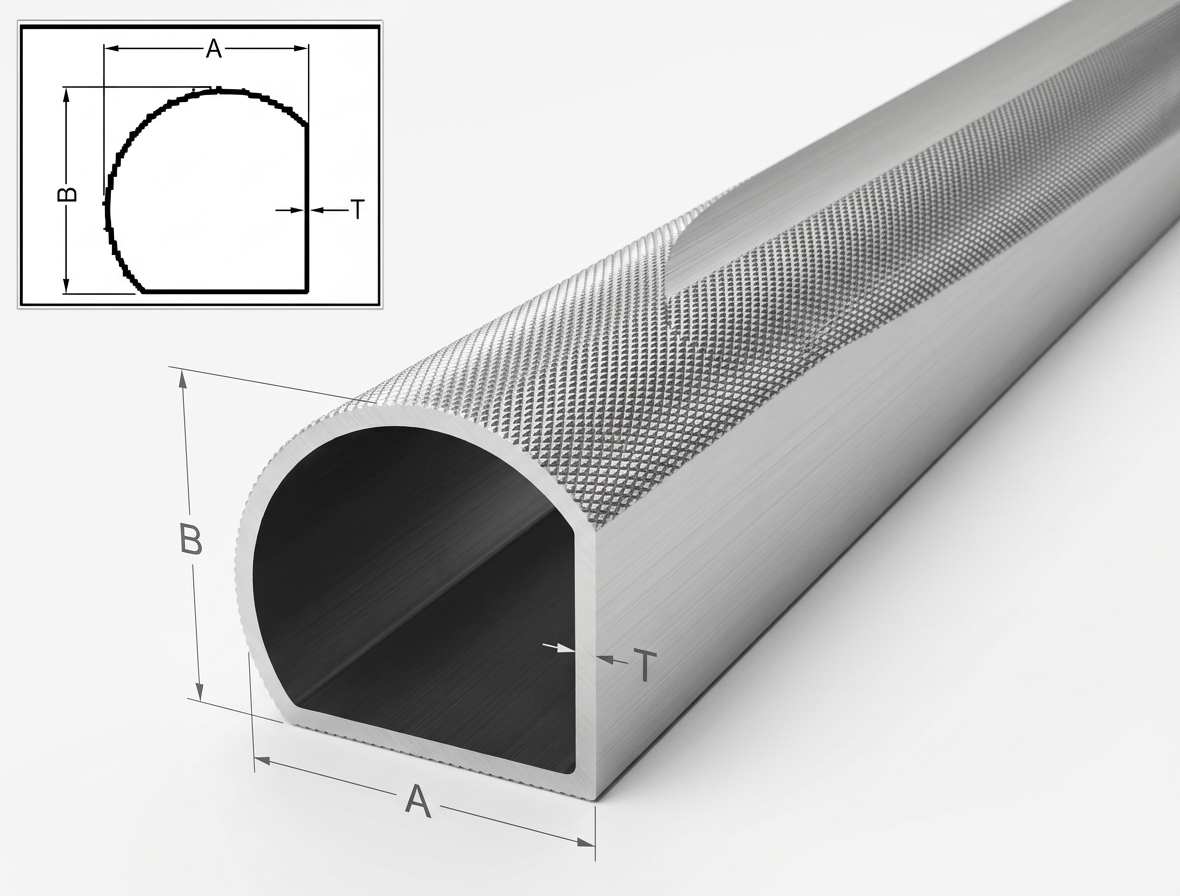
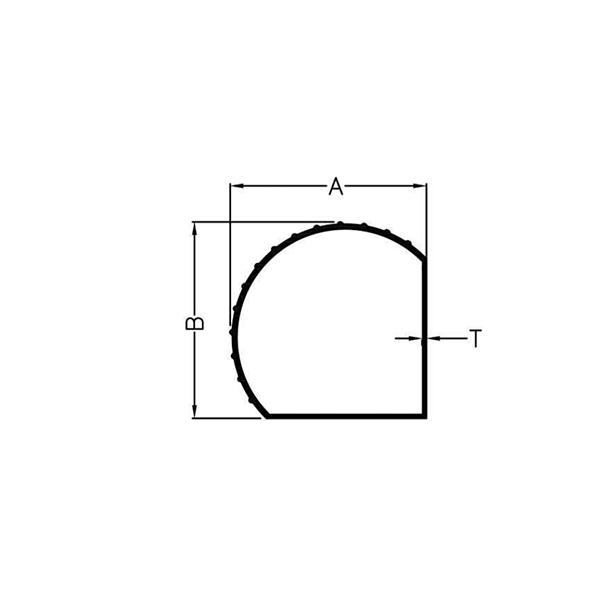
D-shape
A = 36.51mm
B = 36.51mm
T = 0.80mm
W= 0.266 Kg/m
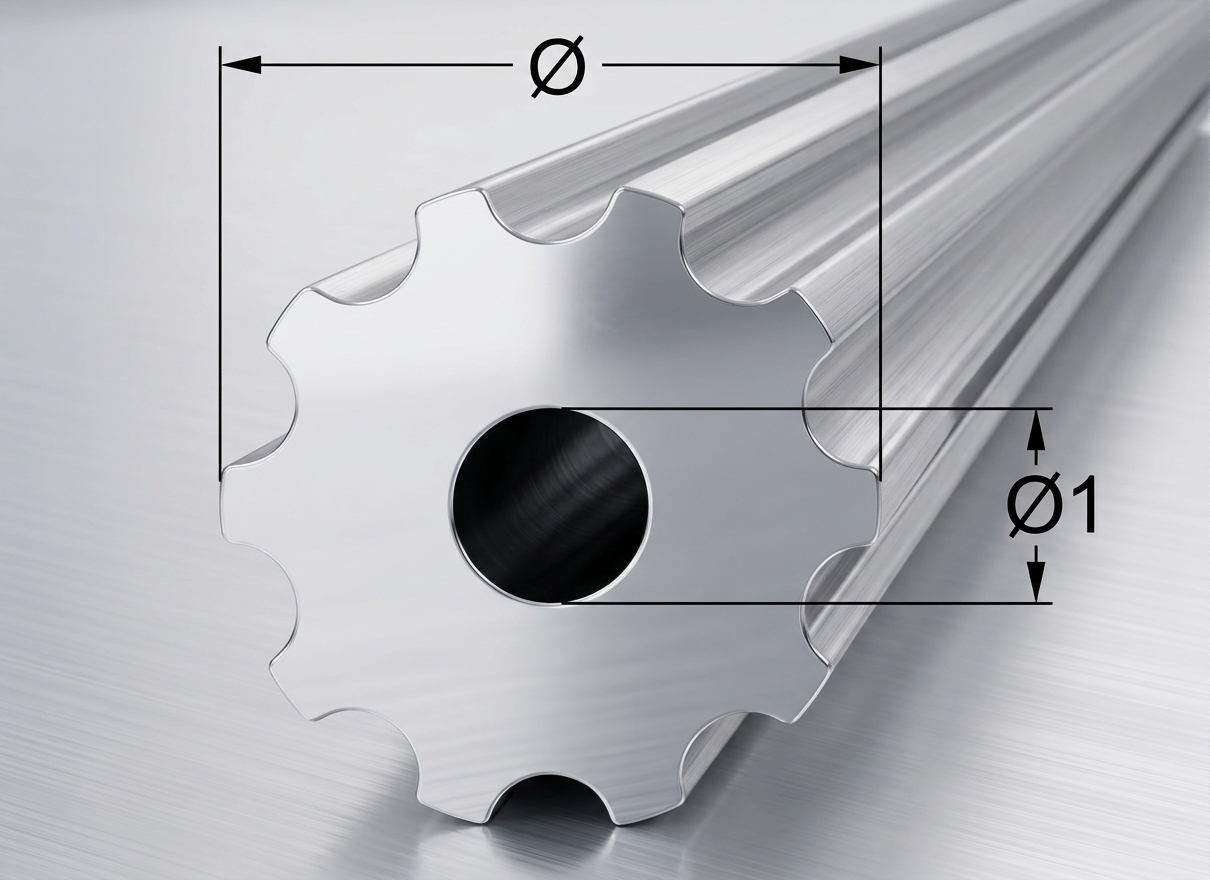
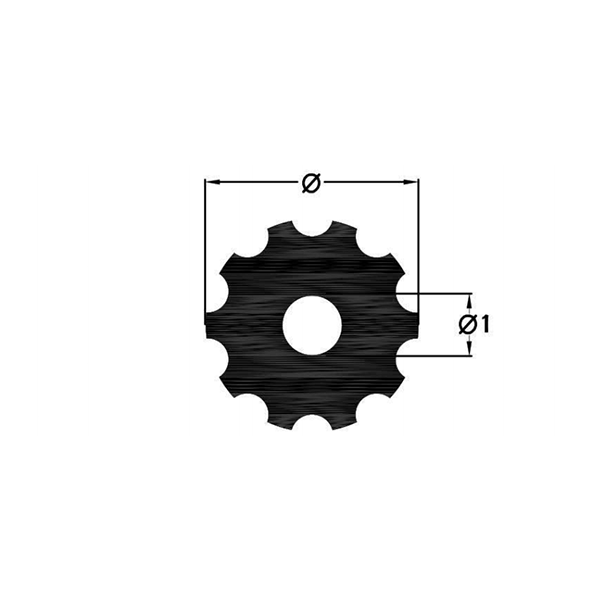
Gear/Hollow
Ø = 25.00mm
Ø1= 7.00mm
W = 1.030 Kg/m
Our aluminum can be used to create a wide range of your needs such as outdoor furniture, partition systems, rolling doors, and more. Elevate your outdoor living area with our premium aluminum furniture collection.
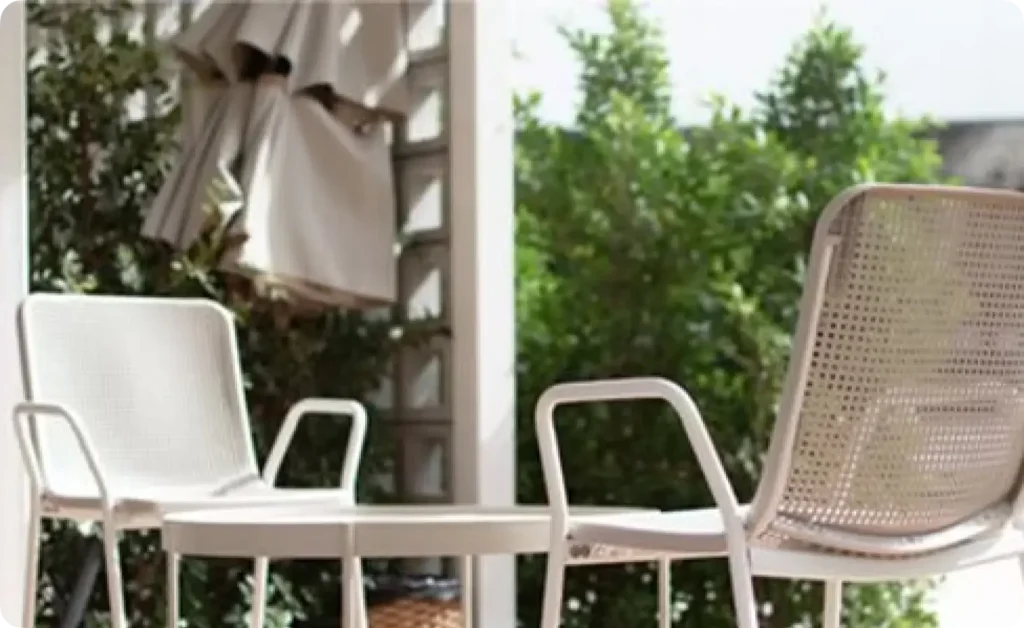
Aluminium material with a solid structure that provides high resistance to pressure and heavy loads, making it ideal for industrial and construction requirements.
We provide a 30-day product quality guarantee to ensure you receive material that meets the highest standards and is free from production defects.
Available in anodizing, powder coating, and mill finish options, offering durability and a clean appearance for various applications.
Aluminium offers excellent formability, allowing it to be easily shaped and fabricated into various designs without compromising strength ideal for custom and complex applications.
Bring design to us and we can turn your ideas into precise, high-quality aluminium solutions. Custom sizes, specification and finishing tailored to your project needs.
Aluminium decorative tubing, sold in British English markets as architectural tube, is a hollow profile where the surface itself is the specification. The flutes, ribs, and reeded lines are not applied, rolled, or machined afterwards. They are formed in the extrusion die, in the same pass that forms the tube, which is why the pattern holds its depth and crispness along the full 6 m length. We extrude decorative tubes at our facility in Indonesia, mostly in 6063, the alloy that renders fine pattern detail best.
Start with a plain round tube and give the die a profiled edge instead of a smooth circle. The result is a tube whose outer face carries a continuous pattern: concave flutes, convex reeds, square ribs, or grouped line textures, all running the length of the bar.
That phrase, running the length, is worth pausing on. Extrusion produces a constant cross-section, so the patterns it can form are longitudinal by nature: straight grooves and ridges parallel to the tube's axis. Spiral and twisted effects need a secondary operation after extrusion, which we can arrange but which is a different process at a different price. An honest supplier tells you this before the order, not after.
The product is identical; the buyer's vocabulary is not. In the UK, Australia, Canada, and Europe, specifiers call this an architectural tube, a name that comes from the design office and the facade drawing. In the United States, the market term is decorative tubing, named for what the pattern does rather than where it goes. Ornamental tube and patterned tube circulate in both markets, and the aluminium-versus-aluminum spelling splits along the usual line.
We quote against every one of those names. Send a sketch of the pattern if the name fails; the die does not care what the profile is called.
Our position, formed by watching where these tubes actually end up: buyers who treat the pattern as pure decoration underuse it. The grooves work for a living.
On a handrail, flutes add grip that a smooth tube cannot offer, wet or dry. On furniture and display fixtures, a patterned surface hides fingerprints, fine scratches, and the small dents of daily service that would be obvious on a polished plain tube. On a facade batten, ribs break up reflected glare and give a flat elevation visible texture from the street. The same profile that earns its place in a designer's render also lowers the maintenance complaints two years later.
On plain tube, finishing is a preference. On patterned tube, it is half the design, and here is the guidance we give every specifier.
Anodising is the default recommendation. The anodic layer follows the pattern's contours at a near-constant 15 microns, so flutes stay sharp and shadow lines stay deep. Light catches the ridges and pools in the grooves, which is the entire visual point of the product. Natural silver, champagne, bronze, and black all read differently across a fluted surface, and all wear without chipping.
Powder coating works, with a caveat. The film is many times thicker than an anodic layer and it builds in corners, so very fine or shallow patterns lose definition under it. For bold ribs it is fine and brings the full RAL colour range; for delicate reeded lines, expect a softer profile than the bare extrusion shows. We will tell you which side of that line your chosen pattern sits on before you commit.
Standard patterns ship cut-to-size from our die library: send a cutting list and receive finished lengths ready for installation. Custom patterns start from your drawing and end as a new die on our press, with sample lengths available before the production run so the architect signs off on metal, not on a render.
Send the pattern reference, the diameter, and the finish intent, and our team will reply with feasibility, price, and lead time from our factory and warehouse in Indonesia. For smooth-walled tube specified by load or flow rather than looks, the plain profiles live on our Round Tubes and Pipes page.