
Aluminium equal angles are L-shaped profiles with two equal legs. They are used in fabrication, edging, brackets, and framing where a right-angle section is required.
Compare the section dimensions in the table below, then confirm the alloy, temper, finish, and length needed for your application.
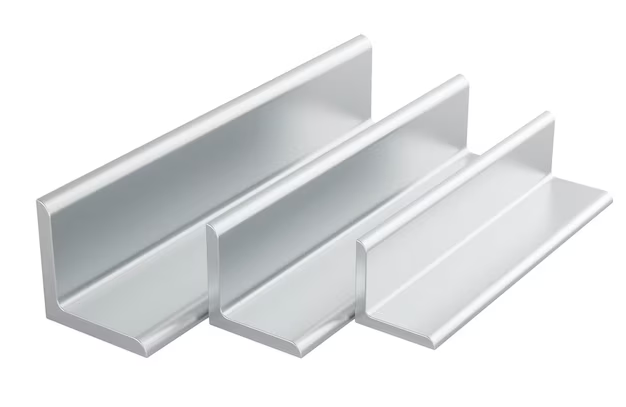
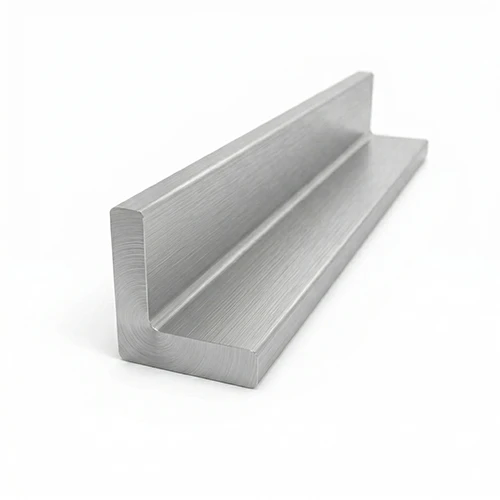
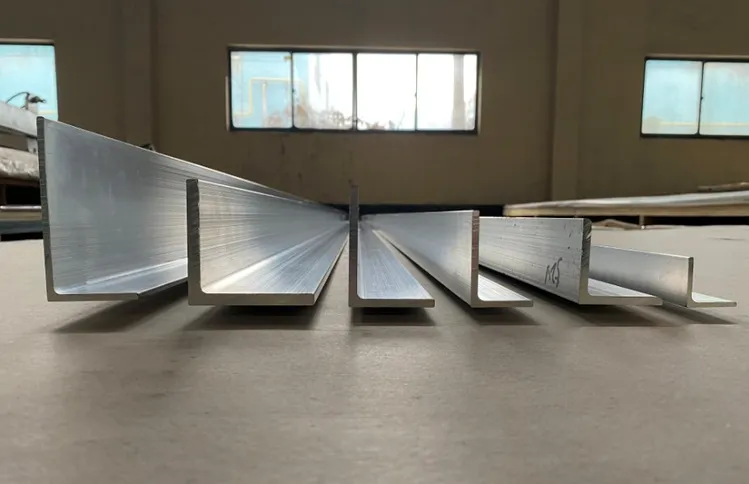
Aluminium equal angles (L-profiles with symmetrical legs) provide excellent structural support and edge finishing. Extruded to precise 90-degree angles, they are easy to cut, drill, and weld, making them indispensable for construction, fabrication, and interior design.
Corner protection
Shielding vulnerable wall corners in high-traffic areas.
Structural frameworks
Bracing and building lightweight metal structures.
Architectural edging
Clean borders for steps, worktops, and paneling.
Shelving & brackets
Sturdy supports for industrial and commercial storage.
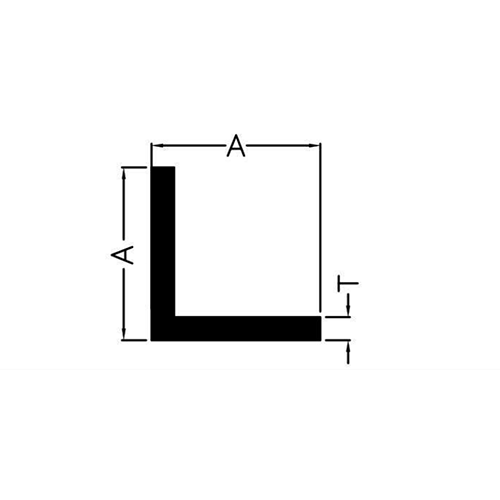
| SECTION | A (mm) | T (mm) | W (Kg/m) |
|---|---|---|---|
| 20018 | 9.50 | 0.80 | 0.040 |
| 20022 | 10.00 | 0.80 | 0.042 |
| 20025 | 12.70 (1/2") | 0.80 | 0.053 |
| 20025 | 12.70 (1/2") | 0.80 | 0.053 |
| 20026 | 12.70 (1/2") | 0.85 | 0.056 |
| 20043 | 18.00 | 2.00 | 0.184 |
| 20045 | 19.00 | 0.80 | 0.081 |
| 20046 | 19.00 | 1.20 | 0.120 |
| 20047 | 19.00 | 1.00 | 0.100 |
| 20048 | 19.05 (3/4") | 2.00 | 0.196 |
| 20070 | 25.40 (1") | 0.90 | 0.122 |
An equal angle is commonly described by its two leg dimensions and thickness: A × A × T. When using the table above, check the dimension labels and selected section number.
For a quotation, include:
• Section number or required leg dimensions.
• Wall thickness and required length.
• Alloy and temper, if specified.
• Surface finish and colour.
• Order quantity.
• Any cutting, drilling, or machining requirements.
For structural applications, the profile and its connections must be checked against the actual loads and design requirements.
Aluminium material with a solid structure that provides high resistance to pressure and heavy loads, making it ideal for industrial and construction requirements.
We provide a 30-day product quality guarantee to ensure you receive material that meets the highest standards and is free from production defects.
Available in anodizing, powder coating, and mill finish options, offering durability and a clean appearance for various applications.
Aluminium offers excellent formability, allowing it to be easily shaped and fabricated into various designs without compromising strength ideal for custom and complex applications.
Bring design to us and we can turn your ideas into precise, high-quality aluminium solutions. Custom sizes, specification and finishing tailored to your project needs.
Equal angles have two legs of the exact same length (e.g., 50x50mm), whereas unequal angles have one leg longer than the other (e.g., 50x30mm).
Sharp corners are preferred for architectural aesthetics and flush fitting, while radius (rounded) corners are chosen for structural strength and safety.
We typically use 6063 for architectural trims (better finish) and 6061 for heavy structural frameworks (higher strength).
Yes, our aluminium equal angles can be easily welded using standard aluminium welding techniques like TIG or MIG.
We supply solid extrusions standard, but custom CNC drilling and punching services are available upon request.
Yes, we offer standard mill finish, clear anodized, and custom powder-coated colors.
An aluminum angle is an L-shaped extrusion, two legs meeting at ninety degrees, and that corner is what makes it such a dependable building block. It braces a joint, stiffens an edge, frames a panel, and carries a shelf, all from one section. As an aluminum angle supplier extruding in Indonesia, we run both equal and unequal angle in 6061 and 6063, from light trim sizes to heavier structural legs.
The first choice is geometry, and it follows the load. The table sets the two side by side.
Feature | Equal Angle | Unequal Angle |
Leg geometry | Both legs the same | Legs differ, one long, one short |
Load distribution | Even support in both directions | Stronger along the longer leg |
Typical use | Framing, bracing, shelving, corner guards | Lintels, edge capping, asymmetric brackets |
Material use | Balanced default | Puts metal where the load needs it |
Both geometries are stocked; the right one depends on the joint, not on which is generally stronger.
An aluminum angle supplier that carries both saves you from forcing one shape to do the other's job.
The leg layout decides where an angle is stiff. An equal angle resists bending about equally on both axes, which suits joints pulled from several directions. An unequal angle concentrates its section in the long leg, so an 80 x 15 profile takes a downward load on the long leg while sparing metal on the short one. When the load runs mainly one way, tell your aluminum angle supplier the direction and the long leg is set to match. Specifying the unequal leg beats trimming an equal angle, which wastes metal, so an aluminum angle supplier extrudes the exact section instead.
Every angle is defined by its legs, thickness, and weight. Read an equal angle as leg by thickness, an unequal angle as long leg by short leg by thickness; weight follows. A sample from our range shows the spread.
Section | Type | Size (mm) | Weight (kg/m) |
20047 | Equal | 19 x 19 x 1.0 | 0.100 |
20048 | Equal | 19 x 19 x 2.0 | 0.196 |
21014 | Unequal | 30 x 20 x 2.5 | 0.322 |
21060 | Unequal | 80 x 15 x 5.0 | 1.220 |
Figures follow the Exalum equal and unequal angle catalogues; more sections sit on each product page.
Send the sizes you need and any aluminum angle supplier should quote them by weight per metre.
The grade sets how an angle machines, welds, and finishes. We extrude 6061-T6 for structural frameworks that carry real load, and 6063-T5 for architectural trims and edges that will be anodized. Where a part does both, 6061-T6 usually wins, holding strength while taking a clean finish. As an aluminum angle supplier we match the grade to the duty rather than default to one.
How you fix an angle matters as much as its size. Bolting and riveting keep an angle at full strength and suit site assembly. If you weld 6061-T6, expect the heat-affected zone beside the bead to lose a share of its strength, so keep that softened band away from the highest stress, or move up a size. A careful aluminum angle supplier will raise this before the drawing reaches the shop.
One section serves a long list of trades. Common duties include machine and frame bracing, shelving and racking, wall and corner guards, panel and glass edging, brackets and gussets, and light structural lintels. Because an angle is light and easy to cut and drill, one order often covers several, which is why an aluminum angle supplier ships it by the bundle.
A short checklist keeps an angle order clean and on time. Say whether you need equal or unequal, the leg sizes and thickness, the alloy and temper, the finish, and the cut length with its tolerance. Add the quantity and delivery date, and send a drawing if the section is non-standard. Sending these once lets your aluminum angle supplier quote right the first time.
Angle ships in 6 m standard lengths or cut to size, faced and deburred, in mill, anodized, or powder-coated finish. Standard sections come from stock, non-standard legs from the die library, and new profiles from a custom die against your drawing. As your aluminum angle supplier, we reply with grade, finish, tolerance, price, and lead time from our factory in Indonesia. Browse the full range on our Equal Angle and Unequal Angle pages, then send a drawing or cutting list and your aluminum angle supplier takes it from there.