The concept of roller conveyors has a rich history that dates back to ancient times. The ancient Egyptians are believed to have used wooden rollers to move heavy stones during the construction of the pyramids. Over the centuries, engineering and technology advancements have refined these simple systems into the highly efficient roller conveyors we use today. The Industrial Revolution played a key role in the development of modern roller conveyor systems, as the mass production of goods created a need for more efficient and scalable material handling methods, paving the way for the sophisticated conveyors employed in industries today.
Roller conveyors come in various configurations, each catering to specific material handling needs. Some common types include:
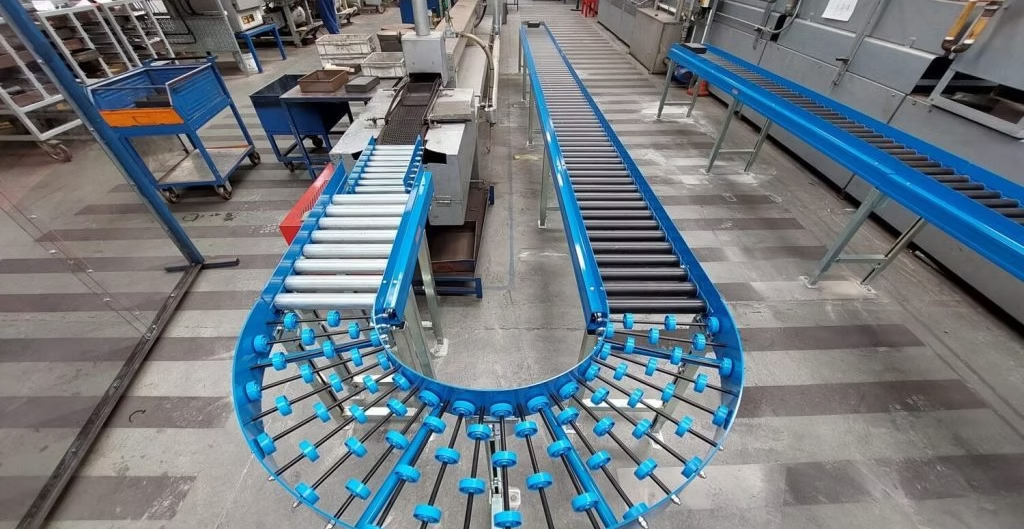
Gravity roller conveyors rely on the force of gravity to move items along the conveyor line. These systems are ideal for transporting lightweight to medium-weight goods and are cost-effective, requiring minimal maintenance. They are often used in applications where the conveyor is installed on an incline or in horizontal configurations with a slight tilt.
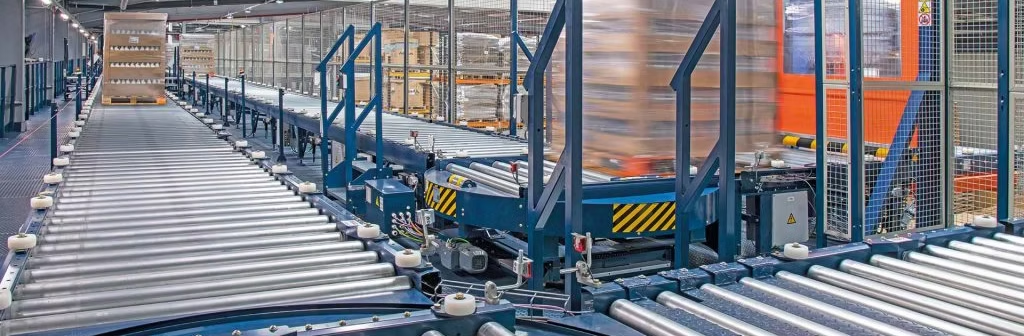
Powered roller conveyors use motors or drive belts to move items along the conveyor line. These systems are designed to handle heavier loads and provide better control over the movement of goods. Powered roller conveyors are ideal for applications where precise positioning, speed control, or the handling of heavier or bulky items is required.
Flexible roller conveyors are adaptable systems that can be expanded or contracted to suit various layouts. Commonly used for loading and unloading trucks or containers, they facilitate item movement between sections of a facility. Their flexibility allows for easy reconfiguration for different applications.
Accumulation roller conveyors have zones with controlled pressure, allowing items to accumulate without jams or collisions. These systems are essential for buffering and sorting products in areas where goods are temporarily stored before processing. They help optimize flow and reduce bottlenecks in production lines or distribution centers.
Roller conveyors are used in a wide range of industries due to their efficiency and versatility. Some key applications include:
In manufacturing plants, gravity roller conveyors are used for assembly lines, product transportation, and material handling between various production stages.
In warehouses and distribution centers, roller conveyors enhance order fulfillment, packing, and shipping efficiency.
In e-commerce and retail facilities, gravity roller conveyors accelerate the movement of packages and parcels, ensuring timely deliveries.
Roller conveyors are crucial in the industry, ensuring seamless movement of packaged and unpackaged products while maintaining hygiene and safety standards.
Roller conveyors offer a multitude of benefits that significantly contribute to operational efficiency and cost-effectiveness. Some advantages include:
With low maintenance needs and energy-efficient operation, roller conveyor systems offer long-term cost savings.
By automating material handling, roller conveyor systems reduce the risk of injuries linked to manual handling.
Roller conveyors require minimal floor space and can be designed to fit into compact layouts, optimizing space usage.
Roller conveyors can be tailored to meet specific material handling requirements, ensuring seamless integration into existing systems.
Roller conveyors have transformed material handling, driving efficiency, reducing costs, and improving safety across industries. From their ancient roots to modern applications, roller conveyors have evolved to revolutionize industrial processes. By implementing best practices and leveraging their capabilities, businesses can enhance material handling efficiency and maintain a competitive edge. Embrace the power of roller conveyors today and enjoy the numerous benefits they bring.