
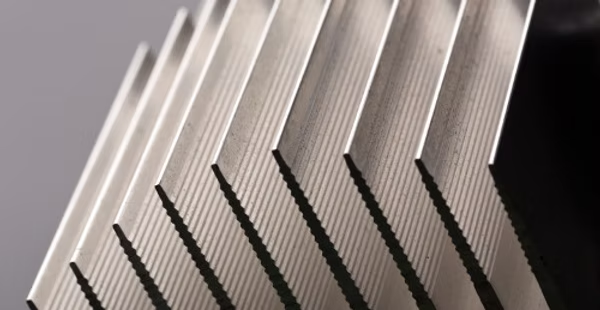
A heatsink is a passive component that functions as a heat absorber and dissipator in electronic devices.
Working principle: heat is transferred from the electronic component to the heatsink, then released into the surrounding air.
Material: while there are heatsinks made of copper, aluminium is far more widely used because it is lighter and easier to extrude.
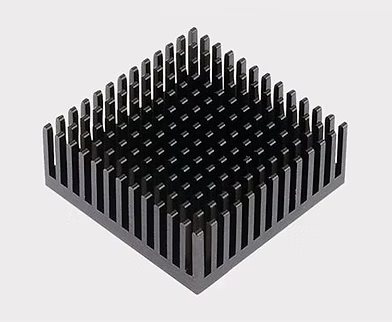
Aluminium has a lower density than copper, making it lighter while still maintaining strength.
Aluminium alloys such as 6060 and 6063-T5 provide excellent heat transfer capability for cooling electronic components.
The extrusion process allows aluminium to be formed into thin, dense fins that maximize cooling efficiency.
With anodizing, aluminium heatsinks are more resistant to rust, making them suitable for long-term applications.
Compared to other materials, aluminium is more affordable, offering a great balance between performance and price.
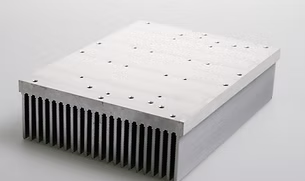
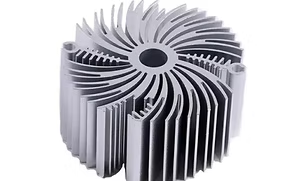
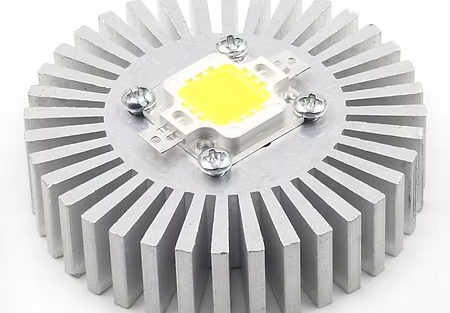
Lightweight, easy to shape, and more affordable.
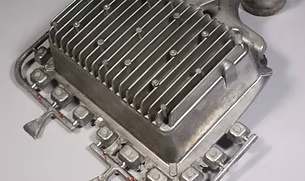
Higher thermal conductivity, but heavier and significantly more expensive.
Exalum provides heatsinks made from Aluminium Alloys 6060 and 6063-T5, which offer:
Surface Quality: excellent for anodizing.
Extrudability: allows thin fins to be produced with ease.
Mechanical Properties: medium strength, sufficient for cooling applications.
With this combination, aluminium heatsink products achieve optimal performance while remaining cost-efficient.
Check the alloy type – choose 6060 or 6063-T5 for the best cooling performance.
Adjust the size – larger surface area means better heat dissipation.
Consider finishing – anodizing improves corrosion resistance and appearance.
Match with application – select designs suited for LED, CPU, power modules, or other specific uses.
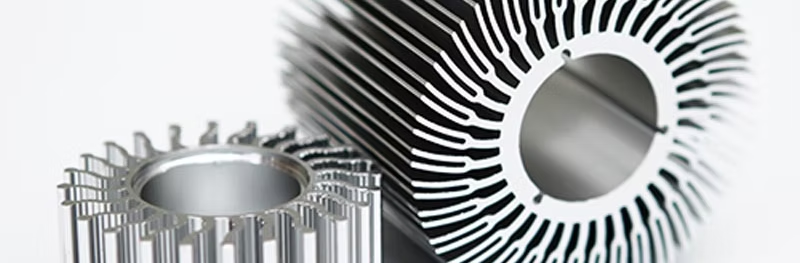
Aluminium heatsinks are the best solution for heat management in a wide range of electronic and industrial applications. With their lightweight nature, corrosion resistance, ease of processing, and excellent thermal conductivity, aluminium stands out compared to other materials.
For high-quality heatsink solutions, Exalum Metal offers products made from 6060 and 6063-T5 alloys, proven to deliver outstanding performance for modern cooling needs. Explore the best aluminium heatsink products at Exalum Metal – Our Products.