
Differences and Applications
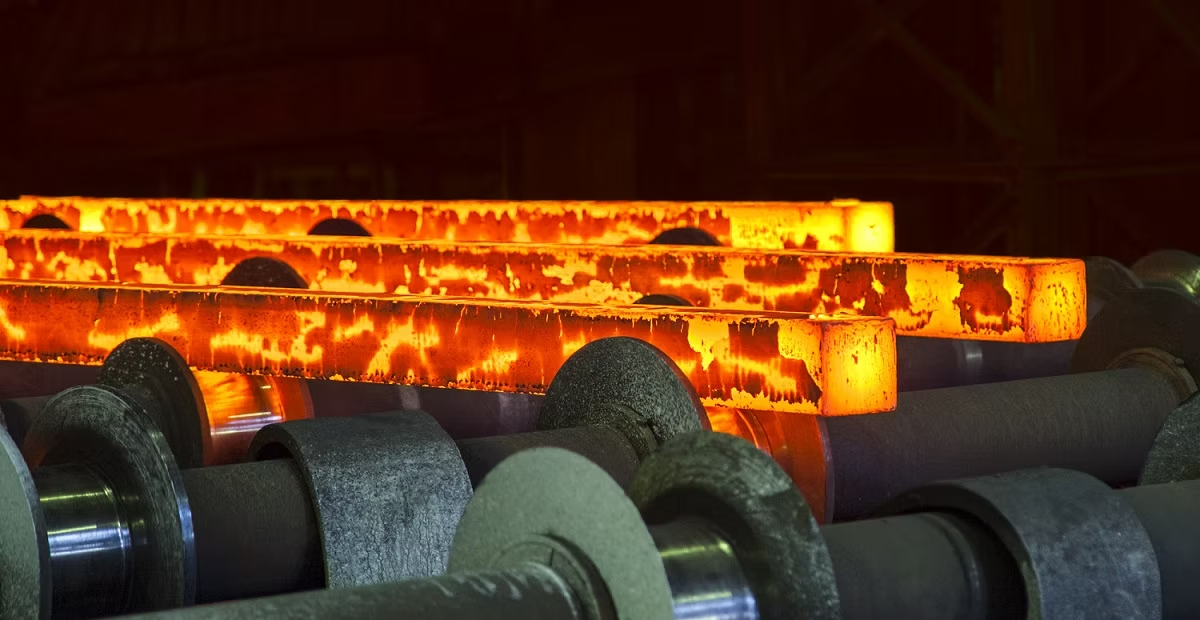
Aluminum properties depend on both the alloy and its processing history. Temper designations describe material conditions that affect strength and formability, so an alloy and temper should be specified together.
This article compares O, T4, T5 and T6 conditions. O is the annealed condition and uses the letter O. It is not designated T0.
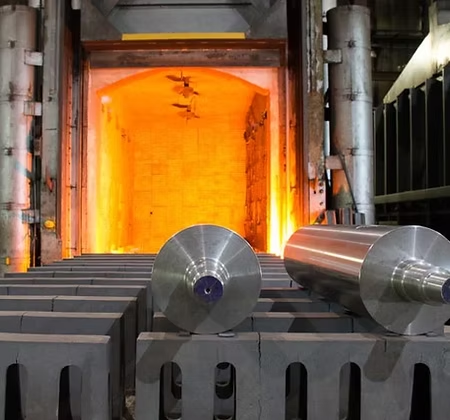
Pure aluminum has a relatively soft crystal structure. To enhance its strength and hardness, aluminum is alloyed with elements such as magnesium (Mg) and silicon (Si). These combinations form aluminum alloys that can be strengthened through heat treatment.
The principle is straightforward: the metal is heated to a high temperature, rapidly cooled, and then allowed to “age.” This process modifies the metal’s microstructure, forming fine precipitates (such as Mg₂Si particles) that strengthen the crystal lattice from within.
This is what distinguishes soft aluminum from hardened aluminum—not the alloy composition itself, but the thermal treatment applied.
The aluminum is heated to approximately 500–540°C, allowing the alloying elements to dissolve completely into the metal structure.
After heating, the metal is rapidly cooled using air, water, or pressurized air. This step “locks” the alloying elements in place before they can precipitate.
The aluminum is then left to mature so that fine precipitates can form. Aging can occur naturally at room temperature (natural aging) or artificially in an oven at 150–200°C for several hours (artificial aging).
These combinations of processes result in different aluminium tempers such as O, T4, T5, and T6.
O identifies the annealed condition. It is commonly considered when formability is important, but its mechanical properties depend on the alloy and product.
Confirm the required final properties and any processing after forming. O temper is a softened condition, not a hardening treatment.
T4 aluminum undergoes solution heat treatment followed by natural aging. This process increases strength compared to O while maintaining excellent formability.
Key characteristics:
Medium tensile strength (approximately 130–190 MPa for 6063-T4)
Good ductility, suitable for bending, riveting, and post-forming
Naturally cooled and aged at room temperature
Typical applications:
Automotive body panels, curved architectural structures, and components requiring further shaping
Widely used in the automotive industry for door and body panels
T4 represents a “semi-hardened” state strong enough for handling yet flexible enough for further fabrication.
T5 aluminum is cooled directly after extrusion and then subjected to artificial aging, without a separate solution heat treatment. This approach shortens production time while achieving sufficient strength.
Key characteristics:
Moderate to high strength with limited flexibility
Ideal for extrusion products with no post-forming
Excellent dimensional stability
Typical applications:
Aluminum window frames, door systems, façade panels, and light structural components
Commonly produced using 6063-T5 alloy for its balance of strength and aesthetic finish
T5 is favored by extrusion manufacturers due to its cost efficiency, speed, and reliable mechanical properties.
T6 identifies material that has been solution heat treated and artificially aged. It is used where strength is an important requirement, but performance depends on the specified alloy and product.
Confirm the applicable mechanical properties and any forming, welding or machining planned after delivery. T6 does not automatically make a profile suitable for every structural application.
Selecting the appropriate temper is not simply about choosing the hardest option. Each application has different priorities:
Maximum formability: O or T4
Production efficiency with moderate strength: T5
High strength and rigidity: T6
Key considerations include:
Aluminium alloy type (e.g., 6061, 6063, 6082)
Profile geometry and design
Production factors such as cost, time, and finishing requirements
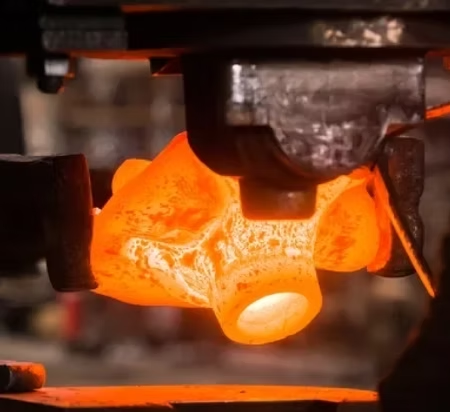
The differences between O, T4, T5, and T6 are more than technical codes—they reflect the metallurgical processes that define aluminium’s strength, flexibility, and durability.
O → highly formable
T4 → flexible yet strong
T5 → efficient and dimensionally stable
T6 → high strength and load resistance
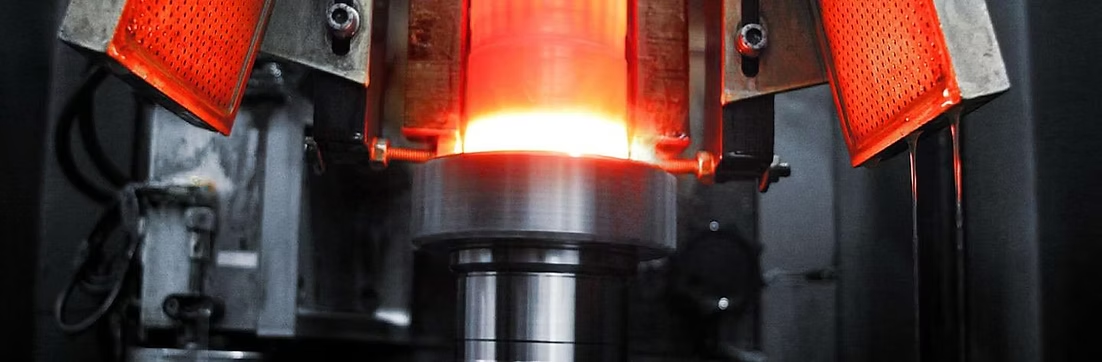
If you require high-quality aluminum extrusion products with precise temper control and heat treatment, Exalum Metal is your trusted partner. As an experienced manufacturer and industrial supplier, Exalum Metal manages every production stage from profile design and extrusion to advanced heat treatment and premium finishing.
Visit Exalum Metal Our Process to learn more about our extrusion technology and explore our wide range of aluminum products used across multiple industries.
With proven expertise in aluminum hardening processes from O to T6, Exalum Metal is ready to deliver strong, precise, and long-lasting aluminum solutions tailored to your needs.