
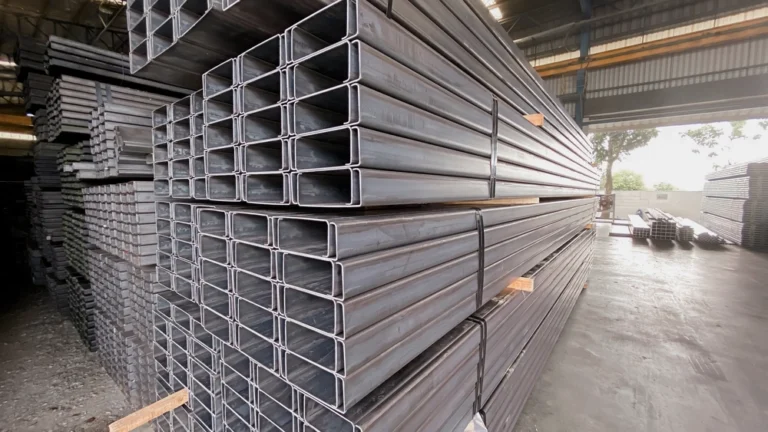
If you run a fabrication shop or manage procurement for a manufacturing line, you already know that the humble aluminum channel does more heavy lifting than its weight suggests. From window framing to solar mounting rails, this U-shaped extruded profile shows up in practically every workshop that touches metalwork. The catch , not all aluminum channels are equal, and the wrong spec can quietly inflate your scrap rate, slow your assembly, and eat into your margins.
Here’s what experienced fabricators look at before placing an order.
What Is an Aluminum Channel?
An aluminum channel is a U-shaped (or sometimes C-shaped) extruded profile produced by forcing heated aluminum billet through a precision die. The result is a continuous length with consistent wall thickness, sharp inside corners, and a cross-section engineered to slot, capture, support, or trim other materials. Common variants include U-channel, C-channel, J-channel, and hat channel , each suited to a different job.
Because they’re extruded rather than welded or rolled, aluminum channel profiles hold tighter dimensional tolerances and offer a cleaner surface finish than fabricated alternatives. That matters when you’re cutting hundreds of pieces a day.
Why Workshops Default to Aluminum Channel
Three properties make aluminum channel a workshop staple:
- Strength-to-weight ratio. You get structural performance at roughly one-third the weight of steel , easier to handle, cheaper to ship.
- Corrosion resistance. A naturally forming oxide layer protects the metal in outdoor and humid environments, often with no painting required.
- Machinability. Cuts, drills, taps, bends, and welds cleanly with standard shop equipment. No exotic tooling, no broken bits.
Add full recyclability and stable long-term pricing, and it’s clear why fabricators reach for aluminum channel before steel or plastic alternatives.
Choosing the Right Alloy and Temper
For most fabrication work, the decision comes down to two alloys.
6063 is the workhorse for architectural and decorative jobs. It extrudes beautifully, finishes smoothly, and is the alloy of choice whenever the part will be anodized or powder coated.
6061 is the structural pick. Higher mechanical strength, better load-bearing capacity, and the right call for industrial framing, transport components, and anything that carries weight.
Tempers matter just as much. T5 delivers good strength with excellent surface quality straight off the press. T6 offers maximum hardness and is the standard for engineered structural work. Spec it wrong and you’ll pay for it in machining time or, worse, field failures.
Surface Finish Options That Affect Cost and Lifespan
A mill finish is fine for hidden structural use, but most fabricators specify a finish:
- Anodizing thickens the natural oxide layer, producing a hard, scratch-resistant, color-stable surface that lasts decades outdoors.
- Powder coating offers a wider color range and a thicker protective skin, ideal for decorative or branded components.
Sourcing both your raw extrusion and your finishing from one supplier shortens lead times and tightens quality control , a real factor when you’re weighing vendors.
Where Aluminum Channel Shows Up in Real Projects
Walk through any active fabrication workshop and you’ll see aluminum channel doing work in:
- Window and door frame assemblies
- Curtain wall and facade systems
- Solar panel mounting rails and racking
- LED housings and signage frames
- Industrial enclosures and cabinet trim
- Partition systems and modular framing
- Edge protection on cabinetry, glass, and panels
Each application has its own ideal alloy, wall thickness, and tolerance window , which is why serious fabricators work with a manufacturer who can extrude to spec rather than settling for whatever’s on the shelf.
Sourcing Aluminum Channel for Your Fabrication Needs
Lead time, consistency, and in-house finishing are usually what separate a smooth project from a painful one. If you’re sourcing aluminum channel for workshop or fabrication-grade work, partner with a manufacturer who controls the entire process , from billet to finishing , under one roof.
Whether you need standard profiles or custom cross-sections designed for your specific fabrication requirements, Exalum Metal has the capacity and expertise to deliver.
Ready to place an order or discuss your requirements? Get in touch with the Exalum Metal team directly:
Email: [email protected] WhatsApp: +62 811 9429 970 Website: www.exalummetal.com
Your next fabrication project deserves material you can count on. Make aluminum channel from Exalum Metal your standard.