
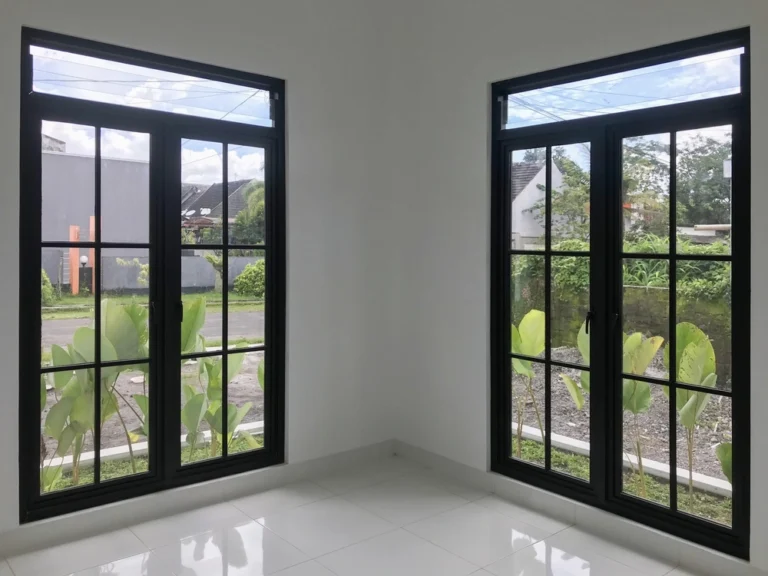
A casement window is hinged at the side and swings open like a door, and that simple mechanism gives it advantages that fixed and sliding windows cannot match. It opens fully to catch the breeze, seals tightly when closed, and frames a clear view through a slim profile. Built in aluminum, the casement gains strength that lets the frame stay narrow, durability that resists weather for decades, and a finish that holds its appearance year after year. We produce the aluminum profiles that casement windows are built from, and the points below cover how they work, the styles available, and why aluminum leads the field.
How a Casement Window Works
A casement window is hinged along one vertical edge and swings outward, operated by a crank, a lever, or a stay that pushes the sash open and pulls it closed. This side-hinged action is the defining feature, and it produces a set of benefits that other window types struggle to match. When open, the casement swings clear of the opening, so the entire window area becomes available for ventilation, unlike a sliding or single-hung window where only part of the opening ever opens.
When closed, the casement seals exceptionally well, because the sash presses against the frame all the way around and the locking mechanism pulls it tight against the weatherseal. This makes casements among the most airtight and weathertight window types, which matters for energy efficiency and for keeping out wind and rain. The outward swing also lets the open sash catch and direct breezes into the room. The combination of full ventilation, tight sealing, and clear views is why the casement remains one of the most popular and effective window designs.
Why Aluminum Frames the Best Casement Windows
The casement design rewards a strong frame material, and aluminum delivers exactly what it needs. The strength of aluminum lets the frame and sash be slim while still carrying the glass and resisting the wind loads on the window, which means narrower sightlines and more glass area for the same opening. A slim, strong frame is what lets a casement window maximize light and view, and aluminum’s strength-to-weight ratio is what makes the slim frame possible.
The corrosion resistance matters because windows face weather for the life of the building, and aluminum’s natural oxide layer protects the frame without rust or rot, holding its integrity through rain, humidity, and salt air. The extrudability lets aluminum be formed into the sophisticated frame profiles a modern casement needs, with integrated weatherseal races, drainage paths, glazing channels, and where specified thermal breaks, all built into the section. And the finish quality of anodized and powder-coated aluminum gives the frame a durable, color-stable surface in any architectural tone. For a window that has to be slim, strong, weathertight, and attractive for decades, aluminum is the natural frame.
The Styles of Aluminum Casement Windows
Casement windows come in configurations that suit different openings and uses. A single casement is one side-hinged sash in its frame, the simplest form, suited to narrower openings. A double or French casement uses two sashes hinged on opposite sides that meet in the middle, opening the entire span with no central post for an unobstructed view and full-width ventilation.
A push-out casement opens with a handle rather than a crank, swinging out manually for a clean, traditional look. A top-hung casement, sometimes called an awning window, hinges at the top and opens outward at the bottom, which lets it stay open during light rain. A fixed-and-casement combination pairs operable casements with a large fixed picture window, maximizing both view and ventilation in a single composition. And casements are frequently combined into multi-unit assemblies divided by mullions, where several sashes and fixed lites make up a larger window wall. Each configuration draws on the same aluminum frame and sash profiles, arranged for the opening and the look.
What Goes Into a Casement Window That Performs
A casement window that delivers on its promise depends on how it is built. The frame and sash profiles have to be engineered for strength and sealing, with the section depth to carry the glass and resist wind load, and the integrated weatherseal and drainage detailing that keep the window airtight and dry. A casement lives or dies on its seal, so the profile design around the gasket and drainage is critical.
The alloy and temper set the strength, with the architectural aluminum grades providing clean extrusion of the complex profiles and the finish quality the application needs. The hardware has to match the window, since the hinges, the crank or stay, and the multi-point locking that pulls the sash tight all work with the frame to deliver the seal and the smooth operation. The glazing detail has to suit the glass, holding it securely and sealing it against weather. And the finish has to withstand constant exposure on a prominent building element. These requirements come down to the engineering of the profiles and the extrusion quality behind them, which is why the frame material and its source matter as much as the window design.
How Casement Windows Connect to Our Products
Casement windows are core to what we produce, built on the extrusion control that keeps frames slim, true, and consistent. Our vertically integrated facility in Indonesia spans 20,000 square metres and manages alloy, extrusion, and finishing as one chain, delivering the dimensional precision and finish quality that visible window work demands.
The profile range covers the casement window and the systems around it:
- Casement Windows profiles for the frames and sashes that define the window
- Windows Wall profiles for the larger window-wall assemblies that combine casements with fixed glazing
- Curtain Wall profiles for facade systems that integrate casement windows
- Doors, Sliding Doors, and Door Jamb profiles for the openings that pair with casement windows
- Equal Angle, Unequal Angle, and Flat Bars for brackets, anchors, and connection hardware
- Handle profiles for window hardware and operating elements
For window systems that need a specific frame profile, sightline, or glazing detail, custom extrusion produces the exact geometry the design requires, finished in-house to the architectural specification.
Choosing Casement Windows With Confidence
A well-made aluminum casement window opens wide for air, seals tight against weather, and frames the view through a slim, strong profile that lasts for decades. The decisions that matter are choosing a frame engineered for strength and sealing, the right alloy and finish, hardware matched to the window, and a manufacturer whose profiles run true and finish evenly. Get those right, and the window boosts the light, the comfort, and the value of the space it serves.
We have supplied architectural aluminum extrusion to fabricators, window makers, and builders since 2009, with the dimensional precision and finishing quality that visible window work demands.
Whether you need standard profiles or custom cross-sections designed for your specific window system, we have the capacity and expertise to deliver.
Ready to discuss your project or request material specifications? Get in touch with our team directly:
Email: [email protected] WhatsApp: +62 811 9429 970 Website: www.exalummetal.com
When the window has to open wide and seal tight, start with extrusion you can trust. Make Exalum Metal your standard.