
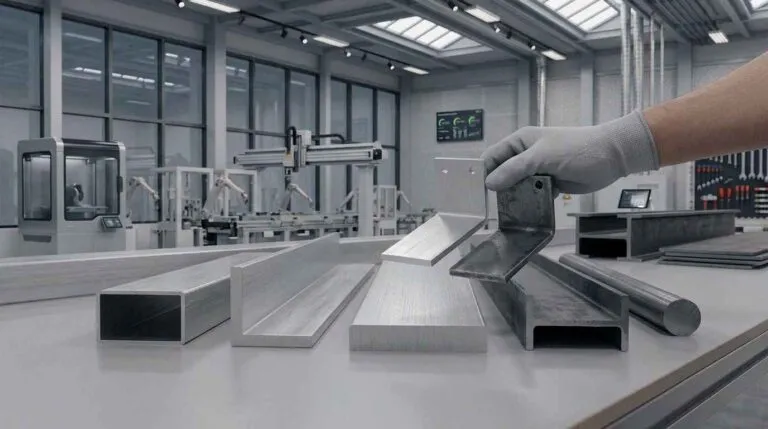
The aluminum vs steel decision starts with what the finished component needs to do. A lightweight cover, a machine frame, and a structural bracket have different requirements, even when they appear similar in size.
Material grade, aluminum temper, cross-section geometry, and connection details all affect performance. A direct material swap may therefore require a redesign rather than a like-for-like replacement.
This guide compares the practical factors to review before choosing aluminum or steel for an architectural or industrial project.
What Actually Sets Aluminum and Steel Apart
Aluminum and steel come from different base metals with different atomic structures, and that difference shows up in how each one behaves under load. Steel is an iron alloy, while aluminum is a much lighter metal on its own. Even a small percentage difference in density adds up fast across a full structure. Engineers factor this in well before strength enters the conversation.
Extrusion technology has also shaped how each material gets used today. Aluminum extrudes easily into complex shapes in one pass, while steel is more commonly rolled, cast, or welded from simpler stock. That manufacturing difference influences cost as much as the raw material itself does. It also explains why the two metals often show up in different parts of the same structure.
Aluminum vs Steel by the Numbers
Concept only goes so far, and a few hard figures make the trade-offs concrete.
| Property | Aluminum | Carbon Steel | Why It Matters |
|---|---|---|---|
| Density | ~2.70 g/cm³ | ~7.85 g/cm³ | Aluminum weighs close to one-third as much for the same volume |
| Typical structural yield strength | ~150 to 275 MPa (common 6xxx grades) | ~250 MPa and up, reaching 1,000+ MPa in heat-treated grades | Steel carries more load per cross-section, while aluminum saves weight |
| Thermal conductivity | ~120 to 235 W/m·K | ~15 to 52 W/m·K | Aluminum sheds heat far faster, which suits HVAC and heat sink work |
| Electrical conductivity | High, about 40 to 60% IACS by alloy | Low, roughly 3 to 15% IACS | Aluminum is the practical pick for conductive parts |
| Corrosion protection | Self-forming, self-healing oxide layer | Needs galvanizing, paint, or ≥10.5% chromium for stainless | Aluminum resists corrosion without an added coating |
Strengths and Limitations of Aluminum Compared to Steel
Where Aluminum’s Strength-to-Weight Ratio Wins
Aluminum offers excellent strength for its weight, which is why it dominates aircraft, vehicles, and any structure where every kilogram matters. A well-designed aluminum profile, including a shape as simple as Louvers blades, can match a steel part’s strength at a fraction of the mass. That advantage compounds across a large structure or a long production run.
Aluminum also resists corrosion on its own, since it forms a protective oxide layer as soon as it meets air. That resistance keeps maintenance costs down in humid or coastal environments where painted steel would need regular upkeep.
Where Steel Still Wins on Heavy Structures
Steel remains the better choice for heavy structural loads. Its higher raw strength lets a slimmer steel section carry more weight than an aluminum section of the same size, which matters where space is limited.
Steel is also easier to weld with standard equipment and easier to repair in the field. For structures where strength per unit cost matters more than weight, steel usually remains the practical choice, even with the added mass.
Aluminum vs Steel: A Side-by-Side Comparison
Choosing between aluminum and steel, including aluminum profiles such as Sliding Windows framing, comes down to matching the material to the job at hand.
| Material | Best For | Less Suitable For |
| Aluminum | Weight-sensitive structures, corrosion-prone climates | Extreme heavy-load structural members |
| Steel | High-strength structural loads, field welding and repair | Weight-sensitive transport, coastal exposure |
For most architectural and transportation applications, aluminum’s weight and corrosion advantages outweigh steel’s raw strength. Heavy industrial structures remain the clearer case for steel.
Where the Choice Plays Out in Real Projects
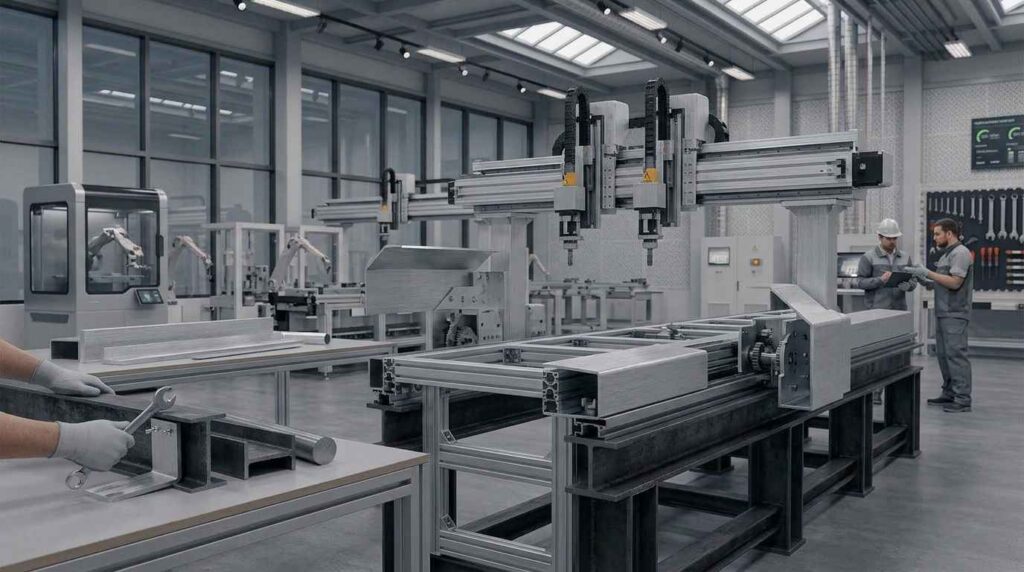
Architectural Facades
Building facades favor aluminum, since large glazed sections need a lightweight frame that will not sag over time. A Curtain Wall system depends entirely on this weight advantage.
Aluminum vs Steel: Compare the Finished Component Cost
Raw material price is only one part of the comparison. Request quotations against the same functional requirements and include:
• Material and expected manufacturing waste.
• Cutting, machining, forming, and joining.
• Required coatings or surface treatments.
• Tooling and order quantity.
• Transport and installation.
• Inspection and anticipated maintenance.
A lighter component is not automatically cheaper, and a lower material price does not guarantee a lower total project cost. Compare both options using the complete design and production requirements.
Transportation and Vehicle Components
Vehicle manufacturers use aluminum to cut weight and improve fuel efficiency. Components such as Automotive Motor Accessories illustrate how far this shift has gone.
Industrial Machinery and Framing
Machine builders often mix both materials, using steel for load-bearing frames and aluminum for Conveyor guarding and lightweight covers.
Marine and Coastal Hardware
Boat fittings and coastal hardware favor aluminum almost by default. Salt air corrodes untreated steel quickly, while aluminum hardware, including a Handle fitting, holds up for years with minimal care.
What to Consider Before Choosing Aluminum Over Steel
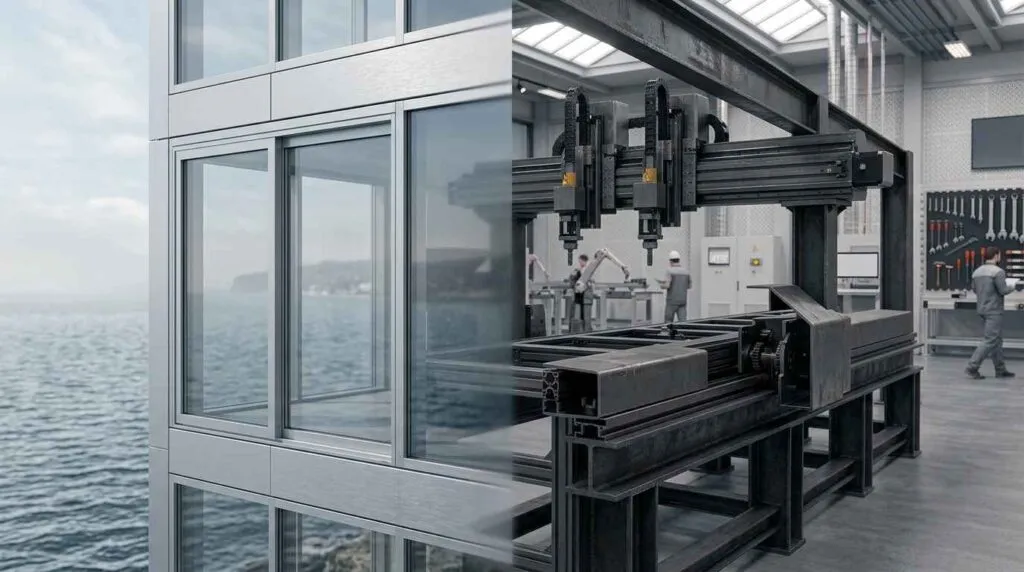
A few practical factors usually settle the decision. Working through them early avoids a costly material swap mid-project.
- Load type: steady structural loads favor steel, while dynamic or weight-sensitive loads favor aluminum.
- Climate exposure: coastal and humid environments favor aluminum’s natural corrosion resistance.
- Fabrication method: steel suits welding and field repair, while aluminum suits extrusion into custom shapes.
- Budget: steel is often cheaper by raw weight, though aluminum can lower shipping and installation costs.
- Maintenance plan: steel usually needs a coating system to prevent rust, while aluminum needs little upkeep.
- Thermal performance: aluminum conducts heat more readily, which matters for equipment such as HVAC housings.
- Lifespan expectations: coastal aluminum structures often outlast painted steel without matching maintenance schedules.
A 6-Point Framework for Choosing Aluminum or Steel
Pulling those threads together, six questions usually settle the material choice before fabrication starts.
| Decision Factor | Leans Aluminum | Leans Steel |
|---|---|---|
| Environmental exposure | Coastal, humid, or corrosion-prone sites | Dry, sheltered, indoor structures |
| Mass and load limits | Weight-sensitive or dynamic loads | Heavy static structural loads |
| Fabrication method | Weld-free modular and custom extrusion | Welded and field-repaired heavy sections |
| Conductivity needs | Thermal or electrical dissipation required | Conductivity not a factor |
| Aesthetics and finishing | Anodizing or powder coating on visible faces | Finish secondary to load capacity |
| Total lifetime budget | Lower shipping and maintenance over time | Lower raw material cost up front |
Aluminum Profiles from Exalum Metal
Exalum Metal extrudes and finishes aluminum profiles for architectural, industrial, and transportation applications where weight and corrosion resistance matter most, from structural framing to smaller pieces such as Showcase display units. Every profile ships to the same tolerance across a full production run.
Custom extrusion is available for project-specific dimensions. Finishing services include mill finish, anodizing, and powder coating. Volume order support extends to manufacturers and contractors ordering profiles on a recurring basis, across multiple project phases.
Considering an Aluminium Profile for Your Project?
Share your component drawing, application, and estimated quantity with Exalum Metal to discuss aluminium extrusion and finishing requirements. Structural suitability should be confirmed by the responsible designer.