
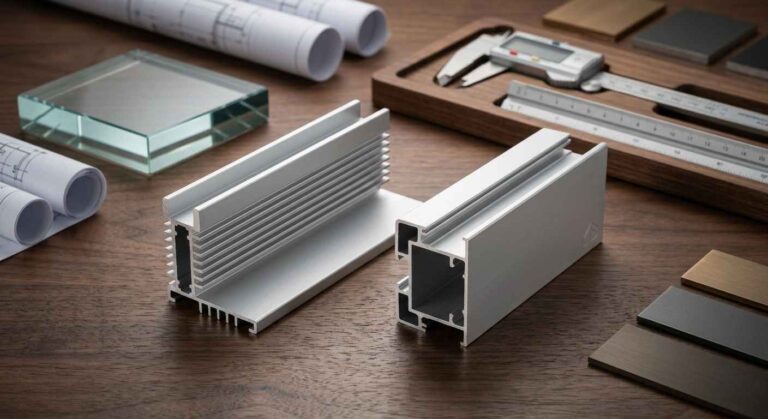
Look at the corner of a warehouse racking bay and you will usually find an aluminium angle at work. The same L-shaped profile edges shop windows, braces machine guards, and trims office walls.
An aluminium angle is two flat legs joined at 90 degrees, either matched in length or unequal. That choice changes how the profile carries load and how much metal you pay for. This guide covers geometry, alloys, applications, finishes, joining, and ordering.
How Leg Geometry Shapes an Aluminium Angle
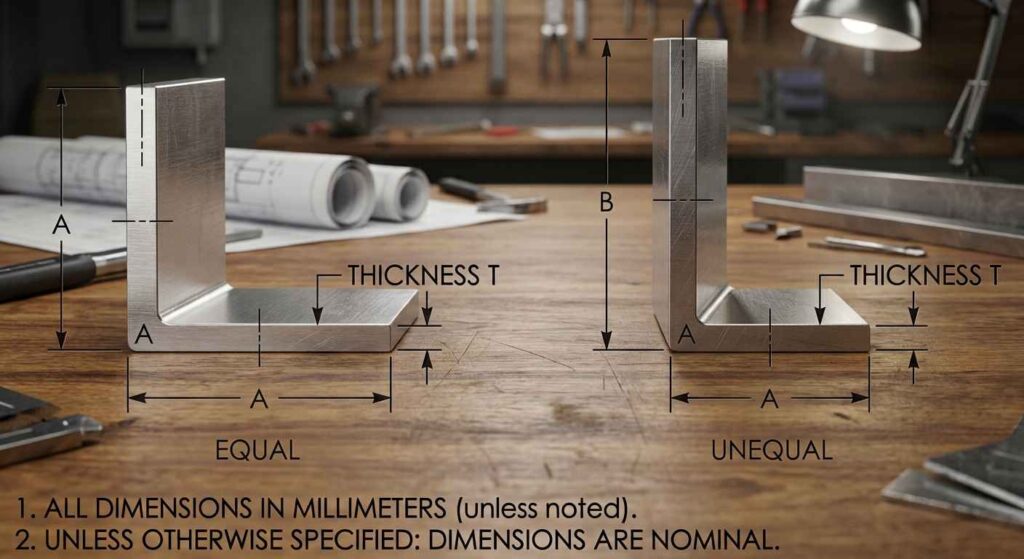
Leg geometry decides where an angle is stiff. Alloy and finish then build on that choice.
Equal Legs
An Equal Angle has matching legs, so it resists bending about equally both ways. That balance suits frames, shelving, and corner guards loaded from several sides. One size also fits many joints.
Unequal Legs
An Unequal Angle pairs a long leg with a short one. The long leg carries the load, while the short leg simply fixes to the frame. Extruding it to size avoids trimming an equal angle on site, which saves metal and labour.
Square or Radiused Corners
A crisp 90° corner suits flush architectural joins. A radiused fillet, a small inside curve, spreads stress in parts that vibrate. Exalum catalogues its standard angles without a set radius, so a defined fillet is a custom die request.
Matching the Alloy to the Long Leg’s Job
The alloy should follow the long leg’s main duty. Structure needs strength, while visible trims need surface quality.
6061-T6
6061-T6 yields at around 240 MPa, the stress where metal starts bending permanently. It suits machinery bases, brackets, and frames tied into Rectangular Hollow sections. Choose it when the angle carries real weight.
6063-T5
6063-T5 yields at around 145 MPa but extrudes to a smoother surface. That makes it the grade for decorative edging and anodised trims. Choose it when appearance matters more than load.
Where Steel Still Wins
Aluminium is about a third as stiff as steel, so it deflects more over the same span. For long, heavily loaded building spans, steel angle is often the more economical choice. Aluminium wins where weight or corrosion matters.
Where Aluminium Angles Carry the Work
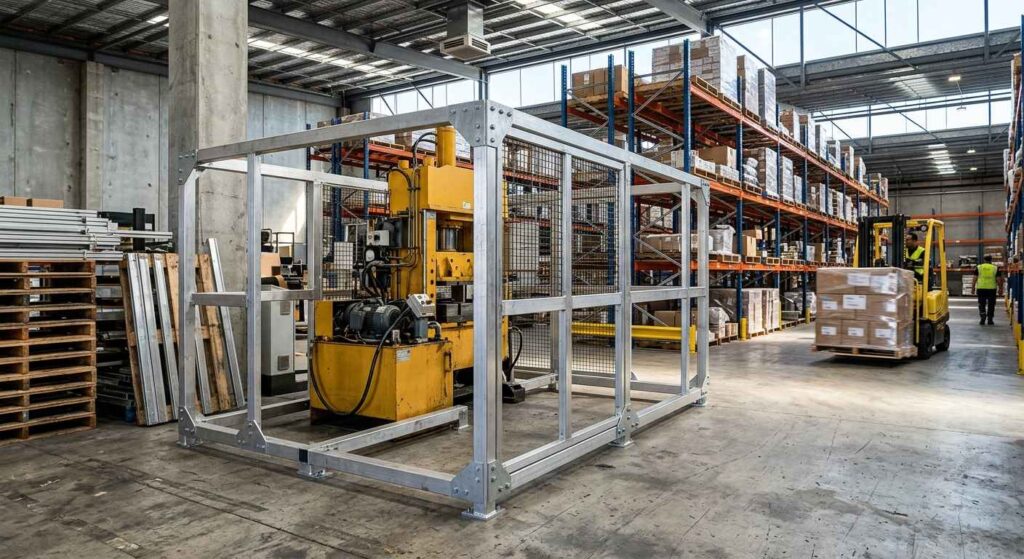
Aluminium angle appears wherever two surfaces meet or a load needs bracing. Four settings account for most orders.
Racking and Machine Frames
Angles brace racking, machine guards, and work platforms built around Square Hollow uprights. Bolted joins let owners extend or rearrange these frames later.
Vehicle and Marine Frames
6061-T6 angle appears in truck body frames and Automotive sub-frames, where lighter weight lifts payload. On boats and docks, it frames decks and fittings above the waterline. Corrosion resistance keeps upkeep low.
Edging and Wall Corners
Anodised 6063-T5 angle guards wall corners and finishes panel edges in Partition systems. It also frames glass wherever a clean line matters. Small sections do this well at low cost.
Brackets and Lintels
Unequal angles make natural brackets and light lintels, with the long leg taking the load. Around doors, they pair neatly with Door Jamb profiles. The short leg keeps the bracket slim.
Finishing Angle for Coastal Sites and Visible Trims
The finish sets how an angle copes with moisture and how it looks. Three options cover most projects.
- Anodising: thickens the natural oxide layer, so the protection is part of the metal. It suits humid or coastal sites.
- Powder coating: bakes on a coloured polymer layer for custom colours. It helps when trims must match Spandrel cladding.
- Mill finish: leaves the raw extruded surface with no treatment. It keeps costs down on hidden frames.
Joining and Fabricating Aluminium Angles
How you join an angle matters as much as its size. Bolting and riveting keep full strength and make joints easy to inspect.
MIG or TIG welding softens the metal beside the bead, and that heat-affected zone loses much of its T6 strength. Keep welds away from peak stress, and use Flat Bars as gusset plates for bolted joints.
Exalum Angle Sections by Size and Weight
Sizes read as leg A by leg B by thickness T, with weight per metre. These sections show how size drives weight.
| Section | Profile | A × B × T (mm) | Weight (kg/m) |
| 20025 | Equal | 12.70 × 12.70 × 0.80 | 0.053 |
| 20047 | Equal | 19.00 × 19.00 × 1.00 | 0.100 |
| 20048 | Equal | 19.05 × 19.05 × 2.00 | 0.196 |
| 21014 | Unequal | 20.00 × 30.00 × 2.50 | 0.322 |
| 21060 | Unequal | 15.00 × 80.00 × 5.00 | 1.220 |
Figures match Exalum’s equal and unequal angle pages, which list further sections.
What an Angle Order Needs to State
A complete order tells the extruder exactly what to make. Confirm these points before requesting a quote.
- Leg sizes: state legs A and B, and which leg takes the load. This matters most on unequal angles.
- Wall thickness: thicker legs resist deflection and impact. Thinner legs save weight on light duty.
- Alloy and temper: choose 6061-T6 for structure or 6063-T5 for visible trims. Mixed orders are common.
- Finish and exposure: pick mill, anodised, or powder coated. Match it to indoor or coastal use.
- Length and volume: give 6 m or cut lengths with tolerance. Add the total quantity for planning.
Ordering Angle That Arrives Ready to Fix
Exalum Metal extrudes equal and unequal aluminium angles in 6061 and 6063 at our factory in Indonesia. We also supply the hollow sections and flat bars that often share the same frame.
When a design needs a leg ratio outside the catalogue, we extrude it from our die library or a new custom die. Angles ship in 6-metre lengths or cut to size, faced, deburred, and CNC-drilled on request. Every profile comes in mill finish, anodised, or powder coated, and volume orders run to a planned schedule.
Send drawings, section numbers, or an estimated tonnage, and our team will confirm alloy, finish, and lead time. A simple cutting list is enough to begin.
Get in touch with our team directly through our contact inquiry or click the “Contact Us” button below.