
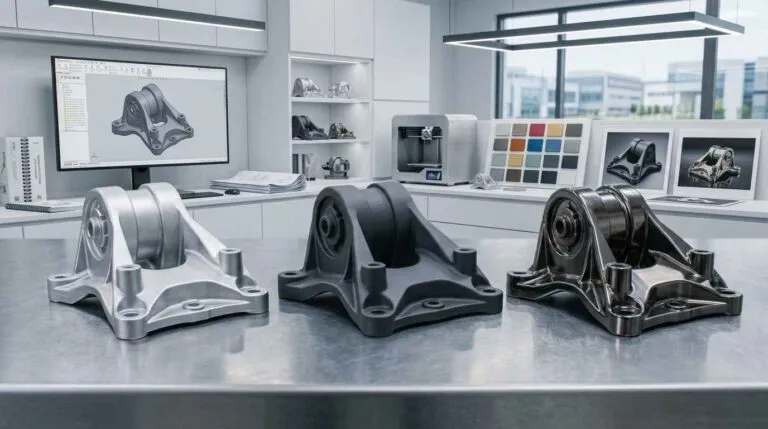
A homeowner runs a hand along an anodized window frame and a powder-coated door handle on the same house, both aluminum, both finished, but neither one looks or feels quite the same. The texture alone gives away which process was used.
That difference comes down to how each finish is applied and what it is made of. Aluminum on its own is durable, but a surface finish adds color, protects against wear, and improves corrosion resistance in demanding environments. PVD coating, anodizing, and powder coating are the three most common ways to finish aluminum, and each one suits a different type of project.
Choosing between them is rarely about which is objectively best, and more about which fits the specific job. Getting the choice wrong usually shows up years later, once the finish starts to fade or wear unevenly. This article compares all three and covers when each finish makes the most sense.
Why Does Aluminum Need a Surface Finish?
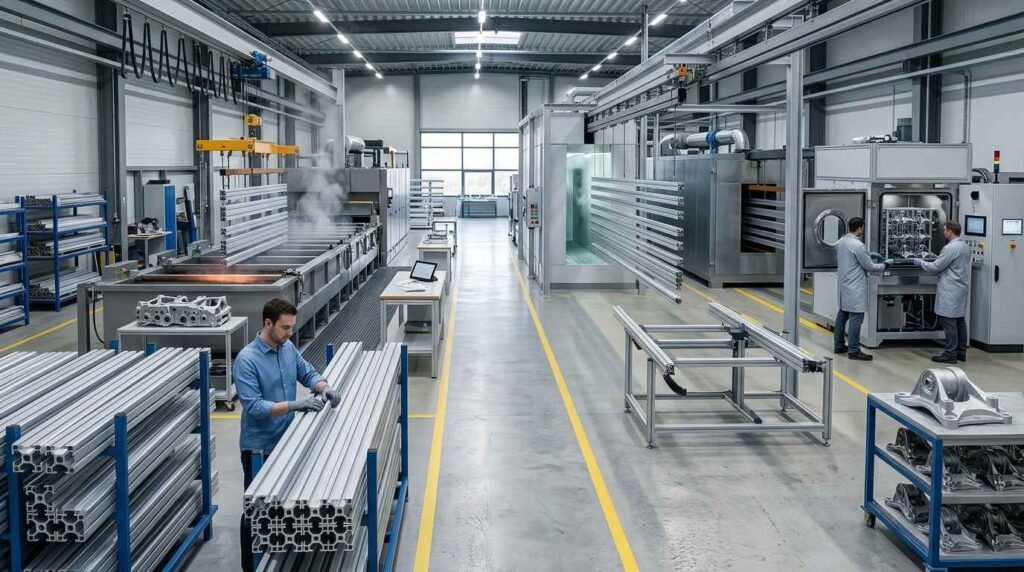
Aluminum already resists corrosion on its own, thanks to a thin natural oxide layer. A finish builds on that foundation, adding color, improving scratch resistance, or extending service life in harsh conditions well beyond what raw aluminum offers alone.
- PVD coating: a thin, hard metallic layer applied in a vacuum chamber, known for a durable, reflective finish.
- Anodizing: an electrochemical process that thickens aluminum’s natural oxide layer into a tough, integrated surface.
- Powder coating: a dry plastic-based coating melted onto the surface, offering the widest color range of the three.
Each process changes the surface in a different way, which is why they suit different jobs rather than competing head to head on every project.
PVDF Coating, the Fourth Finish to Know
One finish sits outside the main three yet sets the benchmark for high-end architecture, so it is worth adding to the comparison.
PVDF (polyvinylidene fluoride) is a liquid fluoropolymer coating, sold under names such as Kynar 500 and Hylar 5000, and it is widely treated as the reference standard for curtain walls and monumental facades. Its performance comes from the carbon-fluorine (C-F) bond, one of the strongest in organic chemistry, which leaves the film largely unaffected by severe UV, acid rain, and salt spray for 30 years or more. That longevity is why specifiers reach for PVDF on landmark buildings, though it sits above anodizing and powder coating on cost.
Strengths and Limitations of Anodizing
What Anodizing Does Well
Anodizing becomes part of the aluminum itself rather than sitting on top of it. This makes it extremely resistant to peeling or chipping over the life of the product. For architectural aluminum such as Sliding Windows framing, that durability is a major advantage.
Anodizing also holds up well under constant sun exposure. It does not fade the way some pigmented coatings can over years of direct sunlight.
Where Anodizing Has Limitations
Anodizing offers a narrower color range than powder coating. The color comes from dye absorbed into the oxide layer rather than a pigmented coating applied on top. Matching an exact custom brand color is harder with anodizing than with powder coating.
For projects that need a specific brand color or a metallic, jewelry-like finish, powder coating or PVD coating often serves the project better than anodizing can.
PVD vs Anodizing vs Powder Coating
Each of these three finishes serves a different priority, from color range to surface hardness, whether the part is a small fitting or a large Spandrel panel.
| Finish | Best For | Less Suitable For |
| PVD coating | Small decorative hardware, ultra-hard reflective finishes | Large architectural surfaces, tight budgets |
| Anodizing | Architectural frames, high durability with moderate color range | Exact custom color matching |
| Powder coating | Wide color range, cost-effective large surfaces | Extreme abrasion resistance |
Most architectural aluminum projects use anodizing or powder coating. PVD stays reserved for smaller decorative work where its cost is easier to justify.
Technical Comparison of Aluminum Finishes
Qualitative labels only go so far, so the matrix below lines up the four finishes on the metrics that decide a specification.
| Performance Parameter | Architectural Anodizing | Powder Coating | PVDF Liquid Coating | PVD Coating |
|---|---|---|---|---|
| Finish type | Integrated aluminum oxide (Al₂O₃) layer | Thermoset polymer film | Fluoropolymer resin film | Thin vacuum metallic layer |
| Typical film thickness | 15 to 25 µm | 60 to 80 µm | 35 to 45 µm | 0.2 to 5 µm |
| Surface hardness | Very hard, near 9 Mohs, approaching sapphire | ~2H to 3H pencil | ~2H to 3H pencil | Very high, hard metallic |
| UV resistance | Excellent | Good, best in super-durable grades | Exceptional, 30+ years | Excellent |
| Salt spray life (ASTM B117) | ~1,000 to 3,000 hrs | ~1,000 to 2,000 hrs | ~3,000 to 5,000+ hrs | ~1,000 to 2,000 hrs |
| Color range | Metallic and natural-metal shades | Very wide, RAL and textures | Solid, metallic, pearlescent | Mirror and jewelry shades |
| Peeling risk | None, the layer is integrated | Rare when pre-treated |
pecifying Finishes by the Numbers
Vague durability claims are hard to act on, so it helps to tie each finish to the grades and tiers used in real specifications.
Anodizing Thickness Grades
| Grade (AAMA 611 / IS 1868) | Coating Thickness | Typical Environment |
|---|---|---|
| AA10 | 10 to 14 µm | Interior partitions and indoor furniture |
| AA15 | 15 to 19 µm | Low-rise architectural windows and shopfronts |
| AA25 | 25 µm and above | Coastal high-rises, industrial zones, and marine exposure |
Note: thicker coatings cost more but last longer in harsher exposure, so match the grade to the site rather than defaulting to the thinnest option.
Powder Coating Durability Tiers
| Grade (Qualicoat) | Resin System | Best Suited To |
|---|---|---|
| Class 1 | Standard polyester | General interior and residential surfaces |
| Class 2 | Super-durable polyester with advanced isophthalic resins | Exterior surfaces under direct UV, resisting chalking |
Note: super-durable grades hold color and gloss longer outdoors, which matters on facades and public fixtures.
Where Each Finish Gets Used
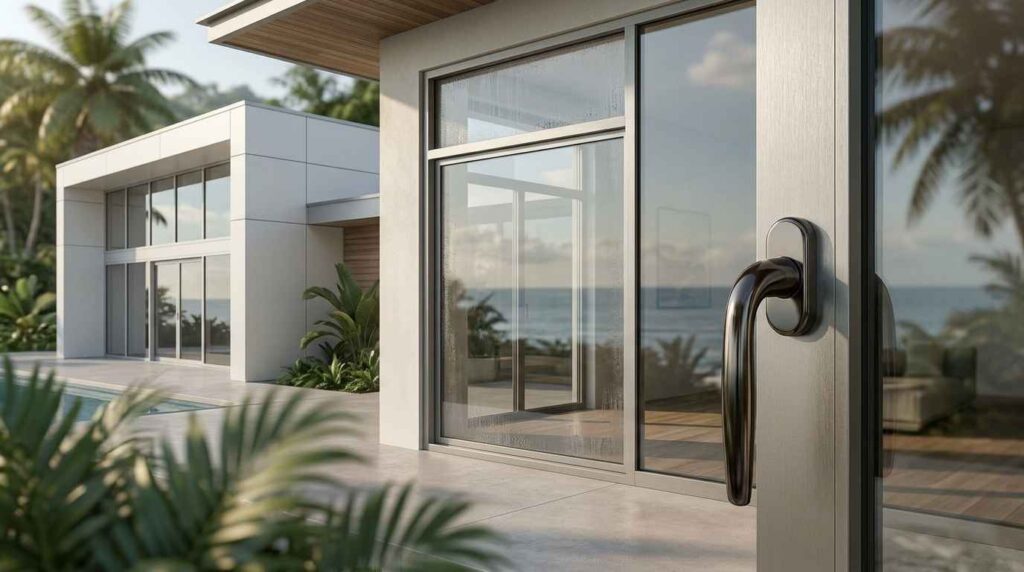
Architectural Window and Door Frames
Anodized frames dominate this category, since the finish resists years of sun and weather. A Casement Windows frame commonly ships anodized for exactly this reason.
Decorative Hardware and Fixtures
PVD coating shows up on small decorative pieces where a premium metallic look matters, including hardware such as a Handle fitting.
Curtain Wall and Facade Panels
Large facade systems often use powder coating for its wide color range and lower cost across big surfaces, including Curtain Wall panels matched to a building’s design.
Outdoor Furniture and Fixtures
Powder-coated aluminum furniture holds color well outdoors while resisting the scratches and dents of daily use. This is common in Furniture designed for patios and public spaces.
How Climate Influences Finish Selection
In coastal and tropical climates, constant humidity and salt air put extra stress on any finish. Anodizing and high-grade powder coating both perform well here. Both resist the corrosion that untreated or poorly coated aluminum eventually suffers under those conditions.
In temperate climates with less extreme exposure, the choice comes down more to appearance and budget than to raw durability. All three finishes hold up reasonably well under milder conditions over a normal service life.
What to Consider Before Choosing a Finish
A few practical factors help narrow down the right finish for a project. Weighing them together usually points clearly toward one option.
- Color needs: powder coating offers the widest range, anodizing a narrower natural-metal range.
- Durability requirements: anodizing and PVD generally outlast powder coating under heavy abrasion.
- Budget: powder coating is usually the most cost-effective option for large surfaces.
- Climate exposure: coastal projects benefit from anodizing’s integrated corrosion resistance.
- Part size: PVD coating works best on smaller components rather than large panels.
- Consistency needs: projects with many matching pieces, such as a Showcase display line, need finish consistency across the full run.
Finishing Services from Exalum Metal
Exalum Metal provides anodizing and powder coating in-house for aluminum profiles, including decorative applications such as Decorative Tubing Pipes. Both finishes are applied and verified under the same roof.
Custom extrusion is available for project-specific dimensions, paired with the finish that suits your application. Volume order support extends to manufacturers and contractors ordering finished profiles at production scale.
If your project needs a specific finish or color match, bring us your drawings or an estimated volume. Get in touch with our team directly through our contact inquiry or click the “Contact Us” button below.