
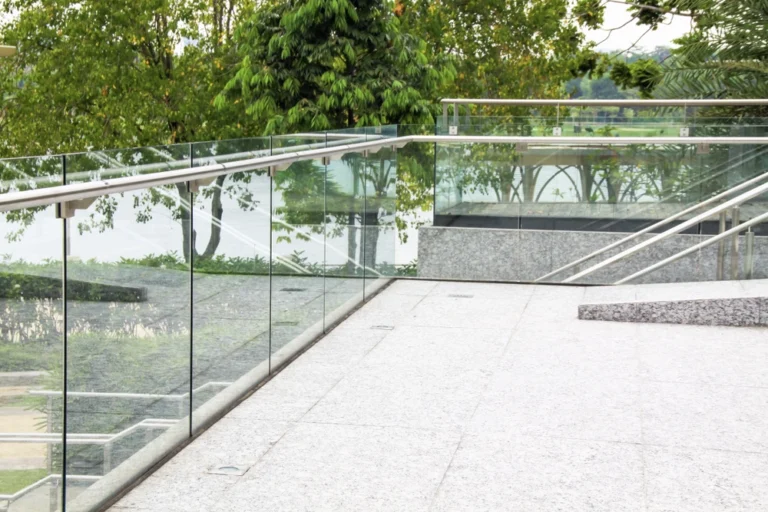
A balustrade is the barrier that guards the edge of a stair, a balcony, a deck, or a landing, and it works at the intersection of safety and design. It has to be strong enough to stop a person from falling, which is a genuine structural and life-safety requirement governed by building codes, and it has to look right, since a balustrade is one of the most visible architectural features of a stair or a terrace. Aluminium has become a leading material for balustrades because it delivers the required strength with slim, clean lines, resists weather without rusting, and holds its finish for decades. We produce the aluminium profiles that balustrades are built from, and the points below cover the designs, the safety basics, and why aluminium suits the job.
What a Balustrade Does
A balustrade is a protective barrier along the open edge of a raised surface, made up of a handrail along the top, the infill that fills the space below it, and the posts that carry the whole assembly and anchor it to the structure. Its primary purpose is safety, preventing people from falling from a stair, balcony, landing, or elevated walkway, which is why building codes set firm requirements for how strong a balustrade must be, how high it must stand, and how small the gaps in its infill can be.
Beyond safety, the balustrade defines the look of the stair or terrace it guards. It is a prominent feature, seen and touched constantly, and its design contributes heavily to the character of the space, whether that is the clean minimalism of glass and slim posts or the traditional rhythm of vertical balusters. A balustrade therefore has to satisfy the code-driven safety requirements and the design intent at the same time, and the material it is built from shapes how well it does both.
Why Aluminium Suits Balustrades So Well
Aluminium answers the dual demand of a balustrade especially well. Its strength lets the posts and rails carry the loads that codes require, the horizontal force a barrier must resist without failing, while staying slim, which means the balustrade can meet its structural duty without heavy, bulky members blocking the view. A slim, strong balustrade that satisfies the safety code while keeping clean sightlines is exactly what modern design wants, and aluminium’s strength-to-weight ratio makes it achievable.
The corrosion resistance matters because balustrades are so often outdoors, on balconies, decks, terraces, and external stairs, exposed to rain and, in coastal areas, salt air. Aluminium’s natural oxide layer resists rust without the maintenance that steel demands, so the balustrade stays sound and looks good for decades. The finish quality of anodised and powder-coated aluminium gives the balustrade a durable, colour-stable surface in any architectural tone, and the surface is pleasant to the touch on a handrail people use constantly. And aluminium’s light weight eases handling and installation. For a barrier that has to be strong, slim, weatherproof, and attractive, aluminium is a natural fit.
Aluminium Balustrade Designs
Aluminium balustrades come in designs that suit different settings and tastes. A vertical baluster design uses regularly spaced vertical bars as the infill, the classic look, with the bar spacing set to meet the code limit on gap size for safety. A glass infill design uses panels of toughened glass held by aluminium posts and rails, giving an almost uninterrupted view that suits balconies and terraces where the outlook is the point.
A horizontal rail design uses horizontal rails as the infill for a clean, contemporary look, detailed carefully to meet safety requirements. A perforated or mesh infill uses aluminium panels for a different texture and a degree of screening. And a combination design mixes elements, such as a glass panel with an aluminium top handrail, to balance view, safety, and style. Each design draws on aluminium posts, handrails, and infill components, configured for the location and the look, and all of them have to meet the same underlying safety requirements regardless of their appearance.
The Safety Basics That Every Balustrade Must Meet
A balustrade is a life-safety component, and its design is governed by requirements that exist to prevent falls. The height has to meet the minimum set by code for the application, which is higher for balconies and elevated areas than for some interior stairs. The strength has to be sufficient to resist the horizontal load a code assumes a crowd or an impact could apply, without the balustrade deflecting excessively or failing, which is the requirement that most directly drives the structural design of the posts and their anchorage.
The infill gaps have to be small enough that they cannot be passed through, a requirement aimed particularly at child safety, which sets the maximum spacing for balusters or the design of panel infill. And the whole assembly has to be anchored securely to the structure, because a balustrade is only as strong as its fixings, and the connection to the floor or stair carries the loads into the building. These requirements are not optional, and meeting them depends on posts, rails, and fixings strong enough for the loads, which is where the strength of the aluminium profiles and the quality of their manufacture become a safety matter.
How Aluminium Balustrades Connect to Our Products
Balustrades are built from the railing, post, and structural profiles we produce, with the strength, corrosion resistance, and finish quality that a visible, weather-exposed, safety-critical feature demands. Our vertically integrated facility in Indonesia spans 20,000 square metres and manages alloy, extrusion, and finishing as one chain, delivering the strength, consistency, and finish that balustrade work requires.
The profile range covers the components a balustrade is built from:
- Tubing Pipes and Decorative Tubing Pipes for handrails, posts, and the vertical balusters of the infill
- Square Hollow and Rectangular Hollow for posts and structural members carrying the balustrade loads
- Equal Angle and Unequal Angle for brackets, base fixings, and the connections that anchor the balustrade
- Unequal Channel for glass-retention channels in glass-infill balustrades and for top and bottom rails
- Flat Bars for base plates, infill rails, and connection hardware
- Handle profiles for handrail elements and grip components
For balustrade systems that need a specific handrail profile, post section, or glass-retention channel, custom extrusion produces the exact geometry the design calls for, finished in-house with anodising or powder coating that survives the exposure balustrades face.
Designing a Balustrade That Protects and Impresses
A well-designed aluminium balustrade does two jobs at once, guarding the edge to the standard that safety codes demand and finishing the stair or terrace with clean, lasting style. Aluminium is what lets it do both, carrying the required loads with slim members, resisting the weather, and holding its finish for decades. The key is a design that meets the height, strength, and gap requirements, posts and fixings strong enough for the loads, and a manufacturer whose extrusion delivers the strength and finish the application needs.
We have supplied railing, structural, and architectural aluminium extrusion to fabricators and builders since 2009, with the strength, consistency, and finishing quality that safety-critical, visible work demands.
Whether you need standard profiles or custom cross-sections designed for your specific balustrade system, we have the capacity and expertise to deliver.
Ready to discuss your project or request material specifications? Get in touch with our team directly:
Email: [email protected] WhatsApp: +62 811 9429 970 Website: www.exalummetal.com
When the barrier has to protect and impress, start with extrusion you can trust. Make Exalum Metal your standard.