
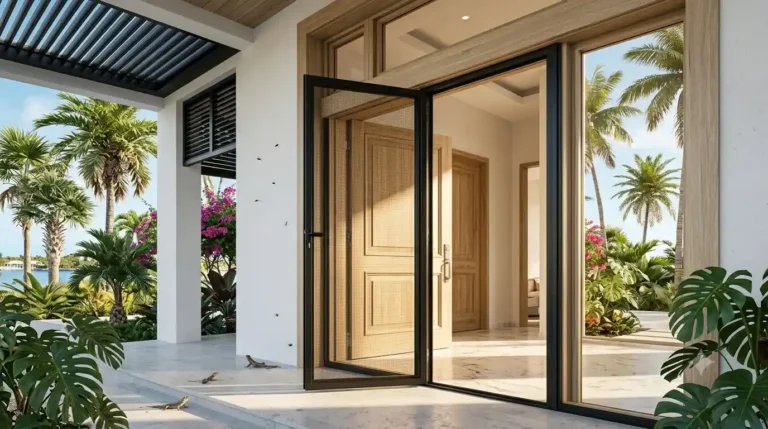
In warm climates like Florida and the Carolinas, opening the front or patio door allows fresh air to circulate throughout the home. Unfortunately, it can also invite mosquitoes, flies, and other insects inside.
That’s why screen doors have become a standard feature in many residential properties across the southeastern United States. They allow homeowners to enjoy natural ventilation while keeping unwanted pests outside. Beyond insect protection, modern screen doors also improve comfort, reduce reliance on air conditioning during mild weather, and complement a home’s overall design.
Whether you’re building a new home or upgrading an existing entryway, understanding the components of a screen door can help you choose the right solution for your needs.
Why Do Homes Need Screen Doors?
A screen door serves as a protective barrier installed in front of or behind a primary exterior door. Instead of blocking airflow, it uses a durable mesh that allows fresh air to pass through while preventing insects and airborne debris from entering.
For homeowners in humid, subtropical regions, screen doors provide several practical benefits.
Better Natural Ventilation
Opening a screen door alongside Casement Windows or Sliding Windows allows fresh outdoor air to circulate throughout the home while maintaining effective cross ventilation.
Protection Against Insects
Mosquitoes, flies, gnats, and other insects are common throughout Florida and the Carolinas. A properly installed screen door helps prevent these pests from entering the home while allowing residents to keep doors open.
Improved Indoor Comfort
Natural ventilation can reduce stuffiness and improve overall indoor comfort. Many homeowners enjoy opening their doors during cooler mornings and evenings without worrying about insects.
Additional Safety for Pets and Children
Screen doors create an additional barrier that helps prevent pets or young children from accidentally running outside when the main door is open.
What Are Screen Doors Made Of?
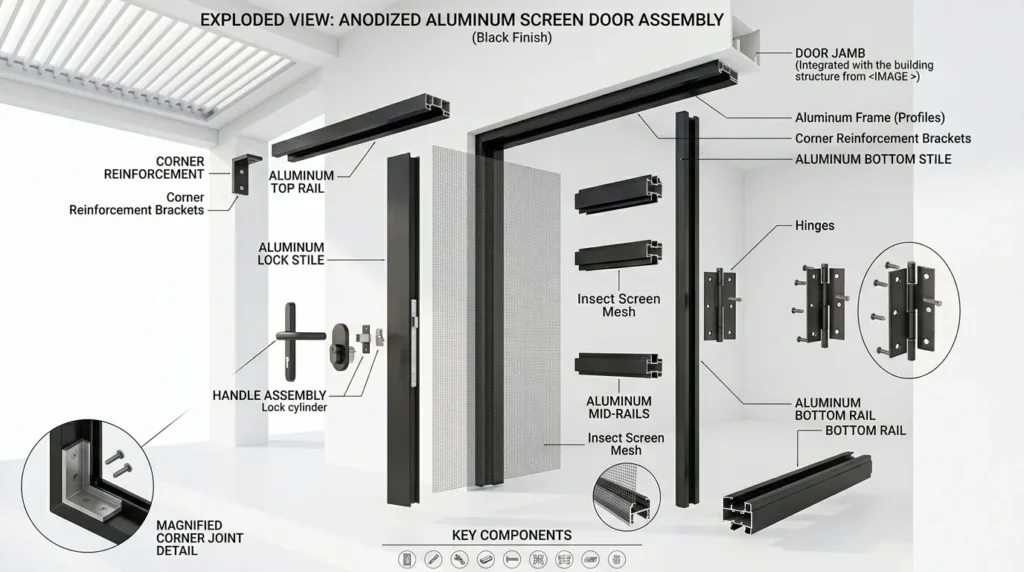
A screen door combines several components that work together to provide durability, visibility, and smooth operation.
Aluminum Frame
Most modern screen doors use aluminum frames that are installed within durable Door Jamb ystems, providing structural stability and long-term performance. Powder-coated or anodized aluminum also offers excellent resistance to corrosion, making it well suited for humid coastal environments.
Powder-coated or anodized aluminum frames provide additional protection while allowing homeowners to choose finishes that complement the exterior design of the house.
Screen Mesh
The mesh is the most recognizable part of a screen door. Different mesh materials offer different levels of durability and performance.
Common options include:
- Fiberglass mesh for everyday residential use
- Aluminum mesh for improved durability
- Stainless steel mesh for enhanced strength
- Pet-resistant mesh for households with dogs or cats
- Solar screen mesh to reduce heat and glare
- Fine insect mesh designed to keep out smaller insects such as no-see-ums, which are common in many coastal areas
Choosing the right mesh depends on the local climate, household needs, and desired level of visibility and airflow.
Popular Screen Door Styles
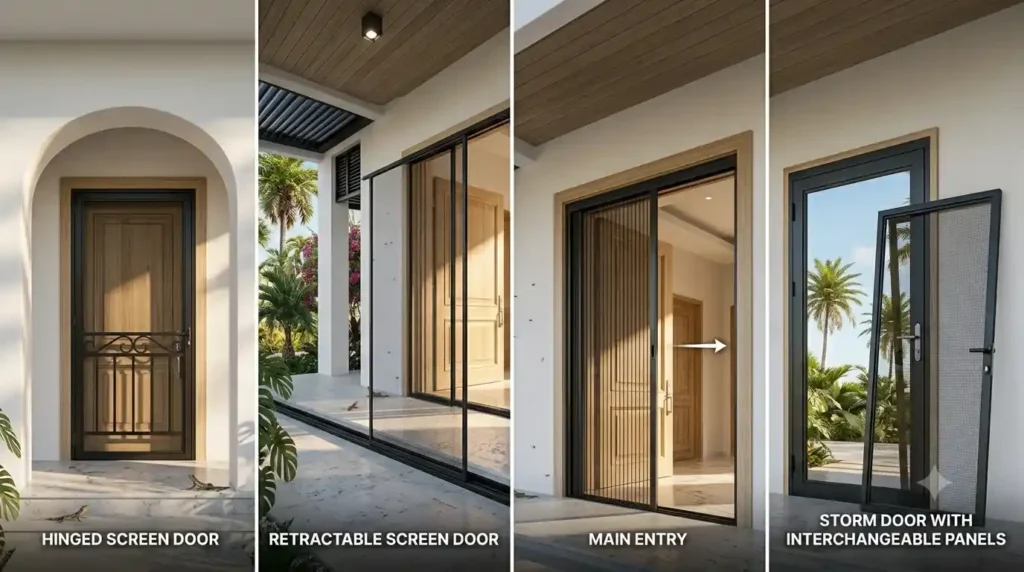
Screen doors are available in several configurations to match different home layouts.
Common styles include:
- Hinged screen doors
- Sliding screen doors
- Retractable screen doors
- Storm doors with interchangeable glass and screen panels
Sliding Doors are particularly popular for patios and backyard access because they can be paired with sliding screen doors that allow ventilation without compromising insect protection.
Optional Features to Consider
High-quality Handle systems improve usability while ensuring the screen door opens and closes smoothly during everyday use.
Self-Closing Hinges
Self-closing hinges automatically pull the door shut after opening, helping prevent insects from entering when someone forgets to close the door.
Magnetic or Secure Latching Systems
Improved latching mechanisms help keep the screen door securely closed, even during strong winds.
Reinforced Corners
Additional reinforcement increases structural stability and helps the frame withstand years of daily use.
Pet Doors
Some screen doors include integrated pet access panels that allow cats and dogs to move freely between indoor and outdoor spaces.
Heavy-Duty Rollers
For sliding screen doors, high-quality rollers ensure smoother operation while reducing wear over time.
Why Aluminum Is the Preferred Frame Material
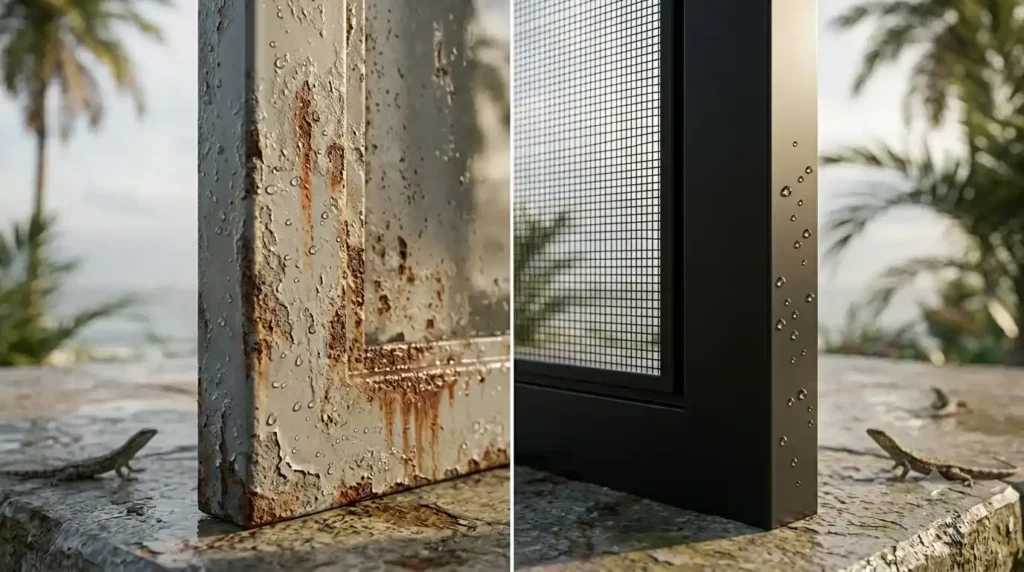
Because screen doors are exposed to sun, humidity, rain, and frequent operation, the frame material plays a significant role in long-term performance.
Aluminum offers several advantages:
- Lightweight yet structurally strong
- Naturally resistant to corrosion
- Low maintenance
- Suitable for powder coating and anodizing
- Available in a wide variety of architectural finishes
- Long service life in coastal environments
These qualities make aluminum one of the most widely used materials for residential screen door frames.
Choosing the Right Screen Door
The ideal screen door depends on your home’s location, daily usage, and environmental conditions. Homeowners in coastal regions often benefit from corrosion-resistant aluminum frames paired with durable mesh designed for humid climates and frequent use.
At Exalum Metal, we manufacture high-quality aluminum extrusion and finishing solutions used in a wide range of architectural applications, including Doors and window systems. With durable aluminum profiles and professional finishing options, we help manufacturers and builders create screen door systems that combine long-lasting performance with modern design.
Contact Exalum Metal to learn more about our aluminum solutions for residential and commercial door applications.
Email: [email protected] WhatsApp: +62 811 9429 970 Website: www.exalummetal.com