
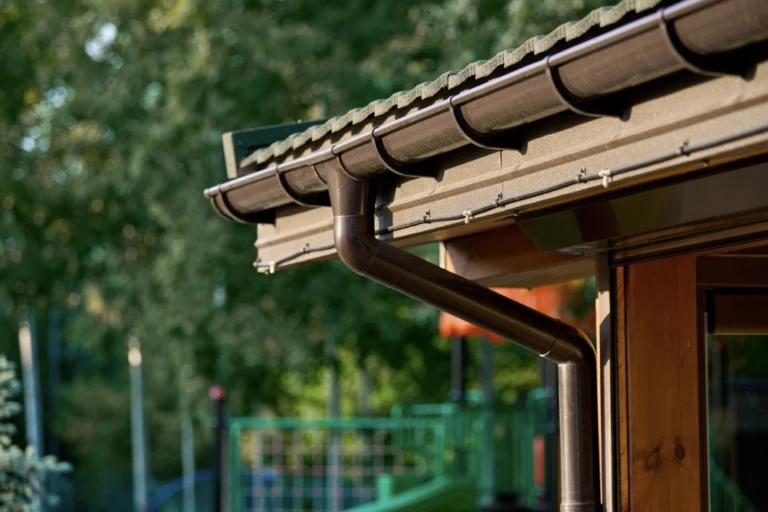
A fascia gutter solves two jobs with one component. Instead of mounting a separate gutter onto a fascia board, the fascia gutter integrates the gutter and the fascia into a single profile that runs along the roofline, hiding the rafter ends, supporting the roof edge, and carrying rainwater away all at once. The result is a clean, continuous line along the eave with no separate gutter bolted on in front, and in aluminum it delivers that look while resisting the rust and rot that defeat other materials. We produce the aluminum profiles that fascia and gutter systems are built from, and the points below cover how fascia gutters work, the styles available, and why they matter for a building.
What a Fascia Gutter Is
To understand a fascia gutter, it helps to separate the two roles it combines. The fascia is the board that runs horizontally along the edge of the roof, covering the ends of the rafters and giving the roofline a finished edge. The gutter is the channel that catches rainwater running off the roof and directs it to downspouts. In conventional construction these are separate, with a gutter hung in front of a fascia board.
A fascia gutter merges them. It is a single profile, typically deeper than an ordinary fascia, with the front face serving as the visible fascia and the back forming a built-in gutter channel that collects the roof runoff. This integration gives a cleaner appearance, since there is no separate gutter projecting from the face of the building, and it simplifies the eave detail into one continuous element. The roof edge sits into or onto the fascia gutter, feeding water directly into the channel.
Why This Matters for a Building
The roofline edge is where a building manages one of its biggest threats, which is water. Rain running off a roof has to be caught and carried away from the structure, because water that spills over the eave or pools at the foundation causes rot, erosion, staining, and structural damage over time. The gutter is the building’s defense against that, and integrating it into the fascia makes the defense both cleaner-looking and structurally tidier.
A fascia gutter also protects the rafter ends and the roof edge, covering and sealing the most exposed part of the roof structure against weather. And it sets the visual line of the roofline, which is one of the most prominent features of a building’s exterior. A clean, straight, well-finished fascia gutter reads as quality, while a sagging, stained, or rust-streaked one drags down the whole appearance. Because the fascia gutter does structural, protective, and visual work simultaneously, the material it is made from carries real weight in the decision.
Why Aluminum Is the Standard for Fascia Gutters
Gutters and fascia have been made from wood, steel, and aluminum, and aluminum has become the dominant material for good reasons rooted in the application. The corrosion resistance is the most important. A gutter is wet for much of its life, holding and channeling water, and that constant moisture rusts steel and rots wood. Aluminum’s natural oxide layer resists corrosion through endless wetting and drying, so an aluminum fascia gutter keeps doing its job for decades without rusting or rotting.
The light weight matters for a component that runs the full length of the roofline and has to be supported along its span. Aluminum is light enough to handle and install in long runs while staying rigid enough to hold its line. The formability lets aluminum be extruded into the integrated fascia-and-gutter profile with the precise channel, return, and mounting details that the system needs. And the finish quality of anodized and powder-coated aluminum gives the visible fascia face a color-stable, durable surface that holds its appearance against constant sun and weather. For a component that is wet, exposed, and prominently visible, aluminum answers every demand.
The Styles and Profiles of Fascia Gutters
Fascia gutters come in profiles that suit different roof types and architectural styles. The depth of the fascia portion varies to match the rafter size and the look the design wants, with deeper profiles giving a more substantial roofline edge. The gutter channel shape varies too, with the capacity of the channel matched to the roof area it drains and the rainfall it has to handle, since a larger roof in a high-rainfall area needs a deeper channel to carry the volume.
The front face can be styled to suit the building, from a plain flat fascia to profiled and detailed faces for more traditional architecture. The system also includes the related profiles that complete the eave, the soffit that closes the underside, the trim that finishes the joints and corners, and the brackets that support the run. Choosing the right fascia gutter is a matter of matching the channel capacity to the drainage demand, the depth and face to the architectural style, and the whole system to the roof it serves.
How Fascia Gutters Connect to Our Products
Fascia gutters and the eave systems around them are built from exactly the kind of formed and extruded aluminum profiles we produce, with the corrosion resistance, dimensional consistency, and finish quality that a wet, exposed, visible component demands. Our vertically integrated facility in Indonesia spans 20,000 square metres and manages alloy, extrusion, and finishing as one chain, delivering the consistency and durability that exterior building products require.
The profile range covers the components a fascia and gutter system is built from:
- Unequal Channel and formed profiles for the gutter channels and fascia sections
- Equal Angle and Unequal Angle for brackets, supports, and the connections that hold the run
- Flat Bars for trim, fascia faces, and joint plates
- Louvers and Diffusers profiles for the ventilated soffit elements that complete the eave
- Square Hollow and Rectangular Hollow for structural support behind the roofline
- Tubing Pipes for downspouts and water management hardware
For fascia and gutter systems that need a specific profile depth, channel capacity, or face detail, custom extrusion produces the exact geometry the design requires, finished in-house with anodizing or powder coating that survives the constant exposure these components face.
Choosing a Fascia Gutter That Performs
A well-chosen fascia gutter manages the roof’s water, protects its edge, and finishes its line, all in one clean profile that lasts for decades. The decisions that matter are matching the channel capacity to the roof area and rainfall, choosing a profile depth and face that suit the architecture, and sourcing aluminum that resists the constant wetting and holds its finish in the sun. Get those right, and the roofline does its job invisibly while looking the part year after year.
We have supplied architectural and structural aluminum extrusion to fabricators, builders, and contractors since 2009, with the corrosion resistance and finishing quality that exterior building products demand.
Whether you need standard profiles or custom cross-sections designed for your specific eave system, we have the capacity and expertise to deliver.
Ready to discuss your project or request material specifications? Get in touch with our team directly:
Email: [email protected] WhatsApp: +62 811 9429 970 Website: www.exalummetal.com
When the roofline has to manage water and hold its line, start with extrusion you can trust. Make Exalum Metal your standard.