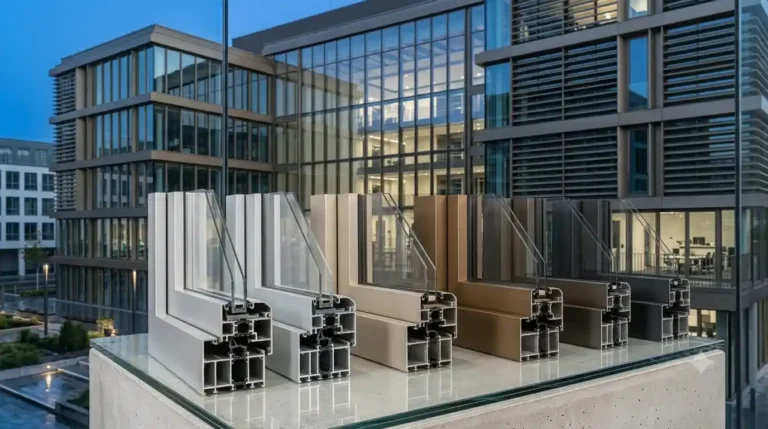
Not all anodized aluminum offers the same level of protection. One of the most important factors affecting its durability is the thickness of the anodized layer, commonly measured in microns (μm).
The appropriate anodizing thickness depends on where the aluminum will be used and the level of environmental exposure it will face. While indoor applications may only require a thinner protective layer, exterior architectural projects often demand greater thickness to ensure long-term corrosion resistance and appearance.
Understanding anodized micron ratings can help architects, contractors, fabricators, and project owners select the right specification for their projects.
What Does “Anodized Micron” Mean?
A micron, or micrometer (μm), is a unit of measurement equal to one-millionth of a meter. In anodizing, it refers to the thickness of the protective oxide layer that forms on the aluminum surface during the anodizing process.
Unlike paint or other surface coatings, this oxide layer becomes part of the aluminum itself. As the anodized layer becomes thicker, it generally provides greater protection against corrosion, abrasion, and weather exposure.
However, a thicker anodized layer is not always necessary. The ideal thickness depends on the environment, expected service life, and application.
The Rule of Thumb: Thicker Anodizing Means Better Corrosion Resistance
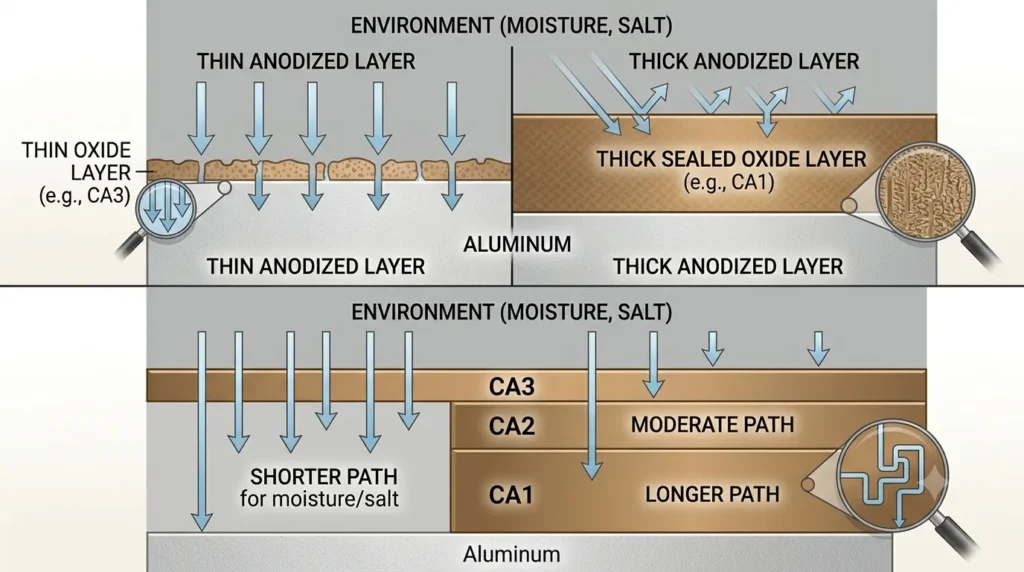
One of the most widely accepted principles in anodizing is simple: the thicker the anodic coating, the longer it takes for corrosive elements to penetrate to the base aluminum.
The anodized layer acts as a protective barrier between the aluminum and the surrounding environment. As this oxide layer becomes thicker, moisture, oxygen, salts, and other corrosive substances require more time to reach the underlying metal. This helps slow the corrosion process and extends the service life of aluminum products, particularly in demanding outdoor environments.
However, thicker is not always better for every application. The appropriate anodizing thickness should be selected based on the project’s exposure conditions, performance requirements, and budget. Indoor decorative applications often perform well with thinner anodized layers, while exterior architectural projects typically benefit from thicker specifications.
A properly specified anodized finish can provide several important benefits:
- Improved corrosion resistance in humid or coastal environments
- Increased resistance to scratches and everyday wear
- Enhanced long-term color stability
- Extended service life of aluminum products
- Reduced maintenance requirements
Selecting the correct anodizing thickness helps balance performance, appearance, and project cost.
Recommended Anodizing Thickness Classifications
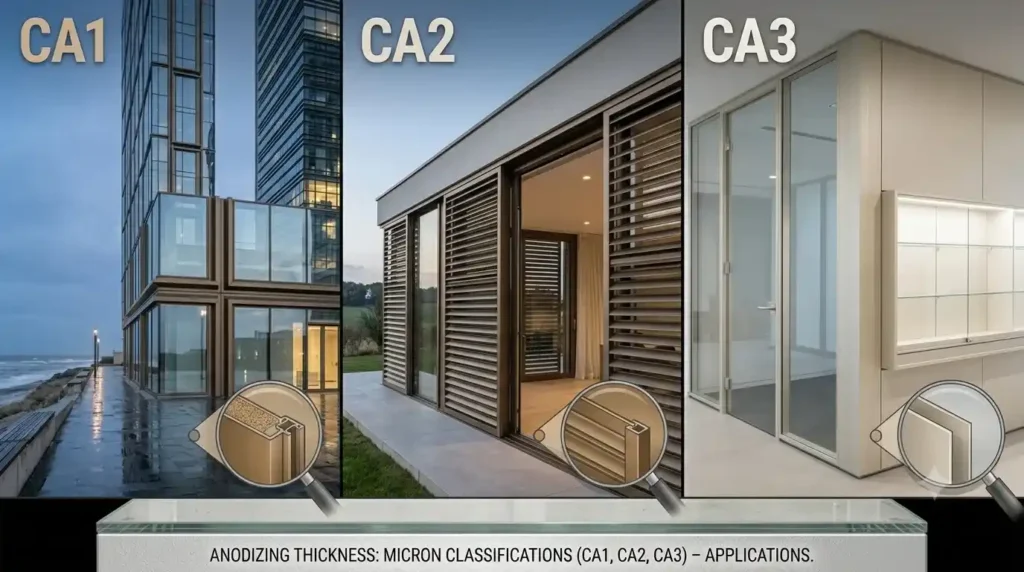
Anodized aluminum is commonly specified according to the required oxide layer thickness. At Exalum Metal, anodizing is generally categorized into three recommended classifications.
CA 1 (15–20 Microns)
CA 1 provides the highest level of protection among the three classifications. The thicker anodized layer offers superior resistance to corrosion, UV exposure, and long-term weathering.
This specification is commonly recommended for:
- Curtain wall systems
- Building facades
- Casement Windows
- Coastal developments
- High-rise buildings
- Projects exposed to heavy rainfall or humid environments
Because of its enhanced durability, CA 1 is often selected for premium architectural applications where long service life and appearance are equally important.
CA 2 (10–15 Microns)
CA 2 offers a balanced combination of durability and cost efficiency. It provides reliable protection for many exterior and semi-exposed applications without requiring the thicker specification used in more demanding environments.
Typical applications include:
- Residential buildings
- Commercial properties
- Louvers
- Sliding doors
- Architectural framing
- Covered outdoor installations
For many projects, CA 2 delivers sufficient protection while maintaining excellent value.
CA 3 (5–10 Microns)
CA 3 is generally recommended for indoor environments or applications with limited exposure to moisture and harsh weather.
Common uses include:
- Interior partitions systems
- Decorative aluminum profiles
- Indoor furniture components
- Display systems
- Interior architectural details
Although thinner than CA 1 and CA 2, CA 3 still provides improved surface durability compared with untreated aluminum.
How to Choose the Right Anodized Micron
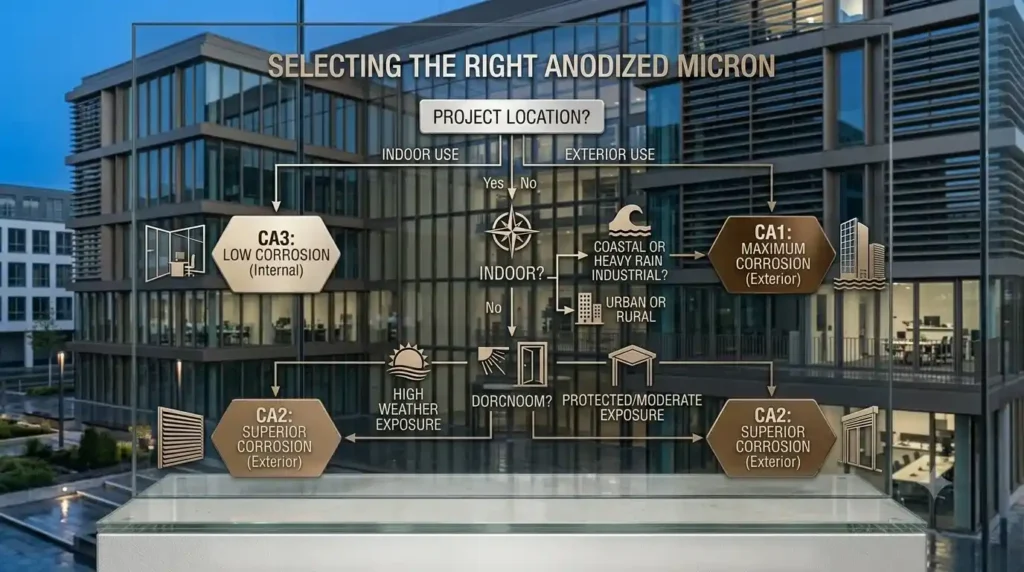
Selecting the correct anodizing thickness depends on several project considerations.
- Environmental Exposure
Projects located near coastlines, industrial areas, or regions with high humidity typically benefit from thicker anodized layers because they face more aggressive corrosion conditions.
- Indoor or Outdoor Installation
Exterior aluminum generally requires greater protection than interior applications. Outdoor installations are continuously exposed to sunlight, rain, temperature changes, and airborne contaminants.
- Expected Service Life
Projects designed for long-term performance often justify thicker anodizing because it helps maintain appearance while reducing maintenance over time.
- Budget and Performance Requirements
While thicker anodized layers provide greater protection, they also involve additional processing. Choosing the appropriate specification means matching the finish to the actual performance requirements rather than automatically selecting the thickest option.
Comparing CA 1, CA 2, and CA 3
| Classification | Thickness | Typical Applications |
| CA 1 | 15–20 μm | Exterior architecture, curtain walls, facades, coastal projects |
| CA 2 | 10–15 μm | Residential and commercial buildings, louvers, sliding doors |
| CA 3 | 5–10 μm | Interior applications, decorative profiles, furniture, partitions, ladder, heatsink, showcase, conveyor, music box, automotive |
Rather than asking which classification is best, the more important question is which thickness best matches your project’s environment and performance requirements.
Choosing the Right Anodizing Specification
Anodized micron thickness plays a major role in determining the durability, appearance, and long-term performance of aluminum products. Selecting the appropriate specification helps ensure that aluminum performs reliably without adding unnecessary cost.
At Exalum Metal, we provide anodizing solutions for a wide range of architectural and industrial applications. hether your project involves heatsink components that require durable surface protection or exterior architectural systems requiring CA 1 for demanding conditions, our team can help you determine the most suitable anodizing specification.
Contact Exalum Metal to discuss your project requirements and find the right anodizing solution for your application.
Email: [email protected] WhatsApp: +62 811 9429 970 Website: www.exalummetal.com