
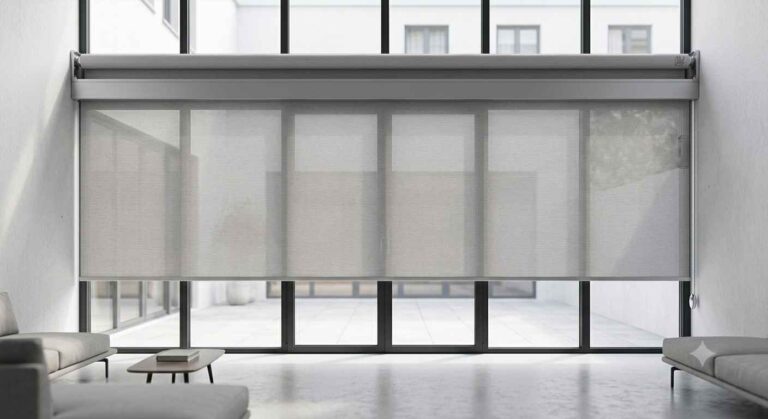
A homeowner pulls a roller blind down over a wide kitchen window. It glides evenly, without tilting to one side or catching halfway down.
That smooth motion rarely comes from the fabric itself. It comes from the hardware hidden inside the system, including a tube the fabric wraps around and a rail that keeps the bottom edge straight. Guides and brackets then hold the whole assembly in place. Most buyers never think to ask what is inside the tube until something goes wrong. A roller blind system is the full mechanism behind a window covering, not just the printed fabric panel most people notice first. This article walks through each aluminum component, explains why aluminum is usually the material of choice, and covers what manufacturers should check before specifying a system.
Why the Hardware Determines How a Roller Blind Performs
Fabric gives a roller blind its look. The hardware behind it determines whether that fabric hangs straight, rolls evenly, and keeps working after years of daily use. A tube that flexes under load, for example, causes the fabric to wrap unevenly, no matter how well it was printed or cut.
For that reason, manufacturers spend more engineering attention on the hardware than most buyers realize. Even a well-made fabric panel cannot compensate for hardware that binds or sags. A well-designed component set is what separates a blind that still glides smoothly after years of use from one that starts binding within months. This attention rarely shows up in marketing material, but it shows up in how the product performs.
Strengths and Limitations of Aluminum Roller Blind Components
What Aluminum Components Do Well
Aluminum resists corrosion naturally, which matters in humid rooms and commercial spaces with large glazed openings such as Casement Windows. Unlike steel, an aluminum tube will not rust from condensation on the inside of the glass.
Aluminum is also easy to extrude into precise, lightweight tube and rail shapes. That precision keeps the bottom rail straight and the roller tube round. Both are essential for smooth, even operation over years of daily use. That same lightness also makes shipping and installation faster for manufacturers.
Where Aluminum Components Have Limitations
Aluminum is not always the right call. On very wide or heavy blackout blinds, a steel tube resists sag over a long unsupported span better than aluminum of the same diameter. Steel simply has a higher resistance to bending under that kind of load.
For budget residential blinds with light fabric and a narrow window, plastic components are often cheaper. They do wear out faster than aluminum or steel over repeated use, but the cost savings can matter more for that application. Manufacturers weigh this trade-off carefully before committing to one material across a product line.
Aluminum, Steel, or Plastic? Choosing Roller Blind Materials
Manufacturers building roller blind systems generally choose between aluminum, steel, and plastic. Each material fits a different budget and performance target, including heavier-duty aluminum tube options such as Square Hollow sections for wide spans.
| Material | Best For | Less Suitable For |
| Aluminum | Most residential and commercial installations | Ultra-low-cost, disposable window coverings |
| Steel | Very wide or heavy blackout systems | Humid or coastal environments |
| Plastic | Small, low-budget residential blinds | Wide spans or frequent daily use |
For most window sizes and use cases, aluminum offers the most balanced combination of weight, durability, and cost. Plastic remains common in the lowest-cost segment despite its shorter lifespan.
The Aluminum Components That Make a Roller Blind Function
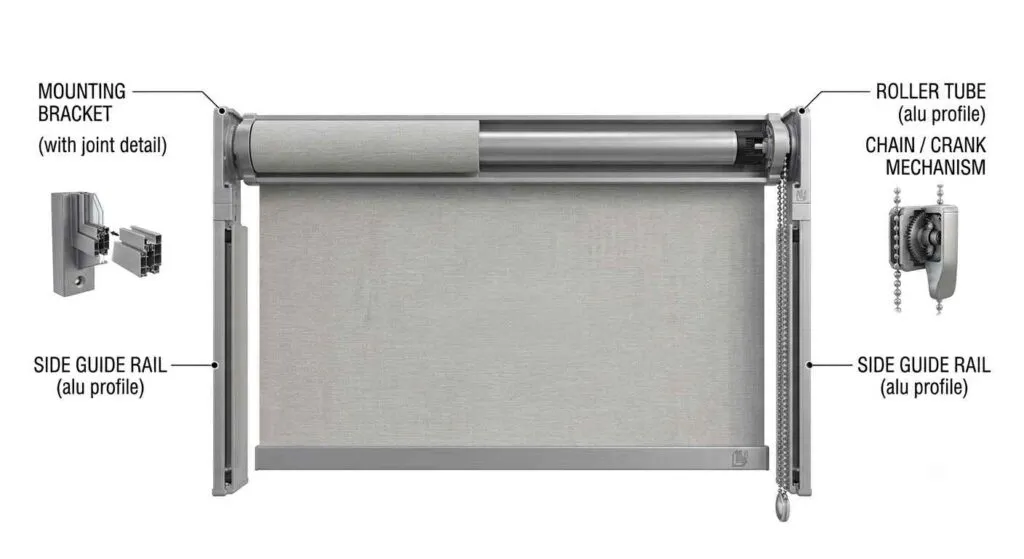
Roller Tube
The roller tube is the cylinder the fabric wraps around as the blind opens and closes. Most manufacturers extrude this from round Pipes, since a true round profile keeps the fabric winding evenly.
Bottom Rail
The bottom rail runs along the fabric’s lower edge, adding enough weight to keep the blind hanging straight. A Rectangular Hollow profile is a common choice, since its flat underside sits cleanly against the sill.
Side Guide Rails
Side guide rails run vertically along the window opening, keeping the fabric from swaying in wind or airflow from a vent. Many systems use a channel similar to Curtain Track, since the fabric edge slides through it the same way a curtain glider does.
Mounting Brackets
Mounting brackets transfer the full weight of the tube and fabric into the wall or window frame. A simple Equal Angle profile often forms the base, since its two perpendicular legs make fixing and supporting easy.
How Component Selection Affects Long-Term Performance
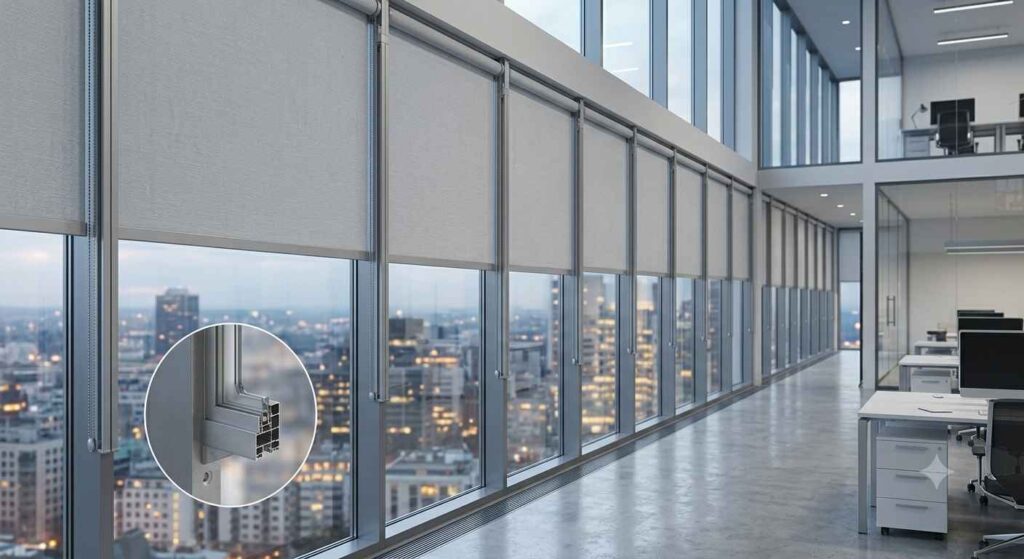
Choosing the right dimensions for each component has a direct effect on how long a roller blind system performs well.
- Tube diameter: a larger diameter resists deflection over wide windows, keeping the fabric winding evenly instead of drifting.
- Wall thickness: thicker walls add stiffness for larger blinds, though most residential systems perform fine with a lighter gauge.
- Surface finish: anodized or powder-coated finishes resist scratching and corrosion better than raw mill finish.
- Corrosion resistance: systems near pools, coastlines, or humid climates benefit from a heavier anodized coating.
- Tube and rail source: premium systems sometimes use Decorative Tubing Pipes for a more refined roller tube.
- Chain or crank hardware: the operating mechanism, including any Handle style crank, needs to match the tube’s diameter and weight.
- Bracket spacing: wider windows need brackets placed closer together to keep the tube from sagging in the middle.
Aluminum Roller Blind Profiles from Exalum Metal
Exalum Metal extrudes and finishes the aluminum tube, rail, and bracket profiles that roller blind manufacturers rely on. These components need to perform consistently across every production run.
Custom extrusion is available for project-specific tube diameters and rail profiles. Finishing services include mill finish, anodizing, and powder coating. Volume order support is available for manufacturers producing systems at scale, whether the end use is residential, commercial, or a retail display such as a Showcase window. Many manufacturers standardize on a single tube and rail specification across their full product range.
If you are developing a roller blind product line, send us your drawings, dimensions, or an estimated volume. Our team will confirm what runs as a standard profile and what needs custom tooling.
Get in touch with our team directly:
Email: [email protected] WhatsApp: +62 811 9429 970 Website: www.exalummetal.com