
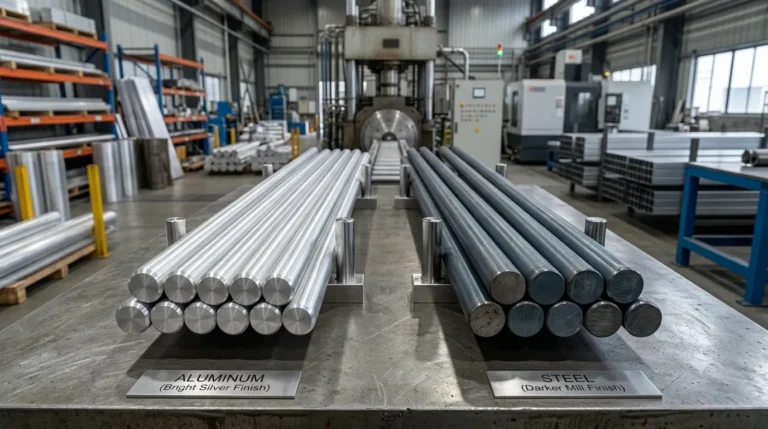
When selecting a material for fabrication or engineering projects, aluminum and steel are often the two leading options. Both are widely used across industries, yet they offer very different characteristics that influence performance, manufacturing efficiency, and long-term durability.
While steel has traditionally been known for its strength, aluminum rods have become increasingly popular because they combine lightweight performance, corrosion resistance, and excellent machinability. These advantages make aluminum suitable for applications ranging from architectural systems and industrial equipment to Furniture, transportation, and electronics.
Rather than asking which material is better, the more practical question is when aluminum becomes the smarter choice.
What Is an Aluminum Rod?
An aluminum rod is a solid cylindrical aluminum product manufactured through extrusion or drawing processes. It is available in various diameters, alloys, and tempers depending on the intended application.
Because aluminum is lightweight and easy to machine, aluminum rods are commonly used for precision components, mechanical parts, support structures, fasteners, decorative applications, and custom fabrication.
They are also frequently integrated into architectural products alongside systems such as Door Jamb, Sliding Doors, and Curtain Wall assemblies, where lightweight structural performance is essential.
Aluminum Rod vs Steel Rod: Key Differences
Although aluminum and steel may appear similar, their engineering properties differ significantly.
| Property | Aluminum Rod | Steel Rod |
| Weight | Very lightweight | Much heavier |
| Strength-to-Weight Ratio | Excellent | Good |
| Corrosion Resistance | Naturally resistant | Requires protective coatings |
| Machinability | Excellent | Good |
| Electrical Conductivity | High | Low |
| Maintenance | Low | Moderate to high |
| Recyclability | Excellent | Excellent |
Steel generally offers greater absolute strength, but aluminum delivers excellent performance while significantly reducing weight. This balance explains why aluminum continues to replace steel in many modern applications where weight reduction improves efficiency.
When Aluminum Is the Better Choice
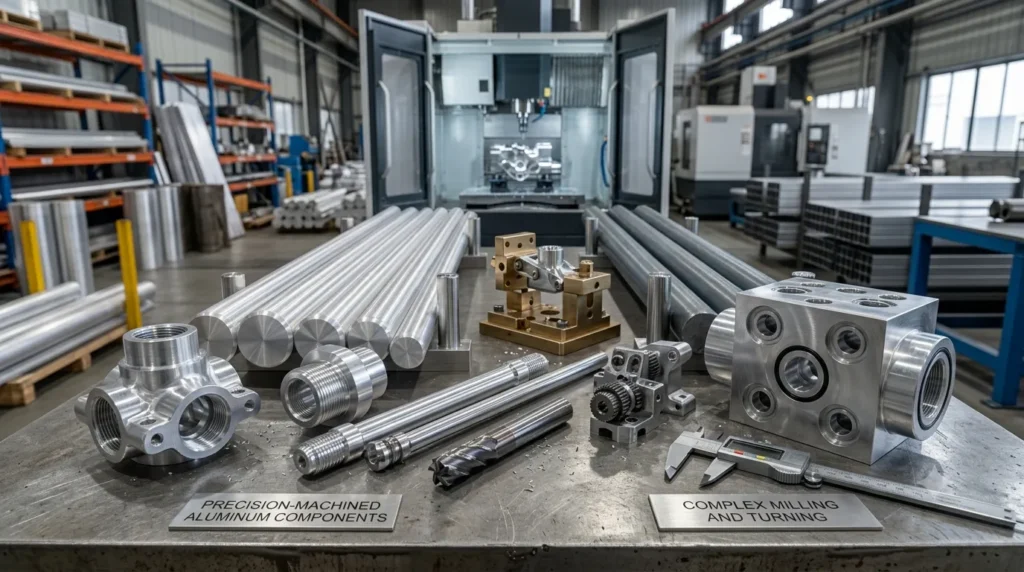
The best material depends on the project’s priorities. In many situations, aluminum offers practical advantages that outweigh steel’s higher strength.
Weight Matters
One of aluminum’s greatest advantages is its low density. At roughly one-third the weight of steel, aluminum rods are much easier to transport, handle, and install.
Reducing overall weight is particularly valuable in industries such as Automotive, aerospace, and transportation, where lighter components help improve fuel efficiency and reduce operating costs.
Corrosion Resistance Is Important
Unlike steel, aluminum naturally develops a thin oxide layer that protects it from corrosion.
This makes aluminum well suited for humid environments, coastal regions, and outdoor applications where exposure to rain and moisture is unavoidable. When combined with anodizing or powder coating, aluminum provides even greater durability while requiring minimal maintenance.
For this reason, aluminum is widely used in architectural applications such as Sliding Windows and exterior building systems that remain exposed to the elements throughout their service life.
Fabrication Efficiency Is a Priority
Aluminum rods are relatively easy to cut, drill, machine, and weld.
Their excellent machinability helps manufacturers reduce production time while maintaining consistent dimensional accuracy. This makes aluminum a preferred material for custom components, precision manufacturing, and fabricated assemblies.
When Steel May Be the Better Option
Although aluminum offers many benefits, steel remains the preferred choice for some applications.
Projects involving extremely heavy structural loads, high-impact conditions, or environments requiring maximum hardness may benefit from steel’s greater tensile strength.
Large infrastructure projects, heavy machinery, and certain industrial equipment often continue to rely on steel because structural capacity takes priority over weight reduction.
Choosing between aluminum and steel should therefore be based on performance requirements rather than material popularity.
Climate Also Influences Material Selection

Environmental conditions often play a major role in determining which material performs best over time.
In tropical regions such as Southeast Asia, high humidity, frequent rainfall, and coastal air can accelerate corrosion on unprotected steel. Aluminum’s natural corrosion resistance makes it a reliable choice for both indoor and outdoor applications with relatively little maintenance.
In North America and Europe, buildings experience freezing winters, hot summers, and repeated temperature fluctuations. Aluminum continues to gain popularity because it combines durability with lightweight construction while supporting modern architectural designs that emphasize larger glazing systems and slimmer structural profiles.
These qualities allow aluminum to perform consistently across a wide variety of climates and industries.
Common Applications of Aluminum Rods
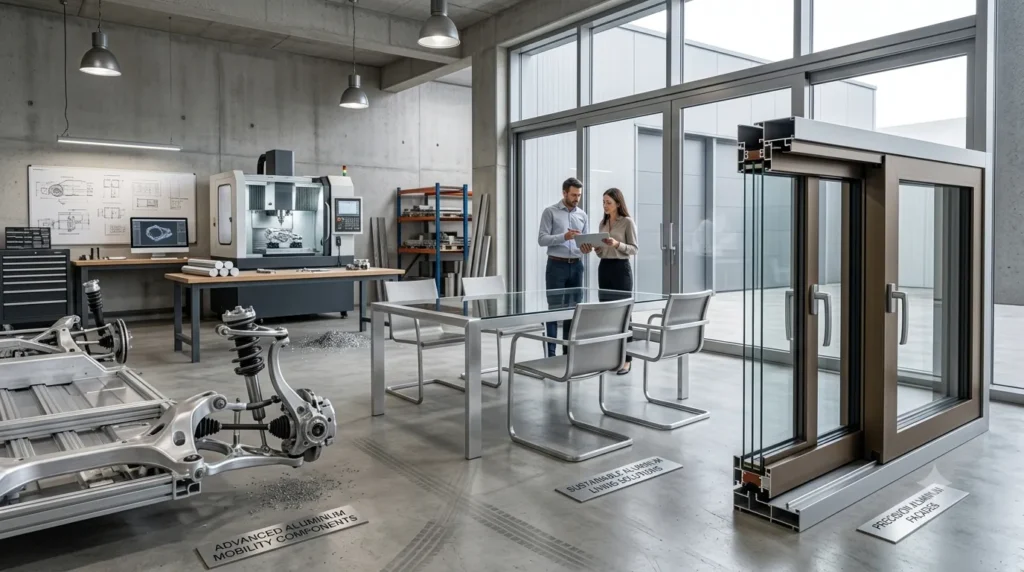
Because aluminum rods combine strength, durability, and ease of fabrication, they are used across numerous industries.
| Industry | Typical Applications |
| Construction | Structural components, architectural systems |
| Furniture | Frames, supports, decorative elements |
| Manufacturing | Machine parts, tooling, fixtures |
| Transportation | Automotive and rail components |
| Electronics | Heatsink components and conductive parts |
| Industrial Equipment | Shafts, brackets, custom-machined components |
Many aluminum rods eventually become part of larger products without users ever realizing it. Whether supporting industrial machinery or serving as precision-machined components, aluminum contributes to countless everyday products.
Cost Isn’t the Only Factor
Although steel can sometimes have a lower initial material cost, selecting the least expensive option does not always produce the lowest overall project cost.
Transportation, installation, maintenance, corrosion protection, and product lifespan all influence the total cost of ownership.
Because aluminum is lighter, easier to fabricate, and naturally corrosion resistant, it often reduces labor, maintenance, and replacement costs over the long term. For many manufacturers and project owners, these lifecycle benefits make aluminum the more economical choice despite differences in raw material pricing.
Choosing the Right Material for Your Project
Aluminum and steel both play important roles in modern engineering. The best choice depends on the project’s structural requirements, operating environment, fabrication process, and long-term maintenance expectations.
When lightweight performance, corrosion resistance, ease of fabrication, and design flexibility are priorities, aluminum rods often provide the ideal solution. Steel remains valuable for applications requiring maximum structural strength, but aluminum continues to expand into industries where efficiency and durability are equally important.
At Exalum Metal, we provide high-quality aluminum extrusion and finishing solutions for a wide range of architectural and industrial applications. Whether your project involves aluminum rods, Curtain Wall systems, Sliding Doors, Furniture components, Heatsink products, or custom aluminum profiles, our team can help you select solutions that combine precision, durability, and long-term performance.
Get in touch with our team directly:
Email: [email protected] WhatsApp: +62 811 9429 970 Website: www.exalummetal.com