
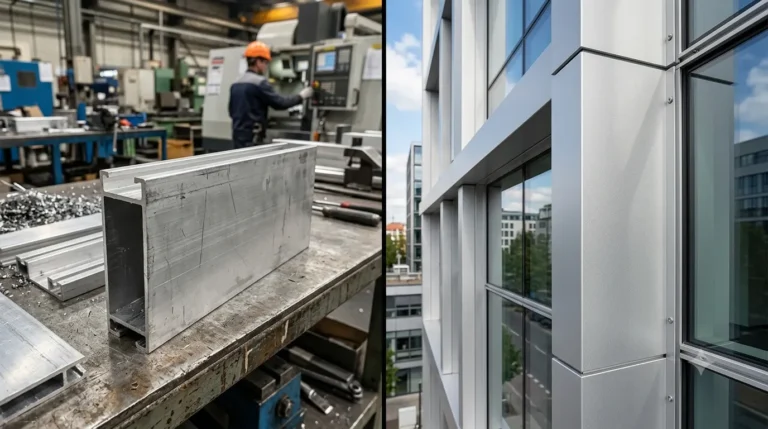
Not every aluminum project requires the highest level of surface protection or the most decorative finish. In many cases, selecting the right finish depends on how the aluminum will be used, where it will be installed, and whether additional processing will take place later.
While anodized aluminum offers enhanced corrosion resistance and a refined appearance, mill finish remains a practical solution for projects that prioritize cost efficiency, fabrication flexibility, and fast production. Understanding when mill finish is the better choice can help manufacturers, contractors, and project owners avoid unnecessary costs while selecting the finish that best fits their requirements.
What Is Mill Finish Aluminum?
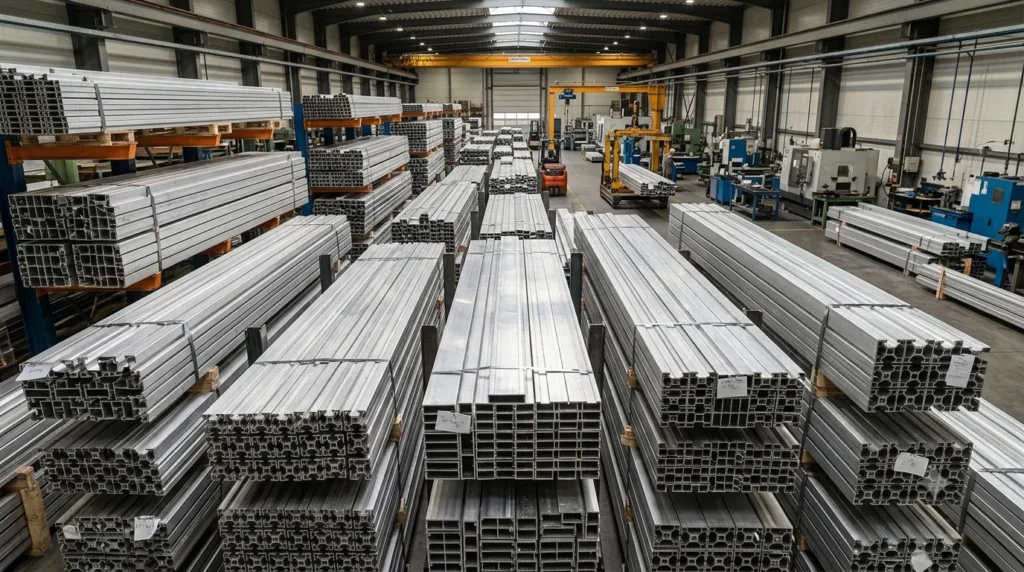
Mill finish aluminum refers to aluminum in its natural state immediately after extrusion or rolling, without any additional surface treatment. As a result, the material retains its natural metallic appearance and may display minor extrusion lines or handling marks that are considered normal characteristics of the manufacturing process.
One of aluminum’s natural advantages is its ability to form a thin oxide layer when exposed to air. This layer provides basic corrosion protection in many indoor environments. Because no additional finishing process is required, mill finish aluminum is generally more economical and available with shorter lead times than anodized products.
Why Choose Mill Finish Instead of Anodizing?
Mill finish is often selected because it reduces production costs while offering greater flexibility during fabrication. It is especially suitable when appearance is not the primary concern or when additional finishing will be applied later.
Key advantages include:
- Lower production and material costs
- Faster manufacturing and delivery
- Easier cutting, drilling, machining, and welding
- An excellent surface for future painting or powder coating
- Suitable for concealed or non-decorative applications
For projects where appearance is not the primary concern, mill finish often provides the most practical and economical solution.
When Is Mill Finish the Better Choice?
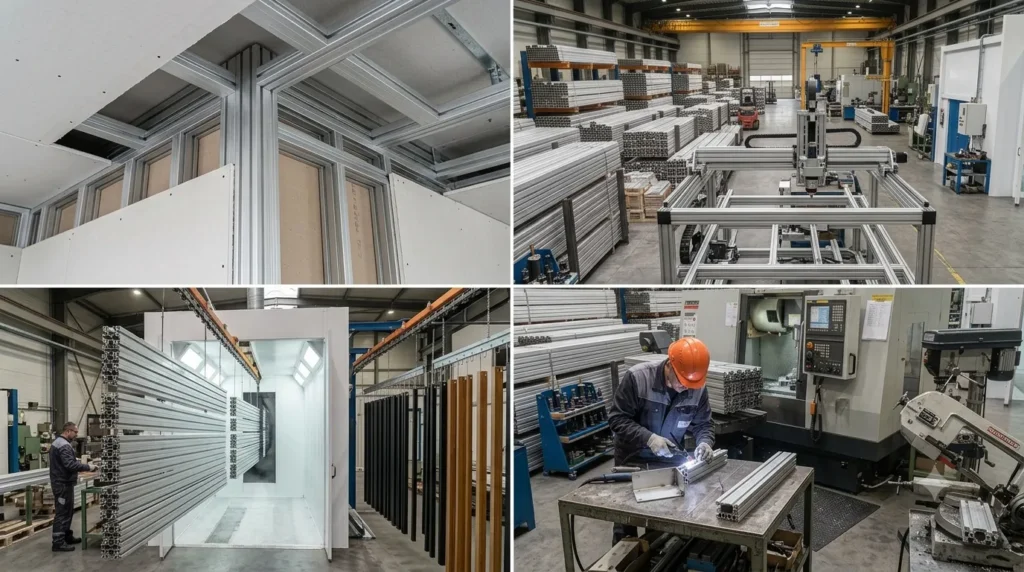
The suitability of mill finish depends largely on the service environment and how the aluminum will be processed after fabrication.
Hidden Structural Components
Many aluminum profiles remain hidden after installation. Internal framing built with Square Hollow and Rectangular Hollow profiles, equipment supports, structural reinforcements, and concealed mounting systems typically do not require decorative finishes. Since these components are protected from direct weather exposure and are rarely visible, anodizing often provides little additional benefit.
Indoor Industrial Applications
Mill finish performs well in dry indoor environments where exposure to moisture, chemicals, or harsh weather conditions is limited.
Common applications include:
- Warehouse racking systems
- Machine frames
- Conveyor systems
- Manufacturing equipment
- Internal support systems
These applications prioritize structural performance and manufacturing efficiency rather than appearance.
Components That Will Be Powder Coated or Painted
Many aluminum products receive another surface treatment after fabrication. Mill finish provides an excellent substrate for powder coating, painting, or other finishing systems. Starting with untreated aluminum eliminates the unnecessary cost of anodizing a surface that will later be covered.
This approach is commonly used for architectural products such as Curtain Wall systems, Louvers, Sliding Doors, and Sliding Windows, where custom colors or specific design aesthetics are required.
Fabrication Before Final Finishing
Many aluminum components require machining, drilling, cutting, bending, or welding before installation. Beginning with mill finish allows fabricators to complete these processes more efficiently without risking damage to a finished surface.
Mill finish is also a practical choice for prototypes, testing equipment, exhibition structures, and temporary installations where speed and affordability are more important than long-term aesthetics.
When Is Anodizing the Better Option?
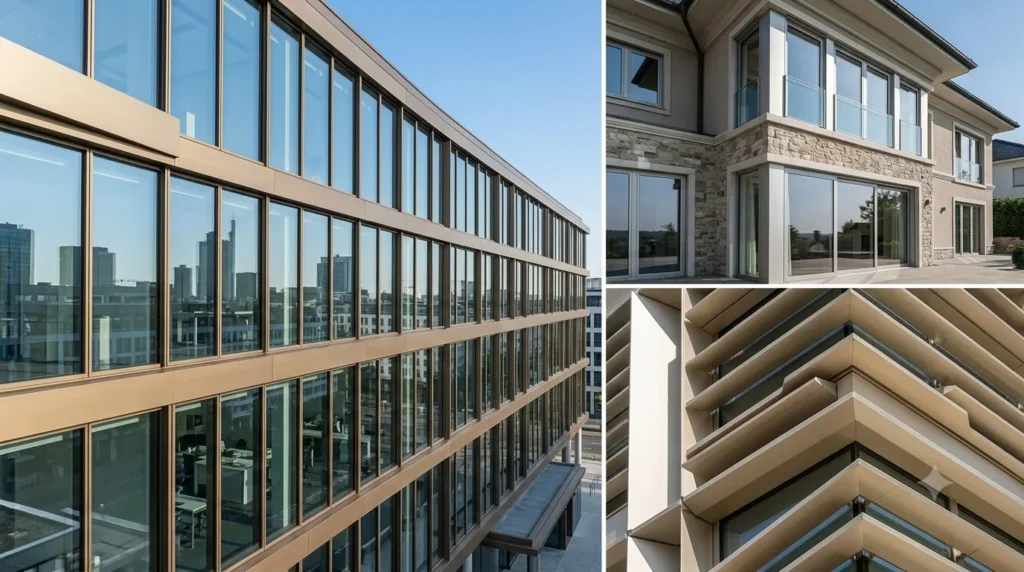
While mill finish is an excellent choice for many industrial and fabrication applications, anodizing becomes the preferred option when durability, appearance, and long-term performance are equally important.
Anodized aluminum offers several advantages:
- Superior corrosion resistance
- Improved wear and scratch resistance
- Excellent UV stability
- Low maintenance requirements
- A clean metallic appearance with optional color finishes
These qualities make anodized aluminum particularly suitable for Curtain Wall systems, Louvers, and Casement Windows, and other architectural applications exposed to outdoor environments where long-term durability and appearance are essential.
Projects that require a broader range of colors may also consider powder coating, which provides excellent weather resistance while offering greater design flexibility.
Mill Finish vs. Anodized Aluminum
| Consideration | Mill Finish | Anodized Aluminum |
| Surface condition | Natural, untreated aluminum | Electrochemically protected surface |
| Initial cost | Lower | Higher |
| Fabrication flexibility | Excellent | Good |
| Machining and welding | Easier before finishing | Best after fabrication planning |
| Corrosion resistance | Basic | Excellent |
| Outdoor performance | Limited | Highly suitable |
| Decorative appearance | Natural metallic finish | Premium metallic finish with color options |
| Ideal applications | Industrial, concealed, or pre-finished components | Architectural, decorative, and exterior applications |
Rather than asking which finish is better, the more important question is which finish best matches your project’s environment, fabrication process, and long-term performance expectations.
Choosing the Right Aluminum Finish
The best finish depends on your project’s environment, fabrication requirements, budget, and long-term performance expectations.
Mill finish is ideal when cost efficiency, fabrication flexibility, or future surface finishing are the primary considerations. It is particularly well suited for concealed components made from Square Hollow and Rectangular Hollow profiles, industrial equipment, indoor structures, and products that will later receive powder coating or paint.
When projects require long-term weather resistance, premium aesthetics, and minimal maintenance, anodized aluminum offers clear advantages. Selecting the appropriate finish early in the design process helps optimize both manufacturing efficiency and long-term performance.
Find the Right Aluminum Finishing Solution with Exalum Metal
Choosing the right aluminum finish starts with understanding your project’s specific requirements. Whether you need mill finish aluminum for fabrication or anodized and powder-coated finishes for architectural applications, selecting the appropriate surface treatment can improve durability, appearance, and long-term value.
At Exalum Metal, we provide aluminum finishing solutions for a wide range of architectural and industrial applications. Our team can help you determine the most suitable finish based on your project’s environment, performance requirements, and design objectives.
Contact Exalum Metal today to discuss your aluminum finishing needs and discover the right solution for your next project.
Email: [email protected] WhatsApp: +62 811 9429 970 Website: www.exalummetal.com