Walk into any modern building, take a closer look at a smartphone chassis, or inspect the rails of a quality curtain wall, chances are you’re looking at anodized aluminum. It’s everywhere, yet surprisingly few fabricators and specifiers fully understand why this finish has become the gold standard for long-lasting, good-looking aluminum products.
In this guide, we’ll break down exactly what anodized aluminum is, how the process works, the advantages it delivers for workshops and industrial projects, and how to choose the right anodizing spec for your next fabrication run.
What Is Anodized Aluminum?
Anodized aluminum is aluminum that has been electrochemically treated to grow a thick, stable oxide layer on its surface. Unlike paint or powder coating, anodizing doesn’t sit on top of the metal, it becomes part of the metal itself. The result is a finish that won’t chip, peel, or flake because it’s literally fused with the substrate.
Bare aluminum naturally forms a thin oxide film when exposed to air, which is why it resists corrosion better than steel. Anodizing takes that natural property and amplifies it enormously, producing an oxide layer that’s hundreds of times thicker, harder, and more uniform than the native film.
The result is a surface that’s corrosion-resistant, abrasion-resistant, electrically insulating, and capable of accepting rich, long-lasting colors.
How the Anodizing Process Works
Anodizing is an electrochemical process, not a coating process. Here’s how an aluminum profile becomes anodized aluminum:
- Step one , Cleaning and pre-treatment. The aluminum part is degreased and etched in an alkaline bath to remove oils, dirt, and surface imperfections
- Step two , Electrolytic bath. The aluminum is submerged in an acid electrolyte (usually sulfuric acid) and connected as the anode in an electrical circuit. A DC current passes through the bath.
- Step three , Oxide layer growth. The electrical current pulls oxygen from the electrolyte to the aluminum surface, where it reacts with the metal to build a controlled, porous oxide layer. Thickness typically ranges from 5 to 25 microns depending on the spec.
- Step four , Coloring (optional). While the pores are still open, the aluminum can be dyed in any color, or treated with electrolytic coloring for deeper, UV-stable bronze, black, and champagne tones
- Step five , Sealing. Finally, the part is sealed in hot water or a chemical bath to close the pores, locking in the color and maximizing corrosion resistance.
Why Fabricators and Workshops Choose Anodized Aluminum
Anodized aluminum earns its place in spec sheets for several practical reasons. It’s exceptionally durable, with a surface hardness approaching that of sapphire, meaning it resists scratches, abrasion, and daily wear far better than painted or raw aluminum. It’s also highly corrosion-resistant, making it the natural choice for architectural facades, coastal projects, and outdoor fixtures where humidity and salt spray would destroy lesser finishes.
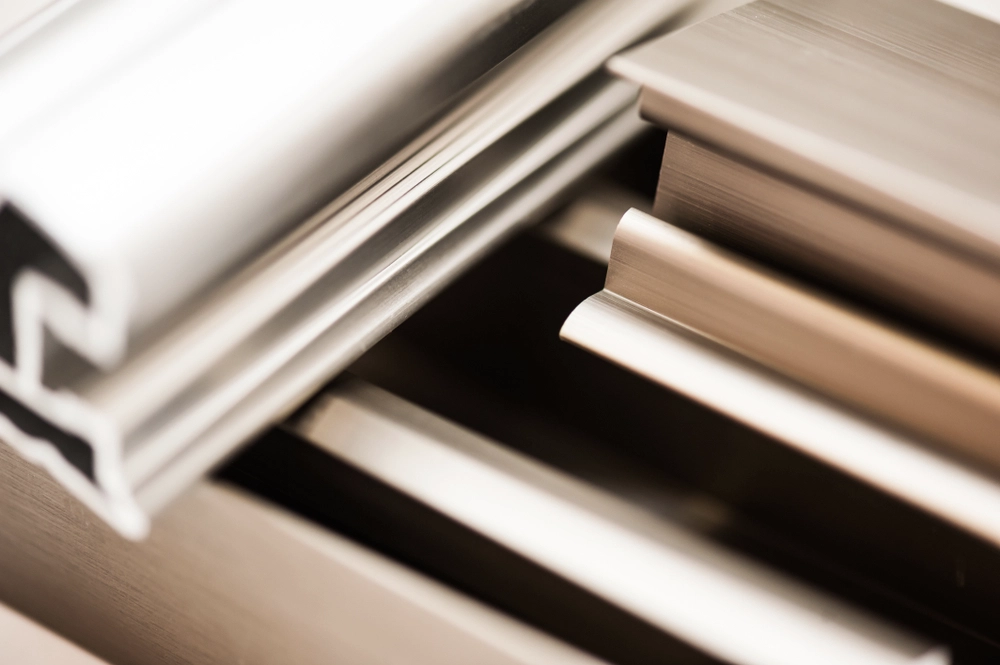
From an aesthetic angle, anodized aluminum delivers a clean, modern metallic appearance that coating simply cannot replicate. Colors don’t sit on the surface, they’re locked inside the oxide layer, so they won’t fade under UV exposure or rub off with handling.
It’s also environmentally friendly. The process uses no heavy metals or VOC-emitting solvents, and the finish itself is fully recyclable along with the aluminum.
For workshops producing curtain walls, door frames, window profiles, consumer electronics housings, automotive trim, or signage, anodized aluminum hits the sweet spot of beauty, durability, and long-term value.
Order Anodized Aluminum from Exalum Metal Indo
If your workshop or fabrication project demands anodized aluminum profiles that hold up to years of real-world use, choose a manufacturer with fully integrated production. Exalum Metal Indo, operating since 2009 from a 20,000 m² vertically integrated facility, produces premium aluminum profiles, pipes, hollow sections, and bars, with in-house anodizing and powder coating for consistent quality from billet to finished surface.
Visit exalummetal.com to explore our capabilities, or reach out directly for questions, technical consultation, and quotations:
Email: [email protected]
WhatsApp: +62 811-9429-970
Equip your workshop with anodized aluminum you can specify with confidence.