
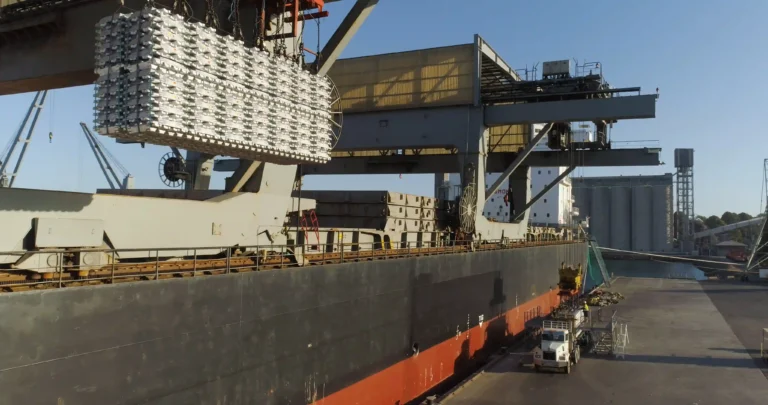
Indonesia has emerged as an increasingly attractive sourcing destination for aluminum products, serving a wide range of industries including construction, transportation, renewable energy, electronics, and industrial manufacturing. As U.S. companies continue to diversify their supply chains and reduce dependence on traditional sourcing markets, Indonesian manufacturers are gaining recognition for their production capabilities, competitive costs, and growing export experience.
However, successful international procurement involves much more than evaluating product specifications and negotiating prices. For U.S. importers, understanding the customs and trade framework governing aluminum imports is essential for accurate budgeting, compliance management, and long-term supply chain planning. Tariff classification, customs duties, Section 232 measures, freight costs, insurance expenses, and documentation requirements can all significantly affect the final landed cost of imported goods.
For businesses sourcing aluminum extrusion profiles from Indonesia, these considerations are particularly important. Extruded aluminum products often fall within tariff classifications that may be subject to multiple layers of duties and trade measures. Misunderstanding these requirements can lead to unexpected costs, shipment delays, or inaccurate pricing assumptions.
At the same time, working with experienced manufacturers can help buyers navigate the complexities associated with global sourcing. Exalum Metal Indo, an integrated aluminum extrusion manufacturer based in Indonesia, supports both domestic and international customers through end-to-end capabilities that include extrusion, fabrication, finishing, packaging, and export coordination. Collaborating with suppliers familiar with international trade requirements may help simplify procurement processes and improve operational efficiency.
Understanding Export Duties in Indonesia
Indonesia may impose export duties on certain designated commodities under specific circumstances. However, these measures generally do not represent the primary cost consideration for U.S. companies sourcing aluminum extrusion products from Indonesia.
Instead, U.S. import duties and applicable trade measures tend to have a much greater impact on the total cost of importation. Since trade regulations may evolve over time, importers should verify current requirements before finalizing shipments or entering into long-term purchasing agreements.
Where Extruded Aluminum Fits Within the U.S. HTSUS
One of the most important aspects of importing aluminum products into the United States is determining the correct tariff classification.
The Harmonized Tariff Schedule of the United States (HTSUS) provides the framework used by U.S. Customs and Border Protection (CBP) to classify imported goods and identify applicable duty rates. Extruded aluminum profiles are generally classified under the following structure:
- Section XV – Base metals and articles of base metal.
- Chapter 76 – Aluminum and articles thereof.
- Heading 7604 – Aluminum bars, rods, and profiles.
Heading 7604 specifically covers aluminum extrusion products.
The applicable subheading depends on factors such as alloy composition and profile design. Common classifications include:
- 7604.10 – Profiles of non-alloyed aluminum.
- 7604.21 – Hollow profiles of aluminum alloys.
- 7604.29 – Other profiles of aluminum alloys, including solid sections.
Many commercial aluminum extrusions used in architectural and industrial applications are manufactured using alloy grades such as 6063-T5 or 6063-T6. Consequently, these products often fall under:
- 7604.21 for hollow profiles, or
- 7604.29 for solid profiles.
One commonly referenced classification for solid alloy extrusions is HTSUS 7604.29.50, which carries a Column 1 General duty rate of 3% ad valorem.
Because classification depends on the exact characteristics and condition of the imported merchandise, importers should confirm the appropriate 10-digit HTS code prior to shipment. When uncertainty exists, consulting licensed customs brokers or seeking a CBP binding ruling may help reduce compliance risks.
Understanding General Note 3 and Indonesia’s Trade Status
After identifying the appropriate classification, importers must understand how duty rates are applied under the HTSUS framework.
General Note 3 establishes the categories of duty treatment available for imported products.
Column 1 – General
This category represents the Normal Trade Relations (NTR) or Most Favored Nation (MFN) rate.
Indonesia is a member of the World Trade Organization and receives NTR treatment from the United States. As a result, qualifying aluminum extrusion products classified under HTSUS 7604.29.50 are generally subject to the 3% General duty rate.
Column 1 – Special
This category applies to products eligible under free trade agreements or preferential trade programs involving countries such as Canada, Mexico, Australia, and Singapore.
Indonesia does not currently maintain a free trade agreement with the United States that provides preferential treatment for aluminum extrusion products under this category.
Column 2
Column 2 duty rates apply to countries subject to different trade treatment under U.S. law.
Indonesia is not included within this category. Therefore, Indonesian aluminum extrusion imports generally rely on the Column 1 General rate as their baseline duty treatment.
Why the 3% Duty Rate Is Not the Primary Cost Driver
Although the HTSUS General duty rate establishes the starting point for import calculations, it may not represent the largest component of landed costs. For many aluminum products, additional trade measures introduced under Section 232 of the Trade Expansion Act of 1962 can significantly increase import expenses.
Section 232 tariffs were originally implemented in 2018 to address national security concerns relating to imported steel and aluminum products. Since their introduction, these measures have undergone several modifications. Most notably, the baseline aluminum tariff was increased from 25% to 50% effective June 4, 2025.
Importers should also recognize that the administration of Section 232 has evolved over time. Earlier frameworks involved different approaches for determining the value subject to duty. Under the framework applicable after April 6, 2026, covered aluminum articles may be subject to a 50% Section 232 duty calculated on the value of the imported articles falling within the applicable provisions.
Because Chapter 99 requirements and Section 232 applicability depend on the specific product involved, businesses should verify whether their imports fall within the scope of these measures prior to shipment.
For many U.S. buyers, Section 232 duties can become the single largest factor affecting overall landed costs.
Landed Cost Illustration for Indonesian Aluminum Extrusions
Understanding how these various cost components interact can help importers develop more realistic budgets. Assume a U.S. importer purchases aluminum extrusion profiles manufactured by an Indonesian supplier such as Exalummetal.
For illustration purposes, assume the imported products are classified under HTSUS 7604.29.50, subject to the 3% General duty rate, and fall within the scope of the 50% Section 232 framework applicable after April 6, 2026.
The transaction details are as follows:
- Product value: USD 50,000
- Inland transportation: USD 1,500
- Documentation fees: USD 300
- Ocean freight: USD 2,500
- Cargo insurance: USD 200
Step 1: Determine the Customs Value
For illustrative purposes, assume the customs value basis includes the following elements:
- Customs Value = Product Value + Inland Transportation + Ocean Freight + Insurance
- Customs Value = USD 50,000 + USD 1,500 + USD 2,500 + USD 200
- Customs Value = USD 54,200
Step 2: Calculate the General Duty
- General Duty = USD 54,200 × 3%
- General Duty = USD 1,626
Step 3: Calculate the Section 232 Duty
- Section 232 Duty = USD 54,200 × 50%
- Section 232 Duty = USD 27,100
Estimated Landed Cost
| Cost Component | Amount (USD) |
| Product value | 50,000.00 |
| Inland transportation | 1,500.00 |
| Documentation fees | 300.00 |
| Ocean freight | 2,500.00 |
| Insurance | 200.00 |
| General duty (3%) | 1,626.00 |
| Section 232 duty (50%) | 27,100.00 |
| Estimated landed cost | 83,226.00 |
This example demonstrates how trade measures may substantially influence the economics of international procurement.
While the standard HTS duty rate may appear relatively modest, Section 232 duties can significantly increase the overall cost of importation. U.S. importers evaluating sourcing opportunities in Indonesia should incorporate these additional expenses into pricing models, margin forecasts, and purchasing decisions.
The above illustration is intended solely as a general example. Actual customs treatment depends on the precise HTS classification, the Chapter 99 provisions in force at the time of entry, and CBP interpretation of applicable regulations.
The Value of Working with Experienced Manufacturers
Given the complexity of international trade requirements, selecting the right manufacturing partner becomes increasingly important.
For buyers seeking a sourcing partner in Indonesia, Exalummetal offers integrated aluminum extrusion solutions supported by in-house capabilities that span multiple stages of production and export preparation.
The company’s capabilities include:
- Aluminum extrusion manufacturing.
- Fabrication and machining services.
- Surface finishing processes.
- Quality assurance procedures.
- Packaging preparation.
- Export shipping coordination.
By consolidating these functions within a single organization, international customers may benefit from improved communication, streamlined project execution, and greater visibility throughout the production process.
Suppliers with export experience may also provide practical operational support during documentation preparation, production scheduling, and shipment coordination.
Although import compliance ultimately remains the responsibility of the importer of record, experienced manufacturing partners can contribute to smoother procurement activities and more predictable supply chain performance.
Importing aluminum extrusion profiles from Indonesia requires a clear understanding of both product classification and the broader regulatory landscape governing U.S. imports.
While Indonesian export duties generally do not represent a major cost factor for these products, U.S. import duties and trade measures can substantially influence total landed costs.
Before proceeding with procurement activities, importers should consider the following actions:
- Verify the appropriate HTS classification before shipment.
- Confirm whether products fall within the scope of Section 232 measures.
- Monitor developments affecting U.S. trade policy and related customs requirements.
- Incorporate logistics expenses and duty obligations into landed cost calculations.
- Consult licensed customs brokers when clarification is required.
- Consider requesting CBP binding rulings for products involving classification uncertainty.
Above all, businesses should recognize that tariff programs and trade regulations evolve over time. Before finalizing pricing arrangements or entering into long-term supply agreements, importers are encouraged to review the latest requirements published through official U.S. government resources and seek professional customs advice where appropriate.
By combining sound compliance practices with reliable sourcing partnerships, U.S. buyers can make more informed procurement decisions and strengthen the resilience of their international supply chains.