
If you’ve specified a window frame, curtain wall, or anodized facade, you’ve probably used 6063 aluminum. It is the standard alloy for architectural extrusion thanks to its smooth surface, reliable corrosion resistance, and ability to form complex profile shapes.
This article explains how 6063 aluminum performs, where it excels, where it has limitations, and what to consider before specifying it.
What Is 6063 Aluminum?
6063 aluminum belongs to the 6000 series, using magnesium and silicon as its primary alloying elements. This composition provides an excellent balance of surface quality, corrosion resistance, and extrusion performance.
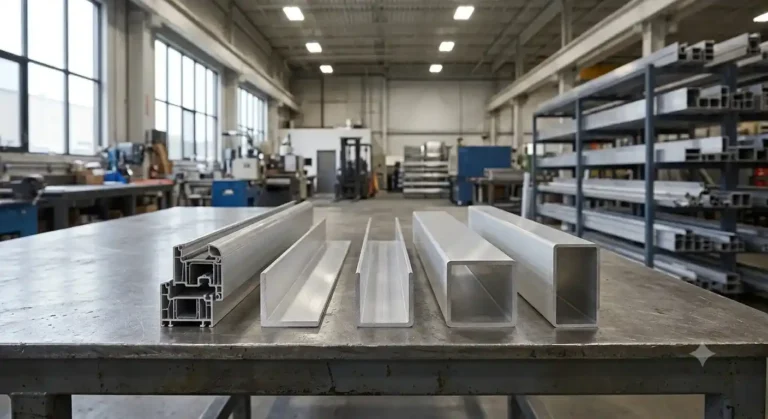
Manufacturers create 6063 profiles by pushing a heated billet through an extrusion die to produce continuous cross-sections. This process is used to manufacture many Exalum Metal products, including Equal Channel, Rectangular Hollow, Square Hollow, and Flat Bars.
The most common tempers are:
- T5: Cooled after extrusion and artificially aged.
- T6: Solution heat-treated and artificially aged for higher strength.
How 6063 Aluminum Performs
Several properties make 6063 the preferred architectural alloy.
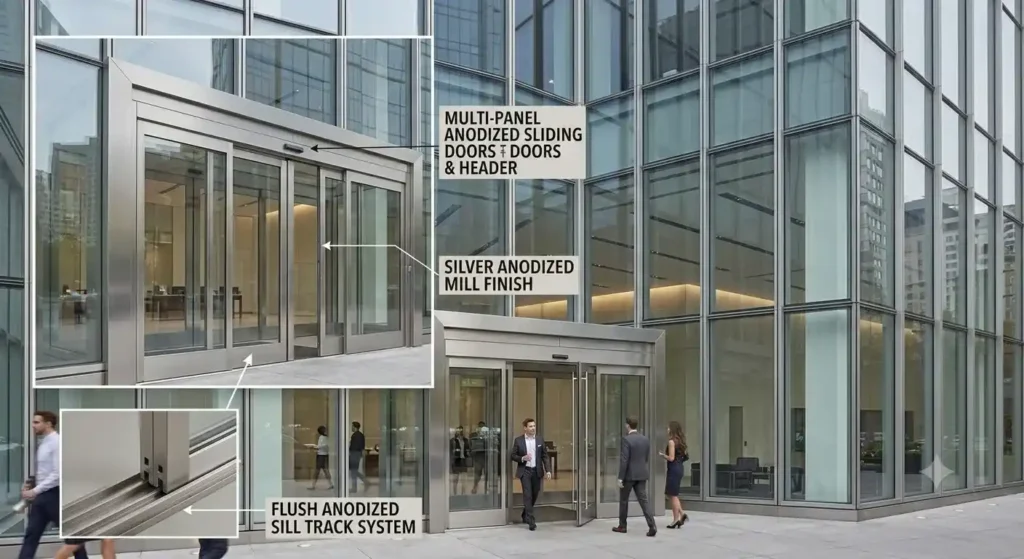
- Excellent surface finish: Its fine grain structure creates smooth surfaces that produce consistent anodized and powder-coated finishes for Curtain Wall systems and other visible architectural components.
- High extrudability: The alloy flows easily through extrusion dies, allowing manufacturers to create thin walls and complex geometries with excellent dimensional accuracy.
- Corrosion resistance: Its natural oxide layer protects the surface, making it suitable for exterior applications, including humid and coastal environments.
- Good fabrication performance: 6063 supports welding, drilling, cutting, and machining for many construction and manufacturing applications.
Strengths and Limitations
Where 6063 Excels
6063 has become the standard alloy for architectural extrusion because it combines appearance and performance.
Its smooth surface delivers highly consistent anodized finishes, making it ideal for projects where color uniformity matters. The alloy also supports intricate profile designs used in Sliding Windows, Sliding Doors, and Louvers, while maintaining tight dimensional tolerances.
Furthermore, its natural corrosion resistance allows long-term outdoor use with relatively low maintenance.
Where It Falls Short
Despite its advantages, 6063 is not designed for every application.
Compared with structural alloys, it offers lower tensile strength. While T5 and T6 tempers perform well in architectural framing, heavily loaded structural members often require stronger materials such as 6061-T6 or 6082-T6.
The alloy is also softer, making it more susceptible to scratches and dents in high-impact environments.
6063 vs. 6061 vs. 6082
These three alloys serve different purposes in construction and fabrication.
| Alloy | Best For | Less Suitable For |
| 6063 | Windows, doors, curtain walls, decorative profiles | Heavy structural applications |
| 6061 | Structural frames, machinery, industrial fabrication | Thin architectural profiles with premium finishes |
| 6082 | Bridges, heavy structural components, high-load applications | Decorative architectural extrusion |
Choose 6063 when appearance, corrosion resistance, and extrusion complexity matter most.
Choose 6061 for stronger industrial or structural applications.
Choose 6082 when maximum strength takes priority over finish quality.
Why 6063 Works Well in Tropical Climates
6063 naturally develops a protective oxide layer that resists corrosion without requiring additional coatings.
This characteristic makes it particularly suitable for tropical and coastal environments, where humidity and salt air accelerate corrosion in many other materials. Across Southeast Asia, architects commonly specify 6063 for commercial facades, residential buildings, and industrial projects because it offers long service life with minimal maintenance.
Common Applications of 6063 Aluminum
Window and Door Systems
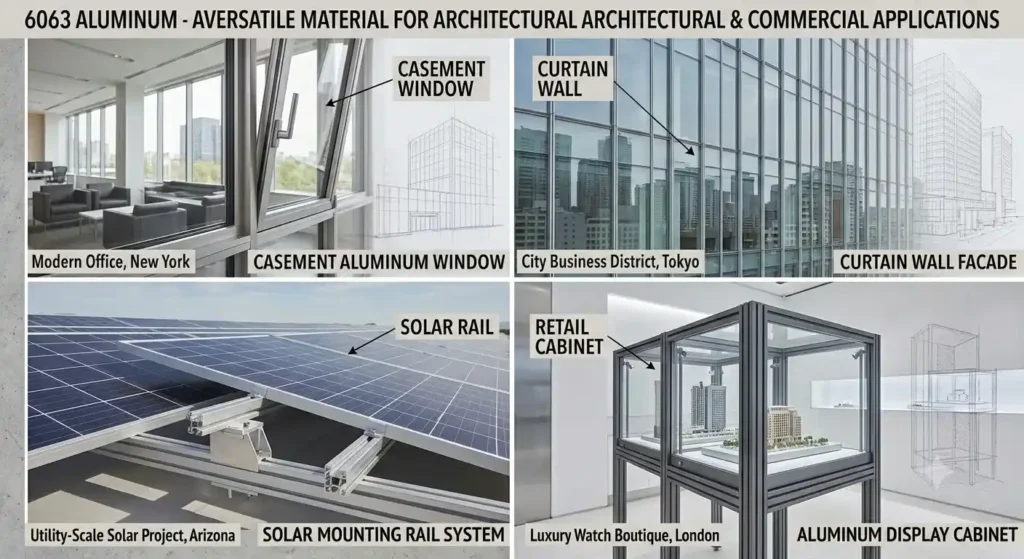
6063-T5 is widely used for Casement Windows and door frames because it combines dimensional stability with attractive anodized and powder-coated finishes.
Curtain Wall Systems
Modern Curtain Wall systems rely on 6063 mullions and transoms for their precision, surface consistency, and compatibility with glazing and thermal-break components.
Solar Mounting Systems
Solar rails and mounting brackets often use 6063 because it provides sufficient strength while resisting corrosion during long-term outdoor exposure.
Furniture and Display Frames
Architectural furniture, retail displays, and showcase systems benefit from 6063’s clean finish and decorative appearance.
What to Consider Before Specifying 6063 Aluminum
Before finalizing a specification, evaluate several important factors.
- Temper: Choose T5 for standard architectural applications or T6 when additional strength is required.
- Surface finish: Specify anodizing or powder coating based on exposure conditions and appearance requirements.
- Wall thickness: Match profile thickness to structural loads and fabrication needs.
- Mechanical requirements: Confirm the required temper instead of specifying only “6063 aluminum.”
- Environment: Coastal and industrial locations typically require anodized or powder-coated finishes for additional protection.
- Joining method: Welding reduces strength near the heat-affected zone, so fabrication methods should account for this during design.
Making these decisions before production helps prevent costly specification changes later.
6063 Aluminum Solutions from Exalum Metal
Exalum Metal manufactures standard and custom 6063 aluminum extrusion profiles for architectural, industrial, and commercial applications. Our capabilities include custom extrusion, anodizing, powder coating, and mill finishes, supported by consistent dimensional quality and reliable production schedules.
Whether you need standard architectural profiles or project-specific extrusions, our team can help you select the right solution.
Get in touch with our team directly:
Email: [email protected] WhatsApp: +62 811 9429 970 Website: www.exalummetal.com