

An electrician strips back the insulation on a thick overhead power cable and finds bright aluminum strands underneath instead of the copper most people expect. The cable still carries current perfectly well.
That substitution is not an accident or a shortcut. Aluminum conducts electricity and heat well enough to carry serious current and move real heat, and it does both at a fraction of copper’s weight. Utilities and manufacturers make this trade deliberately, not because aluminum is cheaper in every case, but because the physics favors it in specific situations.
Conductivity, in simple terms, describes how easily a material allows electricity or heat to pass through it. This article answers whether aluminum is conductive, how it compares to copper, and where that conductivity gets put to work.
How Electrically Conductive Is Aluminum?
Aluminum conducts electricity well, though not as well as copper for the same cross-sectional area. A pure copper wire carries more current than an aluminum wire of identical thickness, all else being equal.
The comparison changes once weight enters the picture. Aluminum conducts roughly twice as much electricity per unit of weight as copper, which is why utilities favor it for equipment such as Automotive Motor Accessories wiring harnesses and long-distance transmission lines. That weight advantage becomes decisive once a cable run stretches for miles.
Copper remains the standard for compact wiring, since it carries more current in less space. Aluminum earns its place wherever weight or cost outweighs the need for maximum conductivity in a small area.
Purity, alloy content, and temperature all affect how well aluminum conducts. Adding alloying elements for strength, as most structural aluminum does, slightly reduces conductivity compared to pure aluminum, so electrical-grade aluminum uses a different alloy mix than structural profiles.
Why Aluminum Became Important in Electrical Infrastructure
Long-distance power lines need a conductor that is both efficient and light, since every extra kilogram adds cost to the towers holding the line up. Aluminum’s weight advantage made it the practical choice for that job, even before other factors were considered.
That same weight advantage extended into modern power transmission equipment, where reducing structural load lowers both material and installation costs across a large network. Utilities continue to specify aluminum for exactly this reason today.
Is Aluminum Thermally Conductive?
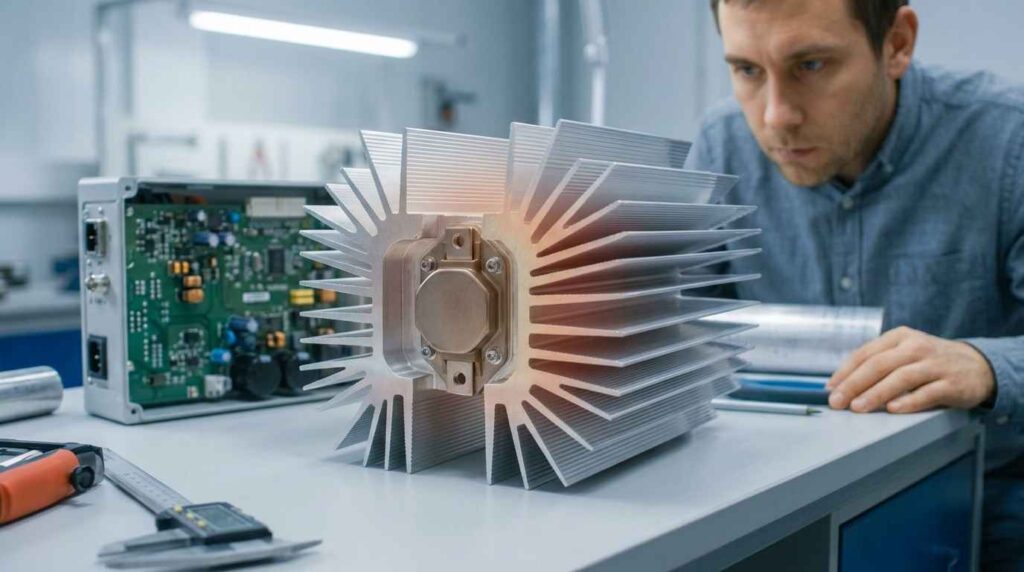
Aluminum also conducts heat efficiently, which is a separate property from electrical conductivity but follows a similar pattern. Heat moves through aluminum quickly, allowing it to absorb and release thermal energy fast.
That thermal behavior is why aluminum shows up constantly in cooling applications, anywhere heat needs to move away from a component quickly and evenly. Equipment designers often choose it specifically for this reason, independent of its electrical properties.
Strengths and Limitations of Conductive Aluminum
Where Aluminum’s Conductivity Works Well
Aluminum’s combination of decent conductivity and low weight suits any application where the conductor itself adds meaningful weight or cost. Long cable runs and large heat-dissipating surfaces, including equipment such as HVAC housings, both benefit directly from this balance.
Aluminum also resists corrosion better than bare copper in humid conditions, which helps protect electrical contacts over time and reduces the need for ongoing maintenance.
Where Aluminum’s Conductivity Falls Short
Aluminum needs a larger cross-section than copper to carry the same current, which limits its use in compact or space-constrained wiring. Aluminum connections also require specific hardware to prevent loosening as the metal expands and contracts with temperature.
For dense electronics and small-gauge wiring, copper generally remains the more practical choice despite its extra weight and higher material cost.
Aluminum vs Copper for Conductive Applications
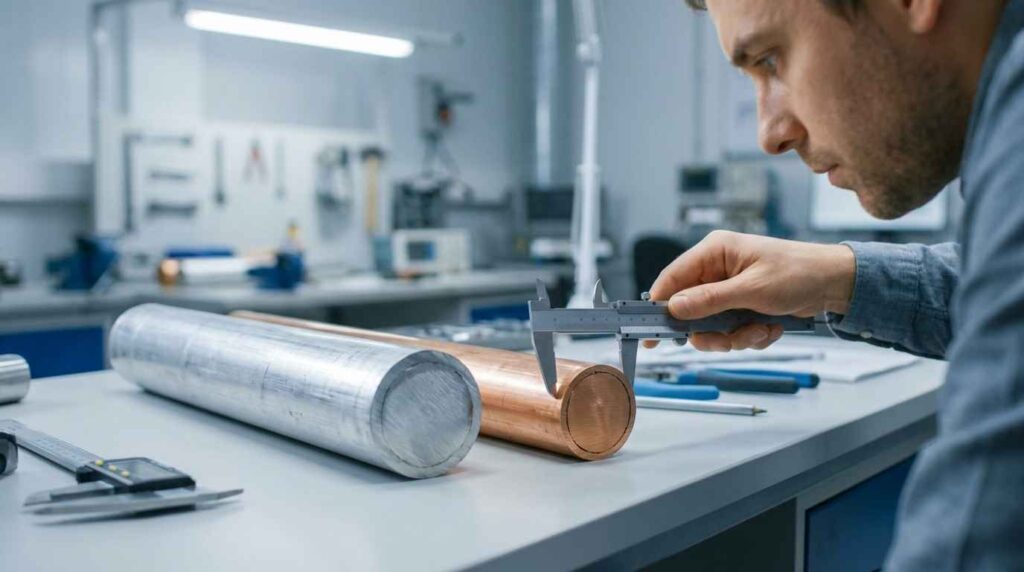
Choosing between the two conductive metals comes down to available space and total system weight.
| Material | Best For | Less Suitable For |
| Aluminum | Long transmission runs, weight-sensitive installations | Compact wiring, dense electronics |
| Copper | Small-gauge wiring, high current density in tight spaces | Long, weight-sensitive cable runs |
For infrastructure spanning long distances, aluminum’s weight savings typically outweigh copper’s higher raw conductivity.
Where Is Conductive Aluminum Used?
Electrical Components
Aluminum bus bars and conductor rails carry current in electrical distribution systems. Solar installations use similar conductive framing, including Solar Rail & Solar Panel mounting systems.
Heatsinks and Thermal Management
A Heatsink profile relies entirely on aluminum’s thermal conductivity, using extruded fins to maximize surface area for shedding heat.
Electronics and Industrial Equipment
Industrial equipment uses aluminum for both structural framing and heat management in the same assembly. Conveyor systems with integrated motor housings often rely on aluminum for exactly this dual role.
What to Consider When Specifying Conductive Aluminum
A few factors determine whether aluminum is the right conductive material for a given application.
- Current load: higher current needs a larger cross-section in aluminum than the equivalent copper would need.
- Available space: tight enclosures may favor copper despite the weight penalty.
- Weight sensitivity: aircraft, vehicles, and long spans favor aluminum’s lighter profile.
- Operating temperature: connections need hardware rated for aluminum’s thermal expansion.
- Corrosion exposure: humid or coastal installations benefit from aluminum’s natural resistance.
- Thermal load: applications shedding significant heat, such as a Diffusers assembly, benefit from aluminum’s fast heat transfer.
Conductive Aluminum Profiles from Exalum Metal
Exalum Metal extrudes and finishes aluminum profiles for applications where conductivity, weight, and corrosion resistance all matter, including electronics and industrial enclosures such as a Clean Room installation.
Custom extrusion is available for project-specific cross-sections. Finishing services include mill finish, anodizing, and powder coating. Volume order support extends to manufacturers producing conductive or thermal components at scale.
If your project needs a specific profile for electrical or thermal use, bring us your drawings or an estimated volume. Get in touch with our team directly through our contact inquiry or click the “Contact Us” button below.