
The transition metals occupy the broad central block of the periodic table, and they include many of the metals that built the modern world: iron, copper, titanium, nickel, chromium, zinc, and gold among them. They share a set of properties that make them extraordinarily useful, from high strength and conductivity to the ability to form alloys and catalyze reactions. Understanding what defines this group, and how aluminum relates to it, clarifies a lot about why different metals get used for different jobs. We work with aluminum and its alloys every day, and the points below explain the transition metals, their properties and uses, and where aluminum fits in the picture.
What Defines a Transition Metal
The transition metals are the elements that occupy groups 3 through 12 of the periodic table, the wide central block between the reactive metals on the left and the post-transition metals and non-metals on the right. What sets them apart at the atomic level is their electron structure, specifically the way they fill their inner d-orbitals, which is the source of most of their distinctive behavior.
This electron arrangement gives the transition metals a characteristic set of properties. They tend to be hard, strong, and dense. They conduct heat and electricity well. They have high melting and boiling points. They often form compounds in multiple oxidation states, which is why their compounds are frequently brightly colored and why many of them act as catalysts. And they readily form alloys with one another. These shared traits are what make the transition metals the workhorses of heavy industry, construction, electronics, and chemistry.
The Properties That Make Them Useful
The usefulness of the transition metals flows directly from their properties. Their strength and hardness make them the structural backbone of construction and manufacturing, with iron and its alloy steel being the most-used structural metals on earth. Their electrical conductivity makes copper the standard for wiring and electrical systems. Their high melting points let them perform in high-temperature environments where other materials would fail.
Their ability to form alloys is perhaps their most important industrial trait, because alloying lets metallurgists tune properties precisely, combining elements to produce materials stronger, harder, or more corrosion-resistant than any single metal. Stainless steel, which combines iron with chromium and nickel, is a classic example. Their catalytic behavior, meanwhile, makes transition metals like platinum and palladium essential to chemical processing and emissions control. And their varied, colorful compounds give them roles in pigments, plating, and countless chemical applications. This combination of strength, conductivity, alloying ability, and chemical versatility is why the transition metals are so deeply woven into industry.
Common Transition Metals and Their Roles
A handful of transition metals carry much of the industrial load. Iron is the foundation of steel, the most widely used structural metal, dominating construction, machinery, and manufacturing. Copper is the standard electrical conductor and a key material in plumbing, electronics, and heat exchange. Titanium combines high strength with low density and excellent corrosion resistance, making it valuable in aerospace, medical implants, and demanding applications.
Chromium provides corrosion resistance and hardness, essential to stainless steel and plating. Nickel adds strength, toughness, and corrosion resistance to alloys and is central to batteries and stainless steel. Zinc protects steel through galvanizing and forms important alloys like brass. Gold, silver, and the platinum-group metals serve in electronics, catalysis, and applications demanding resistance to corrosion and excellent conductivity. Each of these earns its place through the particular balance of transition-metal properties it offers.
Where Aluminum Fits in the Picture
Here is the distinction that matters for anyone comparing metals: aluminum is not a transition metal. It sits in group 13 of the periodic table and is classified as a post-transition metal, a category of metals that lie just past the transition block and behave somewhat differently. This is not a technicality, because the difference in classification reflects real differences in behavior that affect how the metals are used.
Aluminum is far lighter than the transition metals used in structure, at about a third the density of iron, which is precisely why it is chosen where weight matters and the heavier transition metals would be a penalty. It resists corrosion through a self-forming oxide layer rather than needing the alloying or plating that protects many transition metals. And while it is not as intrinsically strong as steel, its alloys deliver strength approaching structural steel at a fraction of the weight. In practice, aluminum competes with and complements the transition metals, chosen over them wherever its light weight, corrosion resistance, and workability outweigh the raw strength or conductivity that metals like iron and copper provide. Understanding that aluminum is a post-transition metal, not a transition metal, is the key to understanding why it gets selected for the jobs it does.
How This Connects to What We Do
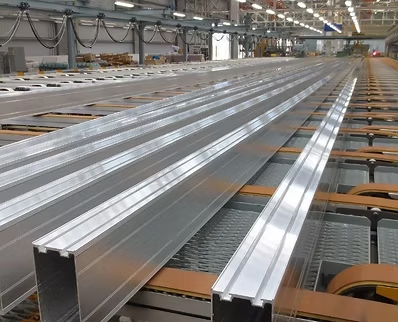
We work with aluminum, the post-transition metal whose particular properties make it indispensable wherever weight, corrosion resistance, and workability matter more than the raw density-bound strength of the transition metals. Turning that metal into useful form is the work of extrusion, and our vertically integrated facility in Indonesia spans 20,000 square metres, controlling aluminum from alloy through extrusion to finishing.
The result is a profile range that puts aluminum’s advantages to work across the applications where it is preferred over heavier metals:
- Square Hollow and Rectangular Hollow for structural framing that would be far heavier in steel
- Equal Angle, Unequal Angle, and Unequal Channel for bracing and connections that resist corrosion naturally
- Flat Bars and Round Bars for components and connections
- Tubing Pipes for railings, frames, and fluid handling
- Heat Sinks that use aluminum’s conductivity for thermal management
- Curtain Wall, Casement Windows, Doors, and Sliding Doors for architectural work where light weight and corrosion resistance win
Each of these is a case where aluminum, rather than a transition metal, is the right material for the job.
Understanding Metals to Choose the Right One
The transition metals are the strong, conductive, alloy-forming backbone of heavy industry, and they remain irreplaceable for the jobs that demand their particular properties. But understanding them also clarifies why aluminum, a post-transition metal with a different balance of properties, has taken over so many applications where weight, corrosion resistance, and workability matter most. Choosing the right metal starts with understanding these distinctions, and putting the chosen metal to work depends on the manufacturer behind it.
We have supplied extruded aluminum to fabricators, builders, and manufacturers since 2009, with the control over alloy and process that turns the metal’s properties into reliable performance.
Whether you need standard profiles or custom cross-sections designed for your specific requirements, we have the capacity and expertise to deliver.
Ready to discuss your project or request material specifications? Get in touch with our team directly:
Email: [email protected] WhatsApp: +62 811 9429 970 Website: www.exalummetal.com
When you put the right metal to work, start with extrusion you can trust. Make Exalum Metal your standard.