
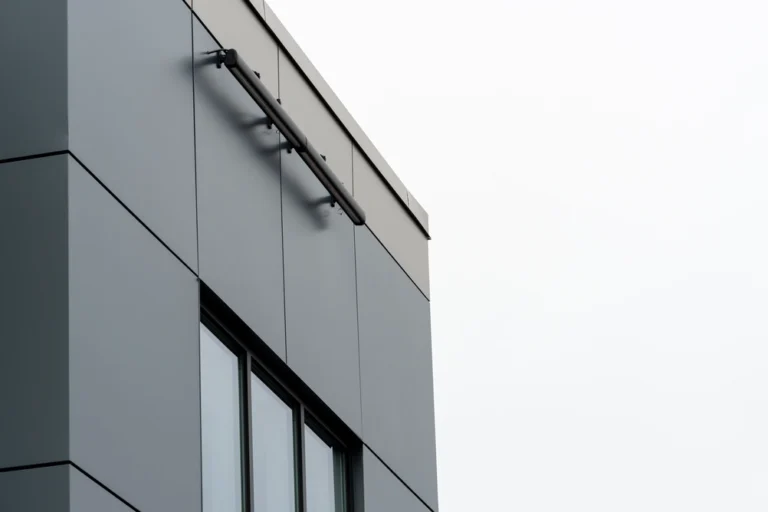
Aluminum composite material panels, known as ACM or ACP, have reshaped how modern facades, signs, and cladding are built. The panel is a sandwich, two thin aluminum skins bonded to a lightweight core, and that simple construction produces a surface that is remarkably flat, rigid, light, and easy to fabricate. ACM cuts cleanly, folds into precise shapes, and presents a smooth painted face that holds its color for years. We produce the aluminum framing and trim extrusion that ACM systems depend on, and the points below cover how ACM is built, where it excels, and the fire-safety distinction that every buyer needs to understand.
How ACM Panels Are Built
An ACM panel is a composite by design. Two skins of aluminum, each typically a fraction of a millimetre thick, are bonded under heat and pressure to a core material that fills the space between them. The result behaves far stiffer than its weight suggests, because the rigid skins sit at the outer faces where bending resistance is highest, while the lightweight core holds them apart and carries the shear between them. This is the same structural principle that makes an I beam efficient, applied to a flat panel.
The total panel thickness commonly runs around 3 to 6 millimetres, with 4 millimetres being the most widely used. The aluminum skins carry the painted or finished surface and provide durability, while the core provides the rigidity and the light weight. The combination is what gives ACM its signature flatness, the smooth, oil-canning-free surface that makes facades and signs look crisp and professional.
The Core Material and Why It Matters
The core is where ACM panels differ most, and where the most important buying decision lives. Standard ACM uses a polyethylene core, which is lightweight, inexpensive, and gives excellent flatness and formability. For decades this was the default, and it remains common in signage and lower-rise applications.
The critical distinction is fire performance. A pure polyethylene core is combustible, and large-scale facade fires have shown that combustible-core ACM can contribute to fire spread on tall buildings. In response, fire-retardant and non-combustible core options were developed and are now required by code on many buildings, particularly taller structures. Fire-retardant cores mix mineral fillers into the polyethylene to limit combustibility, while mineral-core panels use a largely non-combustible filler to meet the strictest fire ratings. For any facade application, and especially anything above low-rise, the core’s fire rating is not an optional upgrade but a code and safety requirement that has to be specified deliberately. Choosing the right core for the building’s height and use is the single most important ACM decision.
Why Builders and Fabricators Choose ACM
ACM earned its place in modern construction by combining qualities that are hard to find together. The flatness is the headline. The composite construction holds a panel dead flat across large areas, avoiding the rippling that single-skin metal sheets show, which is exactly what architects want for clean, monolithic facades.
The light weight reduces structural load and makes panels easy to handle and install. The fabrication is forgiving, since ACM can be cut, routed, and folded with standard tools, with routed grooves on the back letting installers fold the panel into precise returns and corners. The finish is durable and varied, with factory-applied coatings available in solid colors, metallics, and patterns that hold their appearance for many years under exposure. And the cost, for the standard panels, is reasonable relative to solid metal cladding. Together these make ACM a practical choice for facades, fascias, column covers, canopies, and signage alike.
Where ACM Panels Are Used
The applications span architecture and signage. Building facades and rainscreen cladding are the largest use, where ACM forms the visible skin of commercial, institutional, and residential buildings, often over a ventilated cavity that manages moisture. Fascias, soffits, and parapet caps use ACM for clean, durable detailing at the edges and transitions of a building.
Column covers and interior feature walls use ACM for its flatness and finish in lobbies, atriums, and public spaces. Canopies and entrance features use it for sheltered, finished surfaces at building entrances. And signage is a major application in its own right, where ACM’s flatness, light weight, and printable surface make it the standard substrate for everything from storefront signs to large format graphics. In every case, the panel needs a framing and attachment system to hold it, which is where extruded aluminum profiles come in.
The Aluminum Framing Behind Every ACM System
An ACM panel does not hang on a wall by itself. It needs a support system of extruded aluminum profiles that frame the panels, join them, attach them to the structure, and manage water behind them, and this is where our extrusion serves ACM construction directly. The perimeter framing, the panel-joining profiles, the trim at edges and openings, and the sub-framing that carries the whole rainscreen all rely on precise aluminum extrusion.
Our vertically integrated facility in Indonesia spans 20,000 square metres and produces the profile range that ACM cladding systems are built around:
- Equal Angle and Unequal Angle for perimeter framing, sub-framing, and the brackets that attach panels to the structure
- Unequal Channel for panel edge capture, J-trim, and termination at openings
- H-section and panel-joining profiles for the joints between adjacent ACM panels
- Square Hollow and Rectangular Hollow for the sub-framing and structural support behind the cladding
- Flat Bars for splices, backing, and connection plates
- Curtain Wall and Spandrel profiles for the glazed and infill sections that ACM facades combine with
For cladding systems that need a specific framing or trim profile, custom extrusion produces the exact geometry the system requires, finished to match or complement the panels it supports.
Specifying ACM the Right Way
ACM delivers a flat, durable, attractive facade surface at low weight and reasonable cost, which is why it has become a default for modern cladding and signage. The decisions that matter are choosing the core fire rating to suit the building’s height and code requirements, selecting a panel thickness and finish for the application, and pairing the panels with a properly engineered aluminum framing and trim system that holds them flat, joins them cleanly, and keeps the wall behind them dry.
We have supplied architectural aluminum extrusion to fabricators, cladding contractors, and facade specialists since 2009, with the dimensional precision and finishing quality that visible facade work demands.
Whether you need standard profiles or custom cross-sections designed for your specific cladding system, we have the capacity and expertise to deliver.
Ready to discuss your project or request material specifications? Get in touch with our team directly:
Email: [email protected] WhatsApp: +62 811 9429 970 Website: www.exalummetal.com
When the facade has to stay flat, tight, and true, start with the framing extrusion you can trust. Make Exalum Metal your standard.