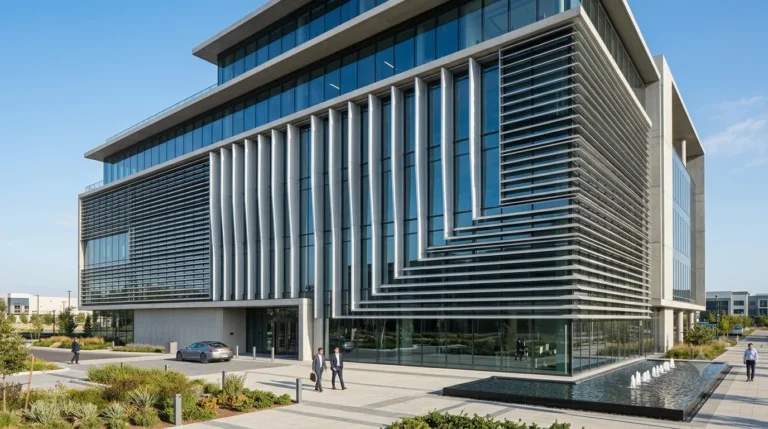
Walk around almost any airport, office tower, shopping mall, hospital, or industrial facility, and you’ll likely find aluminum louvers integrated into the building’s façade. While many people see them simply as decorative architectural features, louvers actually play an important role in how buildings breathe, regulate heat, and protect interior spaces.
As modern architecture places greater emphasis on energy efficiency and occupant comfort, ventilation systems have become more sophisticated. Rather than relying entirely on mechanical cooling, many buildings now combine passive ventilation strategies with carefully designed façade elements. Aluminum louvers are one of the most effective components supporting this approach.
Understanding how aluminum louvers work can help architects, developers, and project owners design buildings that perform better while maintaining a clean, contemporary appearance.
What Are Aluminum Louvers?
Aluminum Louvers are assemblies of angled horizontal or vertical blades designed to control airflow while limiting the entry of rain, direct sunlight, dust, and unwanted visibility.
Unlike simple openings in a wall, louvers are engineered to balance ventilation with environmental protection. Depending on the project, they may serve as ventilation louvers, sun-shading systems, privacy screens, or decorative façade elements.
Because aluminum extrusion allows highly precise profiles, louvers can be manufactured in various blade shapes and sizes to suit different architectural requirements. They are commonly integrated with Curtain Wall systems, Shop Front installations, and modern Sliding Windows.
Why Aluminum Is the Preferred Material for Louvers
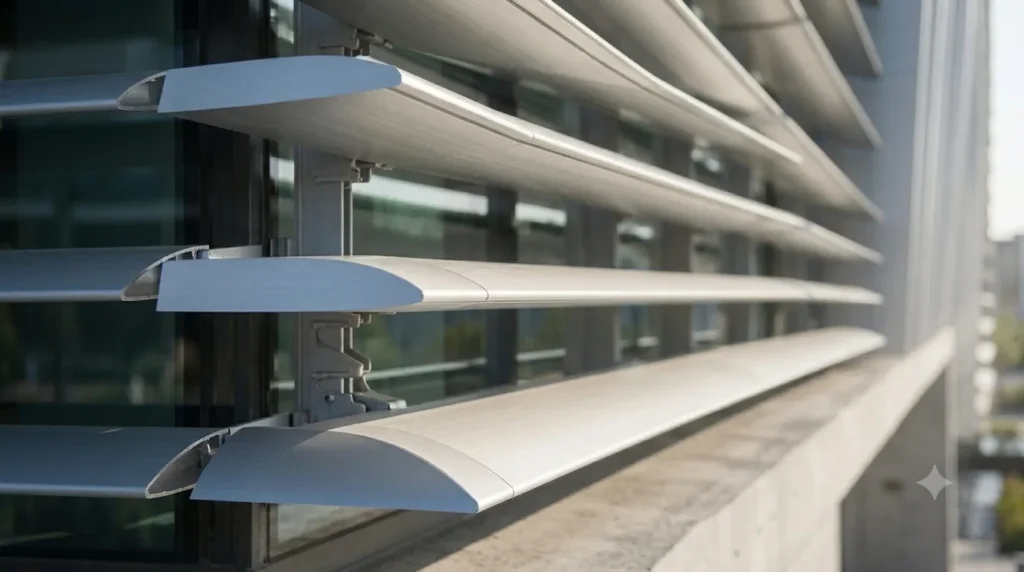
Although louvers can be manufactured from several materials, aluminum has become the preferred choice for many commercial and residential projects.
Lightweight Yet Strong
Aluminum provides excellent structural strength without adding unnecessary weight to the building envelope.
This makes installation easier while reducing structural loads, especially on large façades or high-rise developments.
Excellent Corrosion Resistance
Exterior building components are continuously exposed to rain, humidity, pollution, and UV radiation.
Aluminum naturally develops a protective oxide layer that helps resist corrosion. When combined with anodizing or powder coating, aluminum louvers can maintain both their appearance and structural integrity for many years with minimal maintenance.
Flexible Design Options
Extrusion technology allows aluminum louvers to be produced in a wide variety of blade profiles, spacing, and dimensions.
This gives architects greater flexibility when designing façades that meet both performance requirements and aesthetic objectives.
How Aluminum Louvers Improve Building Performance
The value of aluminum louvers extends far beyond appearance.
Improving Natural Ventilation
One of their primary functions is allowing air to move freely through a building while preventing unwanted environmental elements from entering.
Natural airflow helps reduce heat buildup and improve indoor air quality, particularly in semi-open spaces, mechanical rooms, and parking structures.
Reducing Solar Heat Gain
Louvers also help block direct sunlight before it reaches glazing systems.
By limiting solar heat gain, they reduce cooling loads and contribute to improved energy efficiency, especially in buildings with large glass façades.
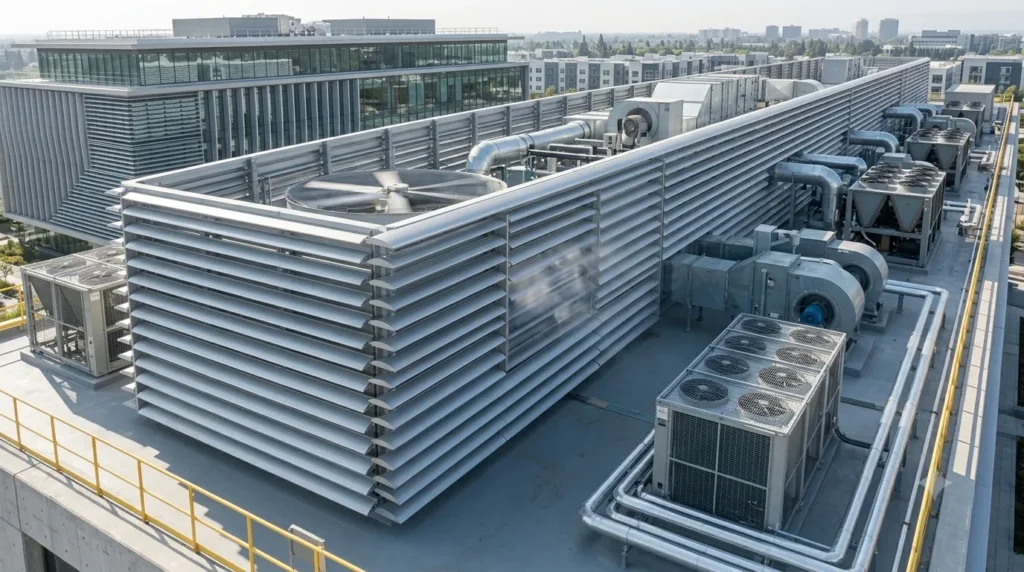
Protecting Building Systems
Mechanical equipment often requires continuous airflow while remaining protected from rain and debris.
Aluminum louvers allow ventilation without exposing sensitive equipment directly to the outdoor environment, making them suitable for plant rooms and utility spaces.
Climate Also Influences Louver Design
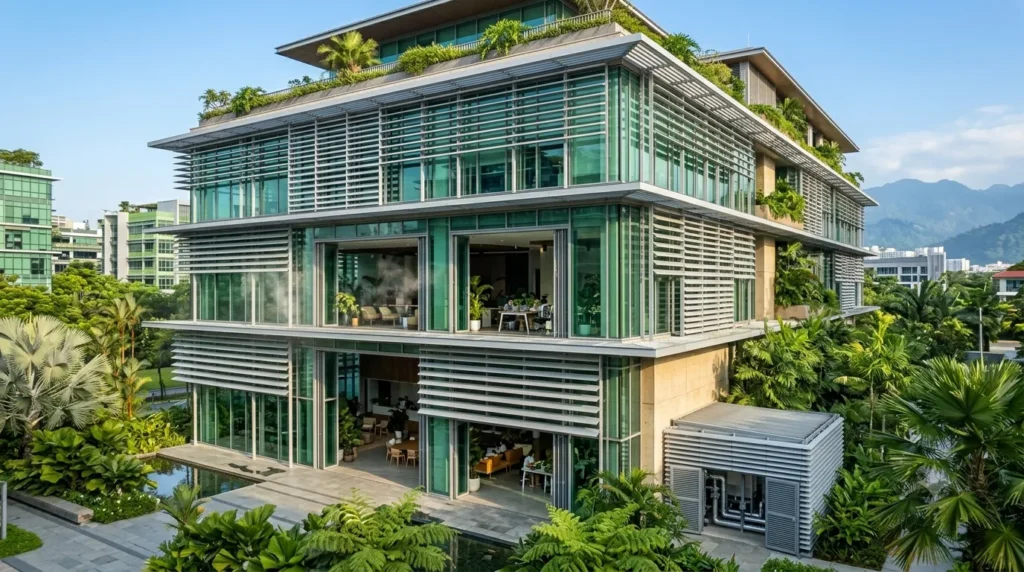
Environmental conditions play a major role in determining how louvers are designed and installed.
In tropical regions such as Southeast Asia, buildings experience high humidity, heavy rainfall, and intense solar radiation throughout the year. Louvers are often designed to maximize airflow while minimizing rain penetration and reducing heat entering the building.
In North America and Europe, where climates vary significantly between seasons, louvers frequently balance ventilation with energy-efficient building envelopes. During warmer months, they help reduce solar heat gain, while carefully engineered façade systems continue supporting indoor comfort throughout seasonal temperature changes.
This ability to adapt to different climates explains why aluminum louvers have become a common architectural feature in buildings worldwide.
Common Applications of Aluminum Louvers
Because they combine ventilation, protection, and architectural value, aluminum louvers are used across many industries.
| Application | Primary Function |
| Commercial buildings | Ventilation and façade enhancement |
| Industrial facilities | Equipment ventilation |
| Parking structures | Natural airflow |
| Residential buildings | Privacy and sun shading |
| Mechanical rooms | Air intake and exhaust |
| Data centers and Clean Room facilities | Controlled ventilation |
Many projects also combine aluminum louvers with Spandrel panels and Curtain Wall systems to create façades that are both functional and visually consistent.
Fixed vs Adjustable Louvers
Not every louver system operates the same way.
Fixed Louvers
Fixed louvers have permanently angled blades that continuously provide ventilation and weather protection.
Because they contain no moving parts, they require little maintenance and are commonly used on commercial buildings, industrial facilities, and equipment enclosures.
Adjustable Louvers
Adjustable louvers allow the blade angle to be changed manually or automatically.
This enables buildings to regulate airflow, daylight, and privacy depending on operational needs or changing weather conditions.
The most appropriate option depends on the building’s ventilation strategy and operational requirements.
How Louvers Complement Modern Architectural Design
Today’s buildings are expected to do more than simply provide shelter. Architects increasingly seek façade systems that combine performance, sustainability, and visual appeal.
Aluminum louvers help achieve this balance by adding depth, rhythm, and texture to building exteriors while serving practical functions such as ventilation and solar control.
When integrated with architectural systems such as Sliding Windows, Partition systems, and modern façades, louvers contribute to buildings that are both attractive and efficient.
Choosing the Right Aluminum Louvers
Selecting the right louver system involves more than choosing a blade shape.
Designers typically consider:
- Airflow requirements
- Local climate and rainfall
- Sun exposure
- Maintenance expectations
- Architectural appearance
- Integration with surrounding façade systems
Carefully evaluating these factors helps ensure the louver system delivers long-term performance while supporting the building’s overall design objectives.
At Exalum Metal, we provide aluminum extrusion and finishing solutions for a wide range of architectural applications, including custom aluminum profiles for louvers, façades, windows, and building envelope systems. Whether your project involves commercial developments, industrial facilities, or modern residential buildings, our team can help you develop aluminum solutions that combine performance, durability, and contemporary design.
Get in touch with our team directly:
Email: [email protected] WhatsApp: +62 811 9429 970 Website: www.exalummetal.com