
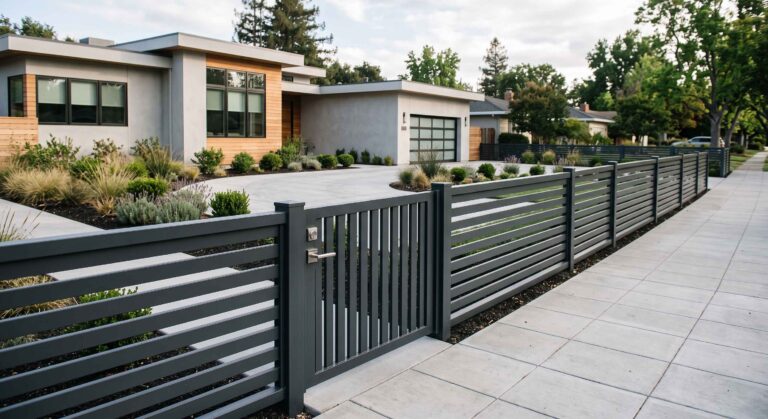
Have you noticed how the fences around new housing estates, waterfront homes, and corporate campuses look cleaner and last far longer than the timber and iron fences of a generation ago? The reason is almost always aluminum.
Across North America, Europe, Australia, and Asia, developers now specify aluminum for perimeter fencing because it pairs a modern look with genuine durability. This article walks through the main aluminum fence types by use, the metallurgy and coatings that make them last, the modular design that speeds installation, and how Exalum Metal supplies fence profiles and kits at volume.
Why Aluminum Has Replaced Timber and Wrought Iron
High-density urban developments and master-planned communities are steadily phasing out timber and wrought iron, because both carry heavy maintenance, rot, and rust liabilities. Aluminum, by contrast, resists corrosion and holds its shape for decades with little care. Moreover, it works as an architectural asset rather than a plain barrier. Slim aluminum profiles frame scenic coastal and landscape views, yet the same system delivers the sleek, modern lines that high-density European and Asian compounds want. As a result, aluminum now sets the standard for both open-sightline fencing and full privacy screens.
Aluminum Fence Types by Use
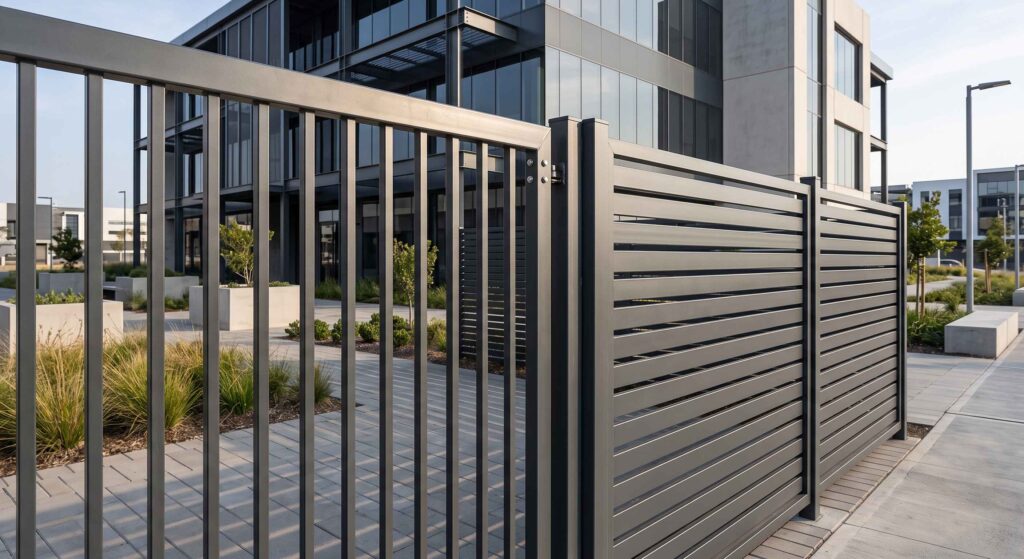
Fence design starts with the job it has to do, so the right type depends on the setting. The three categories below cover most residential, commercial, and architectural projects, and each maps to specific Exalum profiles.
Residential Fencing
Homes value safety, curb appeal, and low upkeep in equal measure. Pool enclosures, for instance, must meet strict rules such as the four-foot pool-safety codes across North America, while many neighborhoods enforce a uniform look through their HOA. Flat-top and spear-picket panels answer both needs, and they never need repainting. Here Round Bars form pickets and spear tops, while Square Hollow posts and Flat Bars rails complete the frame.
Commercial and Security Fencing
Commercial and industrial sites put strength and wind resistance first. In typhoon and high-wind zones across Asia and the Middle East, perimeter fencing has to carry serious load without flexing or failing. Thicker, multi-chamber extrusions handle that demand far better than thin, dent-prone profiles. For these builds, Rectangular Hollow and Square Hollow sections form rigid panels, and Pipes add heavy-duty posts.
Architectural Privacy and Slat Systems
Architectural projects treat the fence as part of the facade. Horizontal slat and blade systems deliver privacy and airflow at once, which suits coastal Australia as well as hot, tropical climates. In Europe, minimalist slat fencing in standard RAL tones such as Anthracite RAL 7016 has become the default. For this look, Louvers supply the slat and blade profiles, Rectangular Hollow frames the panel, and Decorative Tubing Pipes add finer detailing.
The Extrusion Behind a Durable Fence
Strip away the finish and a good fence comes down to its extrusion, which is exactly where Exalum Metal’s engineering shows. We extrude fence profiles in the 6000 series, using 6063-T5 or T6 and 6061 for high tensile strength and rigidity without the extra weight that inflates shipping costs. Just as important, we design engineered wall thickness and multi-chamber sections that shrug off wind load and impact where thin hollow profiles would dent. On top of that, the finish carries the weatherability. Marine-grade powder coating at 60 microns or more shields against UV and salt-spray corrosion, anodized finishes resist chalking and thermal stress in extreme heat, and neither absorbs moisture, so freeze-thaw cycles cannot crack them. For corners and gate frames, Equal Angle and Unequal Angle brackets lock the assembly square.
| Fence Element | Exalum Profile |
| Posts and main rails | Square Hollow, Rectangular Hollow |
| Vertical pickets and spear tops | Round Bars, Square Hollow |
| Horizontal privacy slats | Louvers, Rectangular Hollow |
| Rails, pickets, and brackets | Flat Bars |
| Tubular posts and infills | Pipes, Decorative Tubing Pipes |
| Corner posts and brackets | Equal Angle, Unequal Angle |
Each element links to its Exalum product page in the sections above, and most fences combine several of these profiles in one run.
Built for Modular Assembly and Efficient Shipping
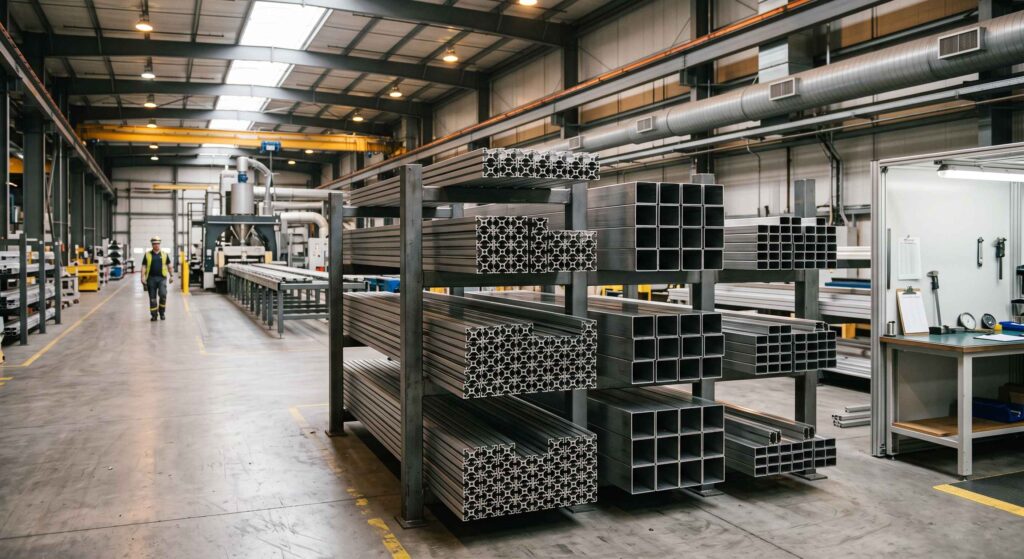
Beyond the profile itself, aluminum fencing wins on how easily it ships and installs. Rackable extrusion systems, for example, articulate across ten to fifteen degrees of grade change, so a fence follows a hillside while its top and bottom rails stay parallel with no gaps underneath. Non-welded, concealed-fastener brackets then let crews assemble panels mechanically, which removes on-site welding and cuts field labor for installation contractors. Finally, flat-packed knock-down kits load far more densely into ocean containers than pre-assembled panels, so importers move more fence per container and lower their per-unit freight to ports in the US, Europe, Australia, and Asia.
Regional Demand and the Case for Importing from Exalum
Different markets ask for different fence systems, and Exalum Metal builds to each as a vertically integrated OEM and ODM manufacturer. The table below maps the core demand in each region to what Exalum adds and why it helps importers.
| Market / Region | Core Product Demand | Exalum OEM Value Add | Strategic Importer Benefit |
| North America (US/CA) | Flat-top and spear-picket panels, pool safety fencing | Custom CAD die creation and standardized 4′, 5′, and 6′ panel heights | High-volume supply stability for national fence distributors |
| Australia (AU/NZ) | Horizontal slat and blade privacy fencing | Precision slat-notch punching and Colorbond-matched finishes | Ready-to-assemble kits tailored for coastal environments |
| Europe (EU/UK) | Heavy slat privacy and minimalist modular systems | EN 1090-compliant alloys and standard European RAL powder coats | Certified quality documentation for commercial and residential builds |
| Asia and GCC | Typhoon-rated security panels and louver fencing | High wind-load die design and heavy-gauge louver and slat profiles | Compliance-ready panels for typhoon and high-heat climates |
Standards such as pool-safety codes, Bushfire Attack Level (BAL) ratings, and EN 1090 vary by market, so confirm the target requirements before production.
What to Specify When Ordering Aluminum Fencing
A clear specification keeps a fence order on budget and compliant with the destination market, so confirm these points up front:
- Panel type and height: flat-top, spear-picket, slat, or louver, with pool-safe heights where codes apply.
- Alloy grade: 6063-T5 or T6 for general profiles, and 6061 where higher strength matters.
- Wall thickness: engineered multi-chamber sections for high wind load, not thin dent-prone walls.
- Finish: marine-grade powder coating at 60 microns or more for coastal sites, or anodizing for extreme heat.
- Terrain and assembly: rackable panels for sloped ground, plus non-welded knock-down kits for fast installation.
- Market standards and volume: BAL, EN 1090, RAL or Colorbond matching, plus container quantity and delivery timeline.
Aluminum Fence Solutions from Exalum Metal
At Exalum Metal, we design, extrude, source, fabricate, finish, and ship aluminum, which lets us run custom OEM and ODM fence production end to end. We create custom dies for your panel designs, hold standard picket and slat heights, and finish in marine-grade powder coat or anodizing to match your market. On top of that, we flat-pack knock-down kits for maximum container density and back large orders with consistent dimensional quality and reliable production timelines.
Whether you distribute fencing nationally or fit out a single development, our team can help you specify and source the right aluminum at volume. Get in touch with our team directly by clicking the “Contact Us” button below.