
Walk through a modern office, warehouse, shopping mall, or residential building, and you’ll likely find aluminum square tubing hidden within the structure. From furniture frames and window systems to industrial equipment and architectural components, aluminum hollow sections have become essential across countless industries.
Their popularity comes from a unique combination of lightweight strength, corrosion resistance, design flexibility, and manufacturing efficiency. Rather than relying on solid metal bars, engineers often choose hollow aluminum profiles because they provide excellent structural performance while using less material.
Among the most common options are square hollow sections (SHS) and rectangular hollow sections (RHS). Although they share many advantages, each profile offers different structural characteristics that make it better suited to specific applications.
Understanding these differences helps architects, manufacturers, contractors, and designers select the most appropriate aluminum tubing for their projects.
What Is Aluminum Square Tubing?
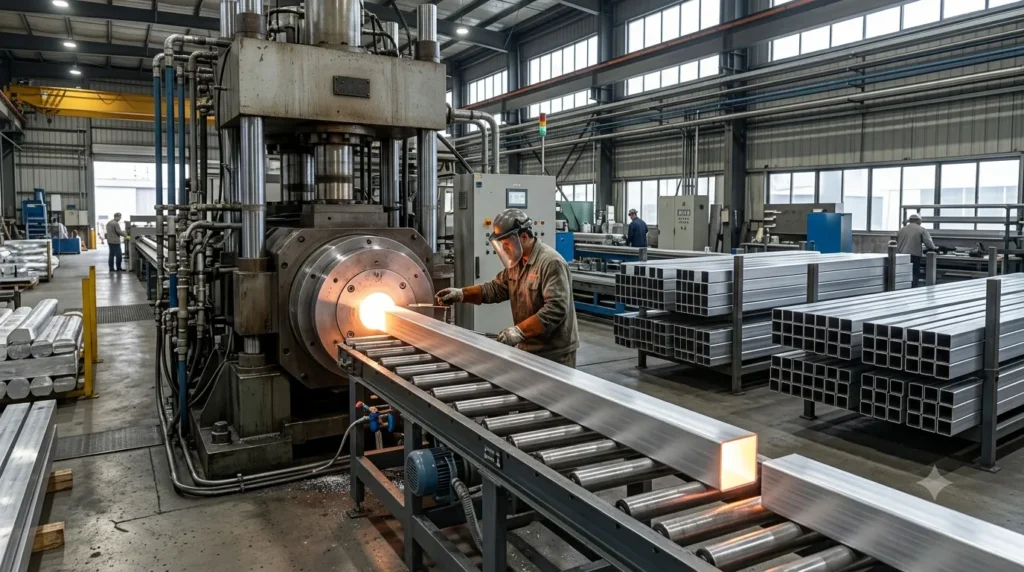
Aluminum square tubing is an extruded hollow profile with four equal sides that form a square cross-section. During the extrusion process, heated aluminum is pushed through a precision die, creating a continuous profile with consistent dimensions and wall thickness.
Because the profile is hollow rather than solid, it offers an excellent balance between strength and weight. This makes aluminum square tubing easier to transport, fabricate, and install while still providing reliable structural performance.
Today, aluminum square tubing is widely used in products such as Furniture frames, Partition systems, equipment structures, and architectural framing where clean lines and durability are equally important.
Square Hollow vs. Rectangular Hollow: What’s the Difference?
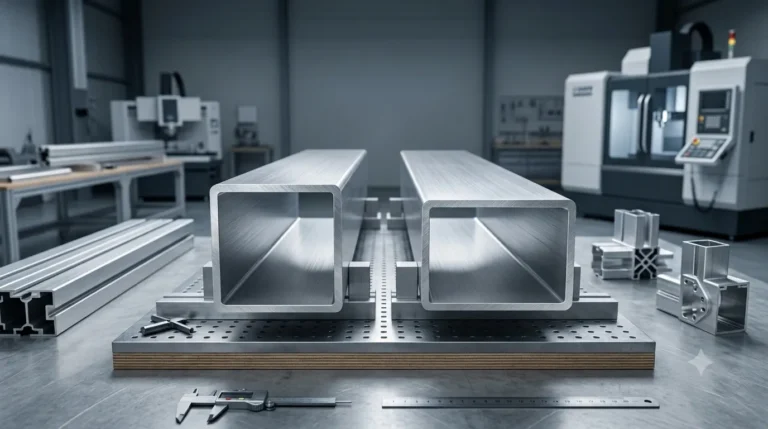
Although both profiles are hollow aluminum extrusions, their geometry influences how they perform under different loading conditions.
| Profile | Best For | Main Advantage |
| Square Hollow Section (SHS) | General framing, furniture, architectural structures | Balanced strength in all directions |
| Rectangular Hollow Section (RHS) | Beams, supports, equipment frames | Greater bending resistance in one direction |
Square tubing distributes loads more evenly because all four sides have the same dimensions. This makes it suitable for columns, frames, and structures where forces may come from multiple directions.
Rectangular tubing, on the other hand, has one longer side, allowing it to resist bending more effectively along a specific axis. Engineers often choose RHS when designing equipment frames, machine supports, shelving systems, or structural members where loads are directional.
Because Exalum Metal manufactures both square and rectangular hollow aluminum profiles, designers can select the profile that best matches the structural and fabrication requirements of each project.
Why Aluminum Hollow Sections Are So Versatile

The widespread use of aluminum square and rectangular tubing comes from several material advantages working together.
Excellent Strength-to-Weight Ratio
One of aluminum’s biggest advantages is that it provides high structural performance while remaining significantly lighter than steel.
This reduces transportation costs, simplifies installation, and makes large fabricated assemblies easier to handle. Whether used in Sliding Windows, modular furniture, or industrial frameworks, lighter components can improve manufacturing efficiency without compromising durability.
Outstanding Corrosion Resistance
Unlike steel, aluminum naturally develops a protective oxide layer when exposed to air. This helps prevent corrosion in many environments.
For projects exposed to outdoor weather or humid conditions, additional finishing processes such as anodizing or powder coating further improve long-term durability while reducing maintenance requirements.
This makes aluminum hollow sections suitable for architectural applications, outdoor installations, and industrial facilities.
Easy to Fabricate
Another reason manufacturers prefer aluminum tubing is its excellent workability.
Aluminum hollow sections can be:
- Cut
- Drilled
- Machined
- Bent
- Welded (depending on alloy and finish)
These fabrication advantages allow manufacturers to produce customized assemblies for architectural products, industrial machinery, retail fixtures, and commercial interiors with greater efficiency.
How Different Industries Use Aluminum Square Tubing
Because aluminum tubing combines structural performance with manufacturing flexibility, it supports a wide variety of industries.
| Industry | Typical Applications |
| Construction | Curtain Wall systems, structural framing, architectural supports |
| Furniture | Tables, shelving, modular office furniture |
| Industrial Manufacturing | Machine frames, Conveyor systems, automation equipment |
| Commercial Interiors | Partition systems, display structures, retail fixtures |
| Transportation | Vehicle frames, trailers, lightweight structural components |
| Electronics | Equipment frames, protective enclosures, Heatsink supports |
Many people interact with aluminum square tubing every day without realizing it. It often serves as the hidden structural framework behind products that appear simple on the outside.
Climate Also Influences Material Selection
Environmental conditions play an important role when selecting structural materials.
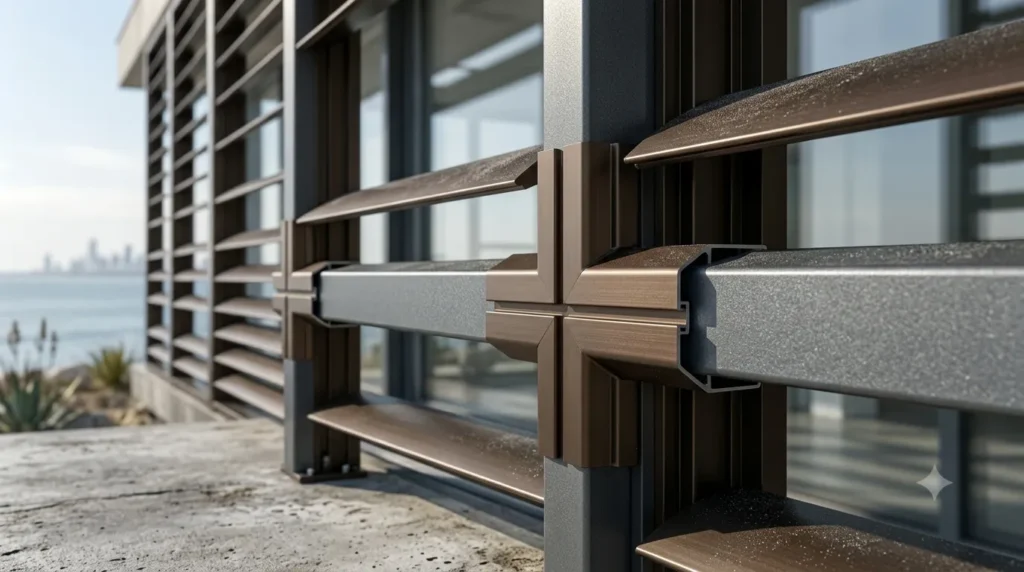
In tropical regions such as Southeast Asia, high humidity, heavy rainfall, and intense UV exposure can accelerate the deterioration of materials that require frequent protective coatings. Aluminum performs particularly well because of its natural corrosion resistance and compatibility with durable finishing methods.
In North America and Europe, structures experience freezing winters, warm summers, and repeated temperature changes. Aluminum continues to gain popularity because it maintains dimensional stability while supporting modern architectural systems with slim profiles and large glazing areas.
These characteristics explain why aluminum hollow sections are widely used across different climates and industries around the world.
Choosing the Right Aluminum Tubing
Selecting aluminum tubing involves more than choosing between square or rectangular profiles.
Engineers typically evaluate several factors before making a decision.
| Consideration | Why It Matters |
| Profile shape | Determines structural efficiency and load distribution |
| Alloy | Influences strength, machinability, and weldability |
| Wall thickness | Affects load capacity and weight |
| Surface finish | Improves durability and corrosion resistance |
| Indoor or outdoor use | Determines finishing requirements |
Considering these factors early helps improve manufacturing efficiency while ensuring the finished product performs reliably throughout its service life.
Why Aluminum Continues to Be the Preferred Choice
As industries continue to demand lighter, stronger, and more sustainable materials, aluminum square and rectangular tubing remain among the most versatile structural solutions available.
Their combination of lightweight strength, corrosion resistance, fabrication flexibility, and clean appearance allows them to support applications ranging from architecture and furniture to transportation and industrial manufacturing.
At Exalum Metal, we provide aluminum extrusion and finishing solutions for a wide range of architectural and industrial applications. Whether your project requires square tubing, rectangular hollow sections, Curtain Wall systems, Sliding Windows, Furniture components, Partition systems, or custom aluminum profiles, our team can help you select solutions that combine precision, durability, and long-term performance.
Get in touch with our team directly:
Email: [email protected] WhatsApp: +62 811 9429 970 Website: www.exalummetal.com