
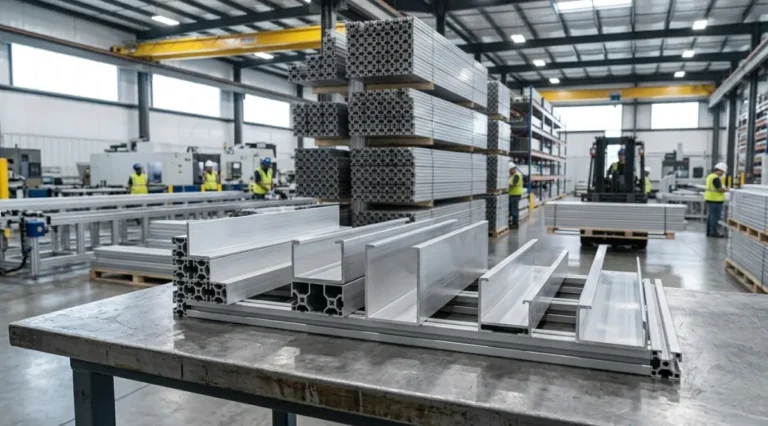
Aluminum channels are used in everything from window frames and furniture to industrial machinery and production equipment. Although they may look like simple structural profiles, choosing the right aluminum channel can significantly affect a product’s strength, fabrication efficiency, installation, and long-term durability.
Today, aluminum channels are used in a wide variety of industries, from architectural facades and window systems to furniture, industrial machinery, transportation, and retail interiors. Because each project has different performance requirements, understanding the available channel profiles is the first step toward making the right choice.
What Is an Aluminum Channel?
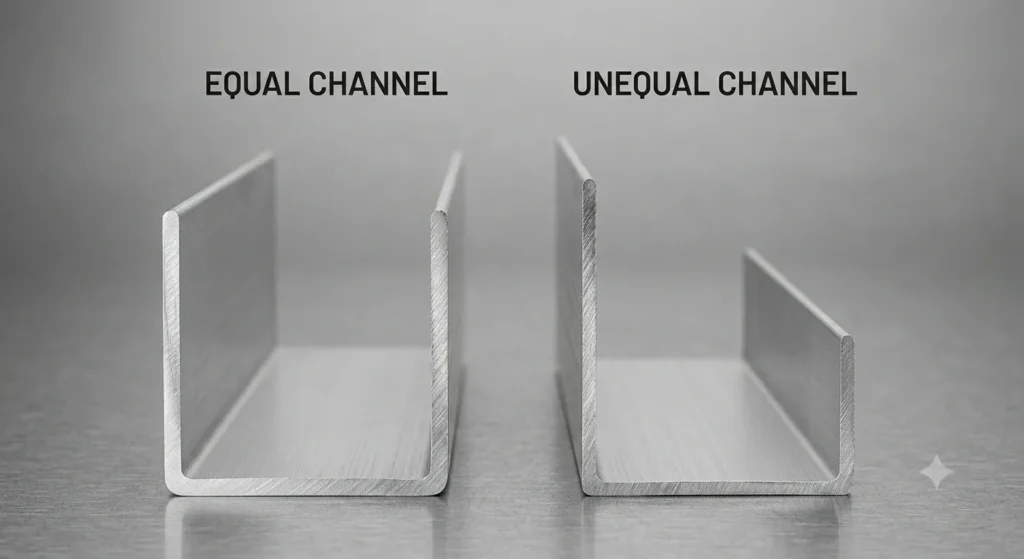
An aluminum channel is an extruded aluminum profile with an open cross-section that is commonly shaped like the letter “U” or “C.” It is manufactured by pushing heated aluminum through a precision die, producing long profiles with consistent dimensions and excellent surface quality.
Rather than offering different shapes for appearance alone, U-channels (also known as equal channels) and unequal channels are designed to solve different structural and installation challenges. Selecting the appropriate profile helps optimize load distribution, simplify fabrication, and improve overall system performance.
Unlike fabricated steel channels that require welding or multiple manufacturing steps, aluminum channels are produced as a single continuous profile. This provides better dimensional consistency while keeping the material lightweight and easy to fabricate.
Because aluminum extrusion allows highly customized shapes, aluminum channels are widely used in architectural products such as Sliding Windows, Curtain Wall systems, Partition frames, and many industrial applications.
Why Aluminum Channel Is Used Across So Many Industries
The popularity of aluminum channel comes from the combination of several material advantages rather than one single property.
Lightweight but Structurally Efficient
Aluminum offers an excellent strength-to-weight ratio, making channels easier to transport, handle, and install than many steel alternatives.
This is particularly valuable for architectural systems, modular structures, and industrial equipment where reducing weight can simplify installation without compromising structural performance.
Excellent Corrosion Resistance
Unlike steel, aluminum naturally forms a protective oxide layer that helps resist corrosion.
When combined with anodizing or powder coating, aluminum channels can perform reliably in humid climates, coastal regions, and outdoor environments while requiring relatively little maintenance.
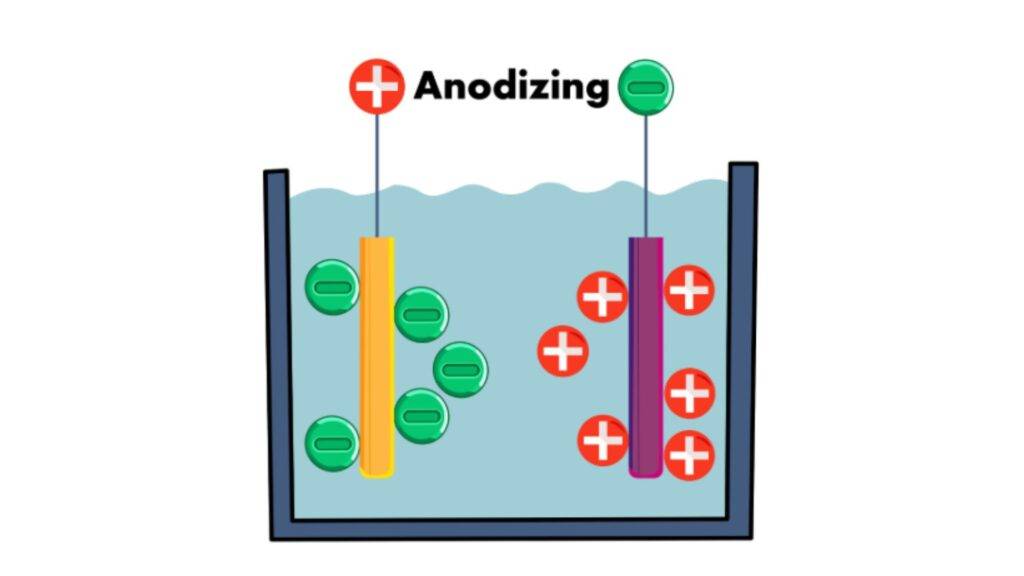
Illustration of the anodizing process. During anodizing, aluminum is immersed in an electrolytic bath and connected to an electrical current, creating a thicker oxide layer that improves corrosion resistance and surface durability.
Easy to Machine and Fabricate
Aluminum channels can be cut, drilled, machined, and welded efficiently.
This flexibility allows manufacturers to produce custom assemblies for applications ranging from furniture frames to production equipment and architectural systems.
Understanding U-Channel and Unequal Channel
One of the most important decisions when selecting an aluminum channel is choosing the appropriate profile.
U-Channel (Equal Channel)
U-channels, have two side walls (legs) of identical height.
Because both sides are symmetrical, U-channels distribute loads evenly and are easier to align during installation. They are commonly selected for:
- Window and door framing
- Display systems
- Protective edging
- Architectural trim
- General structural framing
Thanks to their versatility, U-channels are among the most widely used aluminum channel profiles in both architectural and industrial projects.
Unequal Channel
Unequal channels have one side wall that is taller than the other.
This asymmetrical design allows the profile to accommodate different connection methods, support varying panel thicknesses, or provide additional clearance where required.
Unequal channels are frequently used for:
- Specialized framing systems
- Equipment housings
- Industrial machinery
- Custom architectural details
- Complex fabrication projects
Because aluminum extrusion allows custom dimensions, unequal channels provide engineers with greater design flexibility when standard U-channel profiles are not suitable.
Choosing the Right Aluminum Channel
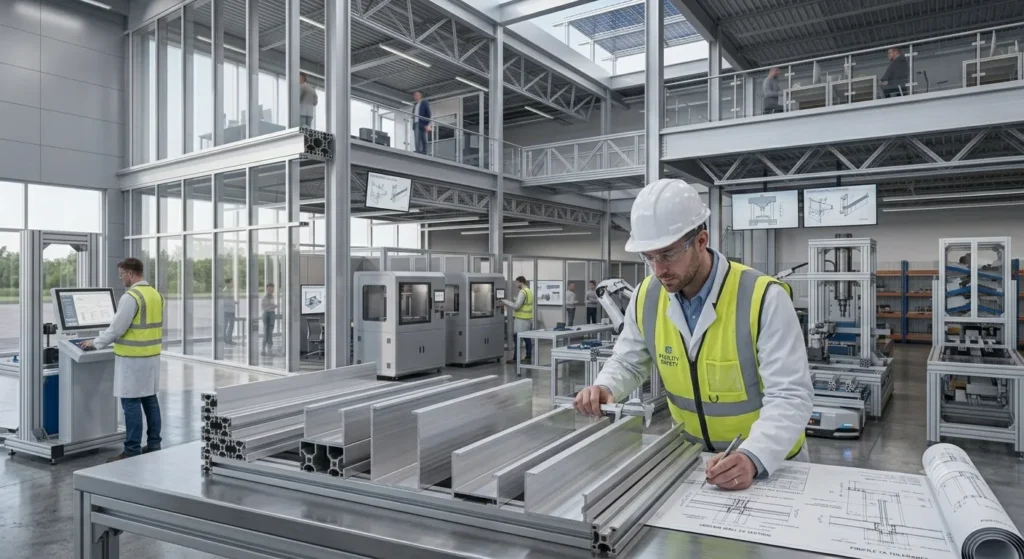
Several factors should be evaluated before selecting an aluminum channel.
| Consideration | Why It Matters |
| Channel profile | U-channels are ideal for standard framing, while unequal channels support specialized structural and fabrication requirements. |
| Load requirements | Heavier loads may require thicker walls or larger profiles. |
| Indoor or outdoor use | Outdoor installations often benefit from anodizing or powder coating. |
| Fabrication method | Cutting, welding, or machining requirements influence profile selection. |
| Surface finish | Decorative and architectural projects typically require finished aluminum. |
Considering these factors early can help improve manufacturing efficiency while reducing material waste and installation challenges.
Climate Also Influences Material Selection
Environmental conditions also affect which aluminum channel performs best over the long term.
In tropical regions such as Southeast Asia, high humidity, frequent rainfall, and strong UV exposure require materials with excellent corrosion resistance. Finished aluminum channels are widely used because they maintain both appearance and structural performance with minimal maintenance.
In North America and Europe, buildings experience freezing winters, warm summers, and repeated temperature changes. Aluminum channels continue to gain popularity because they provide dimensional stability, low maintenance, and compatibility with modern glazing systems that emphasize slim framing and energy-efficient building envelopes.
In coastal areas where salt exposure accelerates corrosion, anodized or powder-coated aluminum channels are often preferred because they provide additional protection against harsh environmental conditions.
These characteristics explain why aluminum channels are used globally across residential, commercial, and industrial projects.
Common Applications of Aluminum Channel
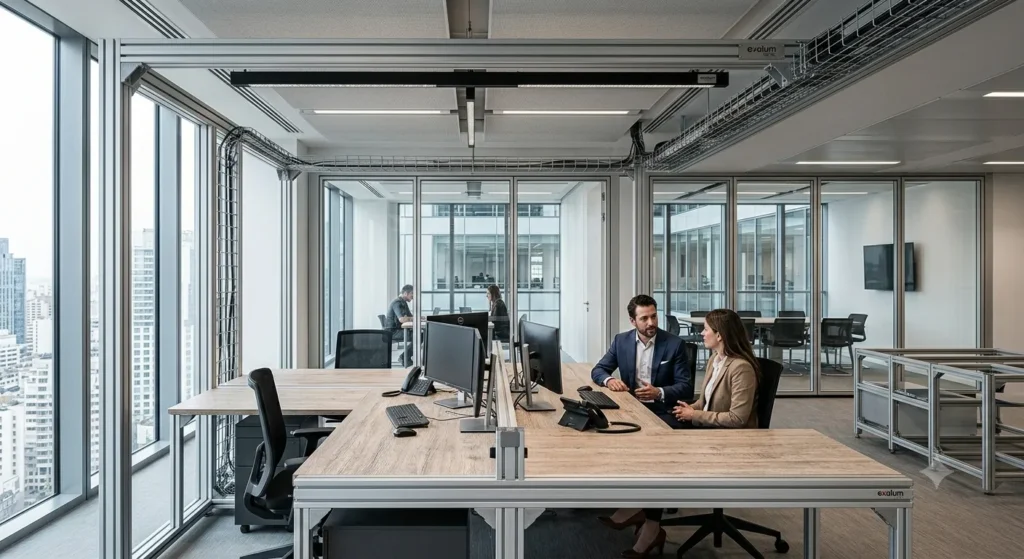
Because extrusion allows channels to be produced in many different sizes and configurations, they support a wide range of industries.
Some common applications include:
Architectural
- Curtain Wall
- Sliding Windows
- Partition
- Shop Front
Industrial
- Conveyor
- Machine guards
- Equipment frames
Commercial
Many projects rely on aluminum channels because they provide structural support while remaining lightweight and easy to fabricate.
Why Alloy and Finish Matter
Choosing the profile is only part of the decision.
The aluminum alloy affects strength, machinability, and corrosion resistance, while the finish influences appearance and long-term durability.
For architectural applications, 6063 aluminum is commonly selected because it offers excellent extrudability, a smooth surface finish, and good corrosion resistance. Structural applications may require different alloys depending on loading conditions.
While 6063 is commonly selected for architectural profiles because of its excellent surface finish and corrosion resistance, 6061 may be preferred for applications that require higher mechanical strength, such as industrial machinery and load-bearing structures.
Likewise, mill finish aluminum is often suitable for fabricated components that will later be welded or coated, while anodized and powder-coated finishes provide additional protection for outdoor environments.
Selecting the right combination of profile, alloy, and finish helps maximize product performance throughout its service life.
Choosing the Right Aluminum Channel for Long-Term Performance
The best aluminum channel depends on much more than its shape. Whether you’re selecting a U-channel for standard framing or an unequal channel for specialized fabrication, engineers and designers typically evaluate structural requirements, fabrication methods, environmental exposure, and finishing requirements together before selecting a profile.
At Exalum Metal, we provide aluminum extrusion and finishing solutions for a wide range of architectural and industrial applications. Whether your project requires aluminum channels for Sliding Windows, Curtain Wall systems, Furniture, Partition installations, Conveyor equipment, or custom extrusion profiles, our team can help you develop the right extrusion solution for your application.
Get in touch with our team directly:
Email:[email protected] WhatsApp:+62 811 9429 970 Website: www.exalummetal.com