
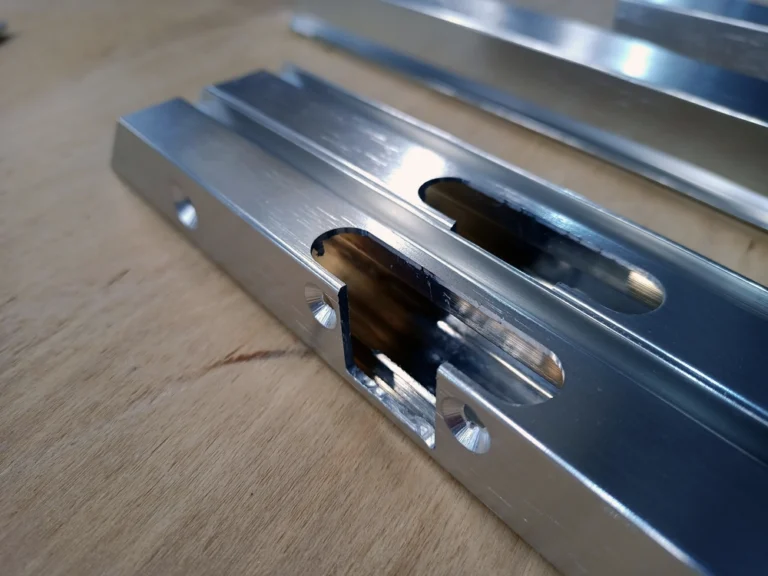
If you design or manufacture furniture for retail, hospitality, contract, or OEM markets, custom metal parts are usually where your product either looks distinctive or looks like everyone else’s. The right aluminum frame, leg profile, edge trim, or handle can elevate a piece from generic to signature. The wrong supplier can leave you with parts that don’t fit, finishes that don’t match across batches, and lead times that miss your launch dates.
For furniture designers, brand owners, and OEM sourcing managers evaluating Indonesia as a custom furniture parts origin, this article walks through what to look for in a manufacturer, what aluminum can actually do for your designs, and why Indonesia has become a serious supply destination for the global furniture industry.
Why Indonesia Is a Strong Origin for Custom Furniture Parts
Indonesia has been a major furniture exporter for decades, with deep capability in solid wood, rattan, and increasingly aluminum and steel components. Three factors have moved Indonesian custom aluminum furniture parts up the consideration list for international brands:
Manufacturing infrastructure. Indonesia has established aluminum extrusion capacity, finishing facilities, and metalworking tradition that translate directly into custom furniture component production. This isn’t a country building furniture capability from scratch.
Design-friendly workforce. Indonesian factories work routinely with European, North American, Japanese, and Australian furniture brands, which means the workforce understands international design standards, finish requirements, and quality expectations.
Total landed cost. The combination of competitive manufacturing costs, established export logistics, and trade infrastructure (including the February 2026 US-Indonesia Agreement on Reciprocal Trade) keeps Indonesia competitive on landed cost even after international freight.
For furniture brands looking to diversify their supply chain or to build distinctive products with custom metal components, Indonesia offers a combination of capability and economics that’s hard to match in higher-cost regions.
What Custom Furniture Parts Actually Means
The category covers more ground than most people realize. Custom aluminum furniture parts include:
Furniture frames for chairs, tables, sofas, beds, and modular seating. Aluminum frames are lighter than steel, won’t rust, and can be finished in any color or texture the design requires.
Table legs and bases in straight, tapered, splayed, or sculptural shapes. Custom extrusion lets designers specify exact profiles that match the visual identity of the piece.
Edge trim and bumpers that protect tabletops, counter edges, shelf fronts, and cabinet corners while contributing to the visual finish.
Drawer pulls, handles, and hardware for cabinetry, wardrobes, kitchen islands, and display fixtures. Custom handle profiles let brands differentiate their products from generic catalog hardware.
Sliding tracks and rails for sliding doors, partition walls, drawer systems, and modular storage furniture.
Shelving and display profiles for retail fixtures, modular shelving, gallery installations, and built-in storage systems.
Connector and joinery hardware for modular and ready-to-assemble (RTA) furniture systems.
Decorative tubing and railings for headboards, bar stools, garment racks, and architectural-style furniture pieces.
LED housings and channel profiles for furniture-integrated lighting in shelving, bed frames, and display work.
Each of these involves specific design requirements, alloy choices, finishing methods, and dimensional tolerances. A factory that can handle all of them well is a different animal from a factory that just resells standard catalog profiles.
Why Aluminum Has Taken Over Furniture Metal Components
Steel still has its place in furniture (welded frames for industrial-style pieces, heavy table bases), but aluminum has become the default metal for most custom furniture parts. Five reasons:
Weight. Aluminum furniture parts weigh roughly a third of equivalent steel components. A chair frame, a table leg, a wardrobe handle all become easier to ship, easier to install, and easier to live with.
Corrosion resistance. Aluminum doesn’t rust. This matters for outdoor furniture, bathroom and kitchen pieces, and any environment with humidity. Steel components inevitably show rust at scratched or worn edges over time.
Finish flexibility. Aluminum accepts anodizing in natural metallic tones, bronze, black, and custom colors. It also takes powder coating in any RAL color with excellent durability. Steel finishes are more limited and more prone to chipping at edges.
Extrusion design freedom. Aluminum can be extruded into complex profiles with integrated features like channels, mounting slots, decorative grooves, and snap-fit details. Steel components require welding or machining to add the same features.
Sustainability story. Aluminum is highly recyclable, and the increasing focus on furniture sustainability has made recyclable materials a brand asset rather than just a procurement detail.
For furniture designers, aluminum is the metal that combines design freedom, finish quality, and supply chain durability in a way that competing materials struggle to match.
What to Look For in an Indonesian Custom Furniture Parts Factory
Not every Indonesian factory that calls itself a furniture parts supplier can actually handle serious custom work. Six capabilities separate the real manufacturers from the trading layer:
Custom extrusion capability. A real custom furniture parts factory designs and produces its own dies, allowing designers to specify unique cross-sections rather than choose from a generic catalog. Factories that only resell standard profiles can’t deliver real differentiation.
Finishing range. In-house anodizing in multiple colors, powder coating in any RAL color, brushed and polished surface treatments, and the ability to match specific finish samples are what makes the difference between a factory that supports your design and one that limits it.
Tight tolerance handling. Furniture parts need to fit together cleanly. Slight dimensional variation that’s acceptable in industrial framing will show up as misaligned drawers, loose handles, or visible gaps in finished furniture.
Surface quality discipline. Visible furniture parts can’t have die lines, pickup marks, or surface inconsistency that would be acceptable on hidden structural extrusions. Factories that protect surface quality from extrusion through finishing produce parts that designers can actually use.
Quality control documentation. Material certificates, dimensional inspection reports, and finish quality records are the difference between consistent production and surprises in your shipping containers.
Export experience. Custom packaging, protective wrapping, proper crating, and ocean freight documentation are part of furniture parts work. Factories that have shipped to North American and European brands understand what’s required.
These capabilities are what separate a factory that can support a furniture brand from one that can only fulfill commodity orders.
What Custom Furniture Parts Look Like at Exalum Metal
Exalum Metal Indo is an aluminum extrusion manufacturer based in Indonesia, operating a 20,000 m² vertically integrated facility since 2009. The vertical integration model means every step from billet preparation through extrusion, heat treatment, and in-house finishing is controlled under one roof, which is what makes serious custom furniture work practical rather than just theoretical.
The product categories most relevant to custom furniture manufacturing:
- Furniture as a dedicated extrusion category covering frame profiles, modular components, and structural elements built specifically for furniture applications
- Decorative Tubing Pipes for visible furniture work like bed frames, chair backs, garment racks, bar stools, and architectural-style pieces where surface finish quality matters
- Tubing Pipes for furniture frames, internal structural members, and railings
- Square Hollow and Rectangular Hollow for table bases, chair frames, and modular furniture structures
- Equal Angle and Unequal Angle for corner reinforcement, bracket connections, and edge framing
- Unequal Channel for sliding door tracks, drawer rails, and panel capture in modular systems
- Flat Bars for mounting plates, decorative trim, and structural connections inside furniture pieces
- Round Bars for connector pins, hinge axles, and decorative elements
- Handle profiles for drawer pulls, cabinet hardware, and wardrobe handles
- Curtain Track and Sliding Doors profiles for furniture-integrated sliding systems
- Showcase profiles for retail display fixtures, gallery installations, and built-in display furniture
- Door Jamb for wardrobe and built-in cabinetry framing
Beyond this range, custom extrusions to designer specifications cover the unique profiles that make signature furniture pieces stand out. Die design, alloy selection, extrusion, and finishing all happen inside our facility, which keeps custom projects moving on realistic timelines rather than getting stuck waiting on outsourced suppliers.
Finishing Options That Matter for Furniture Work
Furniture finishing is where designs either succeed visually or fall short. Three finishing options matter most for custom aluminum furniture parts:
Anodizing thickens the natural oxide layer into a hard, scratch-resistant, color-stable finish. Available in natural silver, bronze, black, gold, and custom colors. Anodized furniture parts hold their color for decades without fading, even on outdoor or heavily-used pieces. The standard for premium, architectural-style furniture.
Powder coating applies an electrostatic polymer finish in any RAL color, with strong impact and UV resistance. The right choice for branded furniture pieces, color-specific designs, and contract furniture where finish consistency across large orders matters.
Brushed and polished mill finishes offer the bare aluminum look that’s become popular in industrial-style, modernist, and minimalist furniture design. Requires careful handling and surface protection throughout production.
In-house finishing means the surface quality is controlled from extrusion through final coating, which protects the visual quality that custom furniture brands depend on.
Custom Furniture Parts Lead Times From Indonesia
Furniture manufacturing typically runs on tight launch schedules, so realistic lead time planning matters. Typical lead times for custom aluminum furniture parts from Indonesia:
- Design consultation and die quotation: 1 to 2 weeks
- Die design and machining: 3 to 5 weeks
- First production trial and sample approval: 1 to 2 weeks
- Production run: 2 to 4 weeks depending on volume
- Finishing (anodizing or powder coating): 1 to 2 weeks
- Packaging and ocean freight: 4 to 6 weeks to most international destinations
Total from approved design to delivered parts is typically 12 to 20 weeks. Planning custom furniture projects 4 to 6 months ahead of launch is the right cadence for predictable delivery. Repeat production runs on existing dies move much faster, typically 6 to 10 weeks total.
Sourcing Custom Furniture Parts From Indonesia With Confidence
The right Indonesian custom furniture parts factory turns international sourcing from a procurement risk into a creative asset, giving designers the freedom to specify exactly what their products need rather than compromising on generic components. The wrong factory loses your launch dates and your design intent at the same time. The difference comes down to vertical control, finishing capability, and the willingness to support custom work properly.
Exalum Metal Indo has supplied custom and standard aluminum extrusion to international furniture manufacturers, contract suppliers, and design brands since 2009. The combination of vertical integration, in-house die-making, controlled alloy chemistry, and on-site finishing is what allows us to support real custom furniture work with realistic lead times and consistent quality across long production runs.
Whether you need standard profiles or custom cross-sections designed for your specific furniture project, Exalum Metal has the capacity and expertise to deliver.
Ready to discuss your custom furniture parts project or request a quote on specific designs? Get in touch with the Exalum Metal team directly:
Email: [email protected] WhatsApp: +62 811 9429 970 Website: www.exalummetal.com
Your next furniture collection deserves a manufacturing partner you can count on. Make Exalum Metal your sourcing standard for custom aluminum furniture parts from Indonesia.