
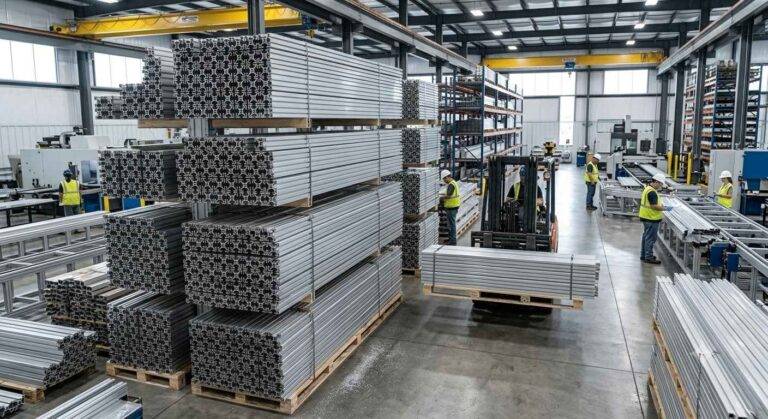
Walk through a modern office, board a train, open a sliding window, or sit at a workstation, and there’s a good chance you’re interacting with extruded aluminum. Although many people associate it with construction, extruded aluminum is found in products and industries that extend far beyond buildings.
Its popularity comes from a unique combination of strength, lightweight performance, corrosion resistance, and design flexibility. More importantly, the extrusion process allows manufacturers to create highly customized profiles that meet specific functional and structural requirements, making extruded aluminum suitable for everything from architectural systems and furniture to transportation, electronics, and industrial equipment.
As industries continue to prioritize efficiency, durability, and sustainability, extruded aluminum remains one of the most versatile engineering materials available today.
What Is Extruded Aluminum?
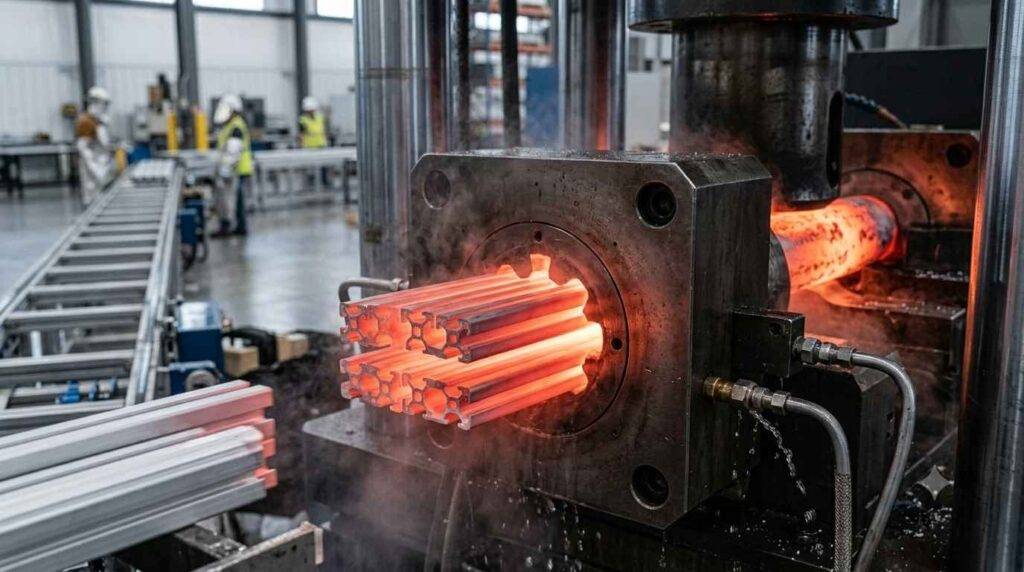
Extruded aluminum is aluminum that has been formed into a continuous profile through a manufacturing process known as extrusion. During this process, a heated aluminum billet is pushed through a specially designed die, producing a profile with a precise cross-sectional shape.
Unlike standard metal stock, extruded aluminum can be manufactured in virtually countless profile designs. Engineers can create sections with built-in grooves, mounting points, drainage channels, reinforcement ribs, or other functional features that reduce the need for additional components during assembly.
This flexibility allows manufacturers to produce products ranging from Sliding Windows and Door Jamb systems to Conveyor components, Heatsink products, furniture frames, and many other industrial applications using the same manufacturing process.
Why Do So Many Industries Choose Extruded Aluminum?
The widespread adoption of extruded aluminum is not driven by a single advantage. Instead, it offers a combination of performance, manufacturing efficiency, and design flexibility that is difficult for many other materials to match.
High Strength Without Excess Weight
One of aluminum’s greatest advantages is its excellent strength-to-weight ratio. Although much lighter than steel, it remains strong enough for many structural and load-bearing applications.
The lighter weight simplifies transportation, handling, and installation while reducing the overall weight of finished products. This is particularly valuable in industries such as construction, transportation, and furniture manufacturing, where reducing weight can improve efficiency without compromising performance.
Greater Design Freedom
Extrusion gives designers far more flexibility than many conventional manufacturing methods.
Instead of assembling numerous separate components, engineers can incorporate multiple functions into a single aluminum profile. Features such as fixing channels, cable routing, drainage paths, or mounting points can all be integrated during the extrusion process.
This not only simplifies assembly but also improves consistency, reduces material waste, and lowers manufacturing costs.
Excellent Corrosion Resistance
Aluminum naturally forms a protective oxide layer when exposed to air, helping protect the material from corrosion.
For applications requiring even greater durability, anodizing or powder coating further enhances corrosion resistance while improving surface appearance. This combination makes extruded aluminum suitable for both indoor and outdoor environments, from architectural facades to industrial equipment exposed to demanding conditions.
Easy to Fabricate
Extruded aluminum is relatively easy to cut, drill, machine, and weld, allowing manufacturers to efficiently produce customized components and assemblies.
Mill finish aluminum is commonly welded before receiving surface treatments, while anodized aluminum typically requires the anodized layer to be removed around the weld area before fabrication. This flexibility makes aluminum an excellent choice for products that require custom manufacturing or complex assemblies.
How Climate Influences Material Selection
Environmental conditions often play an important role when selecting construction and engineering materials. Temperature, humidity, rainfall, UV exposure, and coastal conditions all influence long-term performance.
Tropical Climates
In Southeast Asia and other tropical regions, materials are exposed to high humidity, heavy rainfall, intense sunlight, and, in many coastal areas, salty air.
Under these conditions, corrosion resistance becomes particularly important. Extruded aluminum performs well because its natural oxide layer helps protect the material, while anodizing or powder coating provides additional protection against harsh outdoor environments. This is one reason aluminum is widely used for windows, facade systems, and exterior architectural applications throughout tropical countries.
North America and Europe
Buildings in North America and Europe face different environmental challenges, including freezing winters, hot summers, and frequent seasonal temperature changes.
Modern architecture in these regions increasingly favors larger glazing systems with slimmer frames. Advances such as thermal break technology have enabled aluminum systems to deliver improved thermal performance while retaining the structural strength needed to support expansive glass panels. As a result, extruded aluminum has become increasingly common in residential developments, commercial buildings, and public infrastructure across these markets.
Where Is Extruded Aluminum Commonly Used?
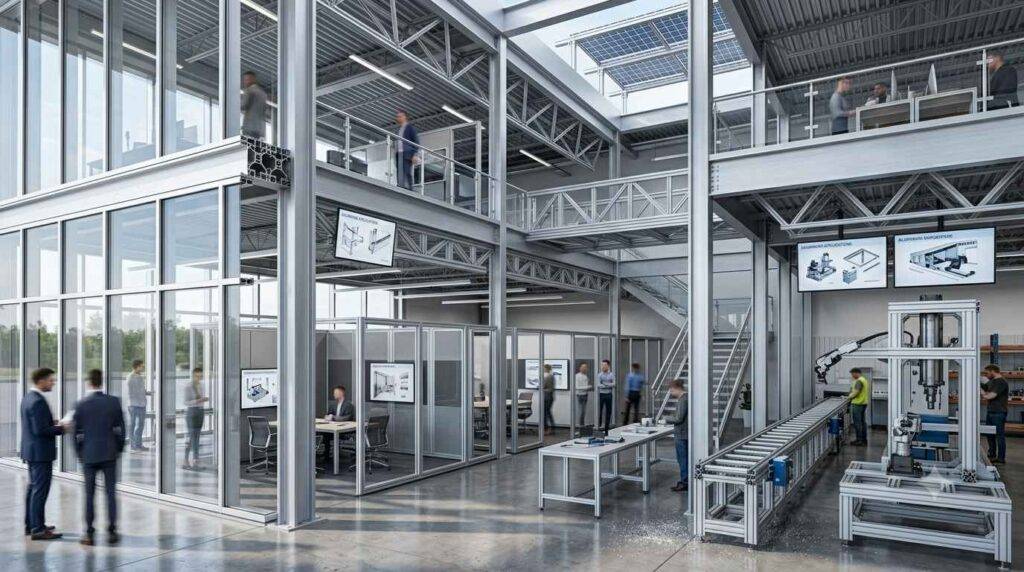
Because extrusion allows aluminum to be manufactured into highly specialized profiles, it serves industries with very different technical requirements.
| Industry | Why Extruded Aluminum Is Preferred | Common Applications |
| Construction | Strong, lightweight, corrosion resistant | Curtain Wall, windows, facade systems, Spandrel panels |
| Furniture | Durable with modern aesthetics | Office furniture, shelving, modular systems |
| Transportation | Reduces overall vehicle weight | Automotive components, trailers, rail systems |
| Electronics | Excellent heat dissipation | Heatsink products and electronic enclosures |
| Manufacturing | Easy to fabricate and customize | Conveyor systems, machine frames |
| Commercial Interiors | Clean appearance and precision | Partition systems, Shop Front installations |
Many people encounter extruded aluminum every day without realizing it. Whether shopping in a retail center, working in an office, traveling by public transportation, or assembling industrial equipment, extruded aluminum often provides the structural framework behind the finished product.
Why Extruded Aluminum Supports Sustainable Manufacturing
Sustainability has become an increasingly important consideration across modern industries, and aluminum offers several environmental advantages.
Aluminum can be recycled repeatedly without significantly losing its mechanical properties, reducing the demand for new raw materials. Recycling aluminum also consumes considerably less energy than producing primary aluminum from bauxite ore.
Extrusion itself further supports efficient manufacturing. Because profiles are produced close to their final shape, less material is removed during fabrication, helping reduce production waste and improve overall manufacturing efficiency.
These advantages make extruded aluminum an attractive material for companies seeking both operational efficiency and more sustainable production practices.
How to Choose the Right Extruded Aluminum Profile
Selecting the right extruded aluminum profile involves much more than choosing a particular shape.
Engineers typically evaluate several factors before specifying a profile, including:
- Structural load requirements
- Indoor or outdoor exposure
- Corrosion resistance requirements
- Alloy selection
- Surface finishing method
- Fabrication requirements, including machining or welding
- Integration with other architectural or industrial components
Carefully considering these factors helps ensure long-term durability, reliable performance, and efficient manufacturing.
Supporting Diverse Industries with Extruded Aluminum
The widespread use of extruded aluminum reflects its ability to solve engineering challenges across many industries rather than a single application. Its combination of lightweight strength, corrosion resistance, design flexibility, and manufacturing efficiency continues to make it a preferred material for architectural systems, furniture, transportation, industrial machinery, electronics, and many other sectors.
At Exalum Metal, we provide aluminum extrusion and finishing solutions for a broad range of architectural and industrial applications. Whether your project involves Curtain Wall systems, Sliding Windows, furniture components, industrial equipment, or custom aluminum profiles, our team can help you select extrusion solutions that combine precision, durability, and long-term performance.
Get in touch with our team directly:
Email: [email protected] WhatsApp: +62 811 9429 970 Website: www.exalummetal.com