
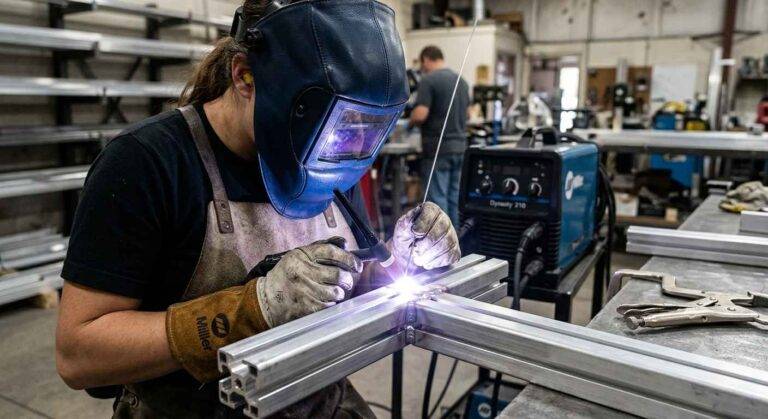
Aluminum is widely used in construction, furniture, transportation, electronics, and manufacturing because it is lightweight, corrosion resistant, and easy to fabricate. From modern furniture frames and architectural systems to industrial equipment, its versatility makes it one of the most commonly fabricated metals today. But one question often arises when working with aluminum: can it be welded?
The answer is yes. Aluminum can be welded successfully and is commonly joined using various welding processes in industries around the world. However, welding aluminum requires different techniques than welding steel because of its unique material properties.
Factors such as the aluminum alloy, surface finish, and welding method all influence the quality of the final weld. Understanding these factors helps manufacturers, fabricators, and project owners choose the right approach for different applications.
Why Is Aluminum More Challenging to Weld?
Although aluminum is highly weldable, it behaves differently from many other metals.
One of the biggest challenges is its natural oxide layer. Aluminum quickly forms a thin oxide coating when exposed to air. While this layer protects the metal from corrosion, it has a much higher melting point than the aluminum beneath it.
If the oxide layer is not properly removed or controlled during welding, it can interfere with weld penetration and create defects.
Aluminum also conducts heat much faster than steel. Heat spreads quickly throughout the material, making it more difficult to maintain a stable weld pool. This requires greater control over heat input and welding parameters.
In addition, aluminum expands more than steel when heated. Without proper technique, this can increase the risk of distortion in larger fabricated components.
Common Aluminum Welding Methods
Several welding processes are suitable for aluminum, each with its own strengths.
The two most common methods are TIG (Tungsten Inert Gas) welding, formally known as Gas Tungsten Arc Welding (GTAW), and MIG (Metal Inert Gas) welding, also known as Gas Metal Arc Welding (GMAW). Both processes use shielding gas to protect the molten weld from contamination, but they are designed for different fabrication needs. TIG welding offers greater precision and produces cleaner welds, while MIG welding is generally faster and better suited for thicker materials or high-volume production.
| Welding Method | Best For | Advantages |
| TIG (GTAW) | Thin sections and precision work | Clean welds, excellent appearance |
| MIG (GMAW) | Thicker materials and production work | Faster welding, high productivity |
| Laser Welding | Automated manufacturing | Precise welds with minimal distortion |
TIG welding is often selected for architectural components and applications where appearance is important, while MIG welding is commonly used for larger fabrication projects that require faster production.
The most appropriate method depends on the material thickness, component design, and required weld quality.
Does the Aluminum Finish Affect Welding?
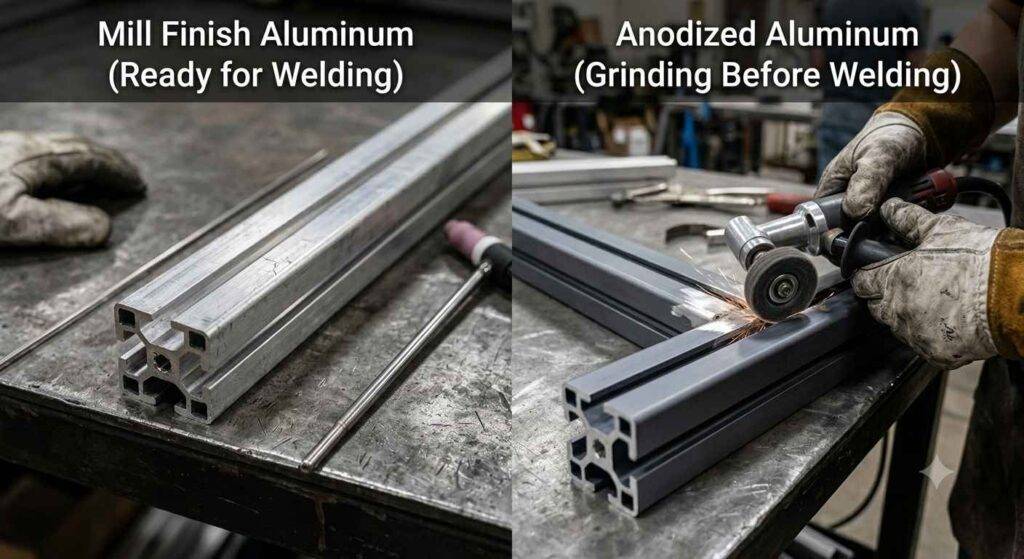
Yes. Surface finish plays an important role in determining whether aluminum can be welded directly.
Mill Finish Aluminum
Mill finish aluminum is generally suitable for welding because it has not received additional surface treatments. Before welding, the material is typically cleaned to remove dirt, oil, and the thin natural oxide layer that forms during normal exposure to air.
This makes mill finish aluminum a common choice for fabricated products that will later receive finishing treatments such as powder coating or anodizing after welding.
Anodized Aluminum
Anodized aluminum can also be welded, but it requires additional preparation.
Because anodizing creates a thick, hard oxide layer on the surface, this coating should be removed from the weld area before welding, typically by grinding or mechanical abrasion. Attempting to weld directly through the anodized layer can lead to poor weld quality, contamination, and unstable arc performance.
Once welding is complete, the affected area no longer retains its original anodized finish. If corrosion resistance or appearance is important, the component may need to be refinished afterward.
This is why many architectural products are fabricated and welded first, then anodized as the final finishing process.
Choosing the Right Aluminum Alloy
Not every aluminum alloy offers the same welding performance.
Some alloys are specifically developed for excellent weldability, while others are designed primarily for maximum strength or machinability.
For architectural and furniture applications, 6063 aluminum is one of the most commonly used alloys because it combines good corrosion resistance, excellent extrudability, and reliable weldability. This makes it well suited for products such as Sliding Doors, Casement Windows, Door Jamb profiles, and aluminum Furniture components that require both structural strength and an attractive finish.
Other alloys may require different filler materials or specialized welding procedures to achieve optimal results.
Where Is Welded Aluminum Commonly Used?
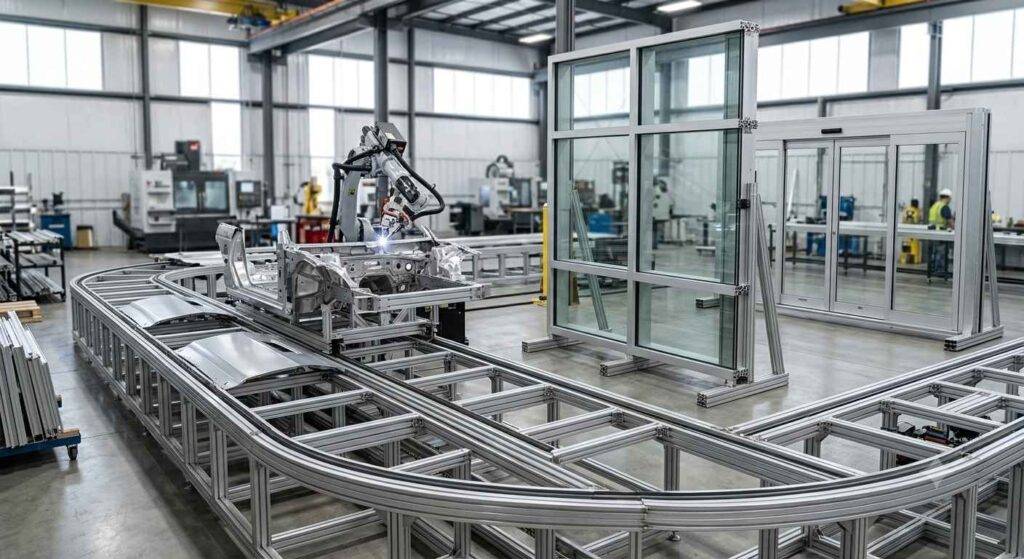
Because aluminum combines low weight with good structural performance, welded aluminum components can be found across many industries.
Common applications include:
- Architectural framing and Curtain Wall systems
- Window and door assemblies
- Aluminum Furniture and interior fixtures
- Transportation equipment
- Industrial machinery
- Conveyor systems
- Heat management components such as Heatsink products
- Marine and offshore structures
In many of these applications, welding allows multiple extruded or fabricated components to be joined into larger assemblies while maintaining the advantages of aluminum. Whether producing architectural systems, industrial equipment, or modern furniture, proper welding techniques help ensure both structural integrity and long-term durability.
Tips for Successful Aluminum Welding
Producing high-quality aluminum welds requires careful preparation and proper technique.
Some important best practices include:
- Clean the material thoroughly before welding.
- Remove anodized coatings from the weld area when applicable.
- Select the correct filler material for the alloy being welded.
- Control heat input to reduce distortion.
- Use appropriate shielding gas, typically argon or argon-based mixtures.
- Ensure proper joint fit-up before welding begins.
Following these practices helps produce stronger welds with better appearance and long-term performance.
Choosing the Right Aluminum for Fabrication
Successful aluminum fabrication begins long before welding starts. Selecting the appropriate alloy, profile design, and surface finish can simplify manufacturing while improving the performance of the finished product.
Mill finish aluminum is often preferred for components that require extensive welding before surface finishing, while anodized aluminum is typically applied after fabrication when corrosion resistance and appearance are priorities.
At Exalum Metal, we provide aluminum extrusion and finishing solutions for a wide range of architectural and industrial applications. Whether your project involves windows, doors, facade systems, or custom aluminum profiles, our team can help you choose aluminum solutions that support efficient fabrication and long-term performance.
Get in touch with our team directly:
Email: [email protected] WhatsApp: +62 811 9429 970 Website: www.exalummetal.com