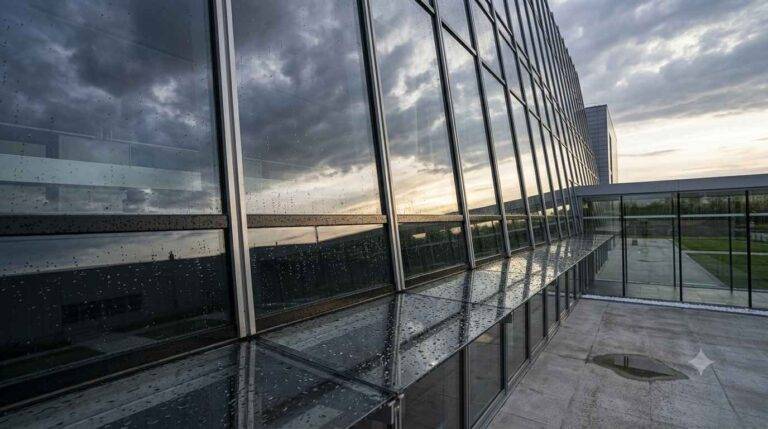
Steel fences often develop reddish-brown rust after years of exposure to the weather, while aluminum window frames can remain in excellent condition for decades. Since both materials are constantly exposed to rain, sunlight, and humidity, many people wonder why they age so differently.
The answer lies in chemistry. Although aluminum can corrode under certain conditions, it does not rust like steel. Instead, it naturally forms a protective oxide layer that helps shield the metal from further deterioration.
Understanding this difference is important when selecting materials for buildings, furniture, transportation, or industrial equipment. It also explains why aluminum has become one of the most widely used engineering materials across many industries.
Rust and Corrosion Are Not the Same Thing
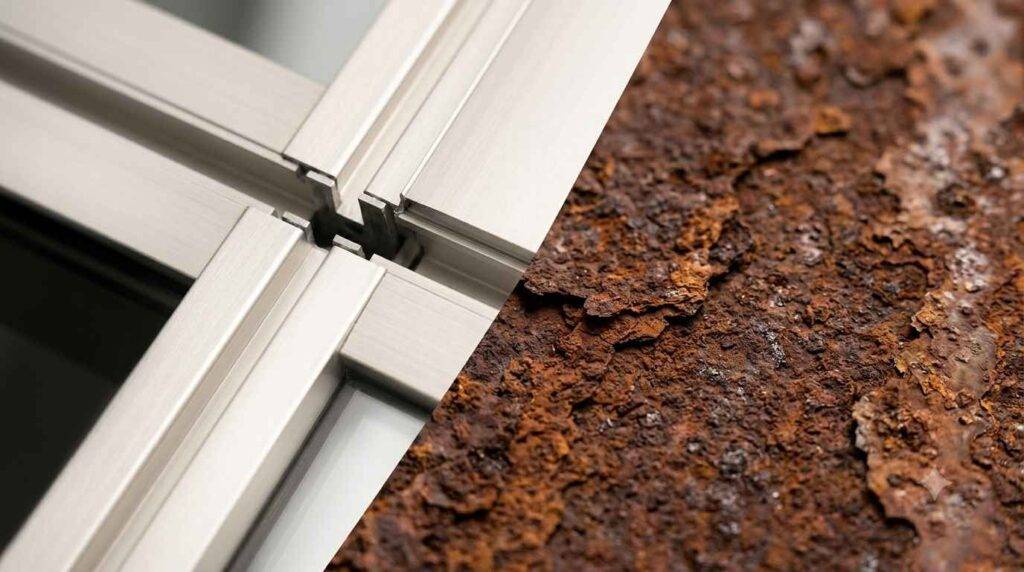
One of the biggest misconceptions is that every metal rusts over time. In reality, rust is only a specific type of corrosion that affects iron and steel.
Aluminum experiences corrosion differently. As soon as fresh aluminum comes into contact with oxygen, it begins forming an extremely thin oxide layer. This invisible barrier develops within seconds and acts as a natural shield against moisture and oxygen, preventing corrosion from spreading deeper into the material.
Unlike rust on steel, which flakes away and continually exposes fresh metal underneath, aluminum oxide remains tightly bonded to the surface. This allows the material to protect itself under normal environmental conditions.
Because of this self-protecting property, aluminum is commonly used for architectural applications such as Sliding Windows, Door Jamb systems, and Curtain Wall facades that require long-term outdoor performance.
Why Does Steel Rust While Aluminum Doesn’t?
The difference comes down to how each metal reacts with oxygen.
| Property | Aluminum | Steel |
| Surface Reaction | Forms protective oxide layer | Forms rust |
| Protective Layer | Yes | No |
| Corrosion Progress | Slows naturally | Continues if untreated |
| Outdoor Maintenance | Low | Higher |
| Typical Applications | Windows, facades, furniture, electronics | Structural frames, heavy machinery |
When steel rusts, the rust layer becomes brittle and eventually falls away. This exposes fresh steel to air and moisture, allowing corrosion to continue unless protective coatings are applied.
Aluminum behaves differently. Its oxide layer remains attached to the surface, creating a stable barrier that significantly slows further oxidation. This is one reason aluminum requires much less maintenance than untreated steel in many outdoor applications.
Does Aluminum Ever Corrode?
Yes. Aluminum is highly corrosion resistant, but it is not completely corrosion proof.
Certain environments are much more demanding than others and can gradually affect untreated aluminum over time.
Common conditions that accelerate aluminum corrosion include:
- Coastal environments with salt-laden air
- High humidity and frequent rainfall
- Industrial areas with airborne pollutants
- Continuous exposure to aggressive chemicals
- Standing water caused by poor drainage
In these situations, additional surface treatments such as anodizing or powder coating provide even greater protection while extending the product’s service life.
How Climate Influences Aluminum Performance
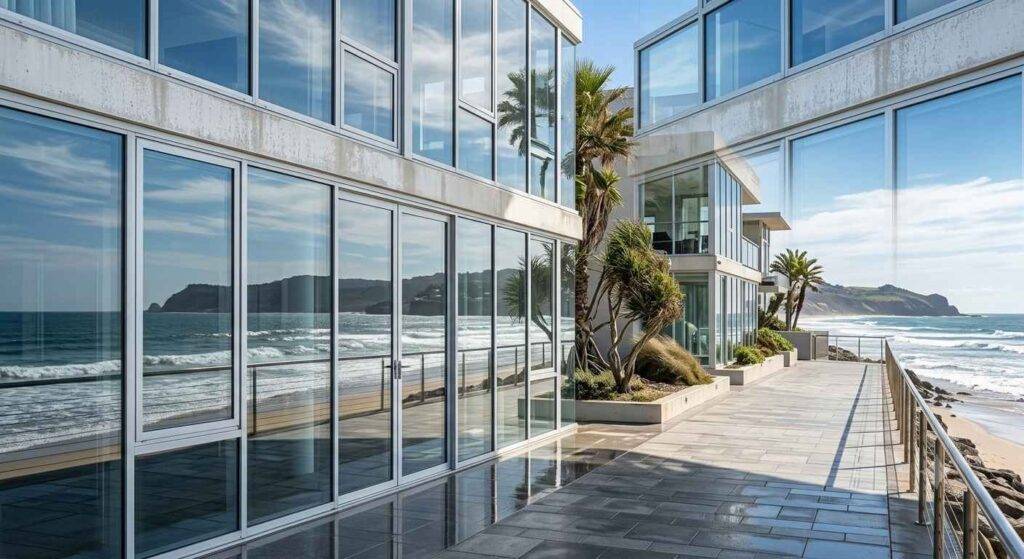
Environmental conditions play an important role in determining how building materials perform over the long term. This is why material preferences often vary between regions.
North America: Seasonal Temperature Changes
Many parts of North America experience freezing winters followed by hot summers. These repeated temperature fluctuations cause building materials to expand and contract throughout the year.
While uPVC remains popular for many residential homes because of its insulation performance, aluminum has become increasingly common in modern houses, apartment buildings, and commercial developments. Improvements such as thermal break technology have enhanced aluminum’s energy efficiency while allowing architects to design larger glazed openings with slimmer frames.
Europe: Sustainability and Contemporary Architecture
Across Europe, energy efficiency and long-term durability are central considerations in modern construction.
Timber continues to be valued in heritage buildings and traditional homes, particularly in Northern and Central Europe. However, aluminum has become the preferred choice for many contemporary residential and commercial projects because it combines slim architectural profiles with excellent durability and minimal maintenance.
Large glazing systems, modern facades, and commercial entrances frequently rely on aluminum because it supports expansive glass panels without sacrificing structural performance.
Tropical and Coastal Regions
Countries across Southeast Asia, Australia, and many coastal regions face different environmental challenges. High humidity, heavy rainfall, strong UV exposure, and salt carried by sea air can accelerate the deterioration of many construction materials.
These conditions make aluminum particularly attractive. Its naturally protective oxide layer, combined with anodizing or powder coating, helps maintain both appearance and structural integrity for years with relatively little maintenance.
This is one reason aluminum continues to be widely used in Spandrel panels, Sliding Doors, and other exterior architectural systems throughout tropical climates.
Material Contact Also Matters
Weather is not the only factor that influences corrosion.
When aluminum comes into direct contact with certain dissimilar metals, such as untreated steel, in the presence of moisture, a process called galvanic corrosion may occur. During this electrochemical reaction, one metal corrodes more quickly than it normally would.
Engineers reduce this risk by selecting compatible fasteners, using insulating materials between different metals, and designing assemblies that prevent water from becoming trapped.
Proper installation is just as important as choosing the right material.
Why Additional Surface Finishes Are Still Important
Although aluminum naturally protects itself, many architectural and industrial applications require even greater durability.
Anodizing strengthens aluminum’s natural oxide layer, making it harder, more wear resistant, and better suited for demanding outdoor environments. Powder coating adds another level of protection while providing a wider range of colors and surface textures.
These finishing methods are especially valuable for products exposed to years of weather, frequent handling, or highly corrosive environments.
Why Aluminum Continues to Replace Other Materials
Corrosion resistance is only one reason aluminum has become so widely used.
Manufacturers and designers also value aluminum because it offers:
- Excellent strength-to-weight ratio
- Low maintenance requirements
- High recyclability
- Easy fabrication through extrusion, machining, and welding
- Modern, clean aesthetics
- Long service life in outdoor environments
These advantages explain why aluminum appears in everything from Furniture frames and transportation equipment to Heatsink components, commercial facades, and architectural systems.
Rather than relying on a single strength, aluminum combines multiple performance benefits that make it suitable for a remarkably wide range of applications.
Choosing Aluminum for Long-Term Performance
The question isn’t simply whether aluminum rusts. A better question is how aluminum performs over decades of real-world use.
Unlike steel, aluminum naturally protects itself by forming a stable oxide layer that resists further corrosion. When combined with the right alloy, thoughtful engineering, and appropriate finishing methods, it delivers excellent durability across residential, commercial, and industrial applications.
At Exalum Metal, we provide aluminum extrusion and finishing solutions for a wide range of architectural and industrial projects. Whether you’re developing windows, doors, facade systems, furniture, or custom aluminum profiles, our team can help you select aluminum solutions that combine durability, corrosion resistance, and long-term performance.
Get in touch with our team directly:
Email: [email protected] WhatsApp: +62 811 9429 970 Website: www.exalummetal.com