

If you’ve ever placed a magnet against an aluminum can, window frame, or ladder, you’ve probably noticed that the magnet doesn’t stick. That often raises a simple question: is aluminum magnetic?
The short answer is no. Aluminum is generally considered a non-magnetic metal in everyday use. However, its behavior around magnetic fields is more nuanced than a simple yes-or-no answer.
Understanding why aluminum behaves differently from metals like iron and steel helps explain why it has become one of the most widely used materials in construction, transportation, electronics, and manufacturing. Rather than relying on magnetism, aluminum is valued for its lightweight strength, corrosion resistance, and excellent conductivity.
What Makes Some Metals Magnetic?
Not all metals behave the same way when exposed to a magnetic field.
Metals such as iron, nickel, and cobalt are known as ferromagnetic materials. Their internal atomic structure allows tiny magnetic regions, called domains, to align in the same direction. Once aligned, they are strongly attracted to magnets and can even become magnets themselves.
Aluminum behaves differently. It is classified as a paramagnetic metal, meaning it responds only very weakly to a magnetic field. Under normal conditions, this effect is so small that it is almost impossible to notice without specialized scientific equipment.
As a result, for everyday applications, aluminum is generally regarded as a non-magnetic material.
Why Doesn’t Aluminum Stick to Magnets?
The answer lies in aluminum’s atomic structure.
Unlike iron or steel, aluminum does not contain magnetic domains that remain aligned when exposed to a magnet. Although a powerful magnetic field can produce a very slight attraction, the effect disappears as soon as the magnetic field is removed.
This is why magnets do not stick to common aluminum products, including beverage cans, Sliding Windows, and many architectural aluminum profiles.
Instead of magnetism, engineers evaluate aluminum based on properties such as strength, weight, corrosion resistance, thermal performance, and electrical conductivity.
Magnetic Properties of Common Construction Metals
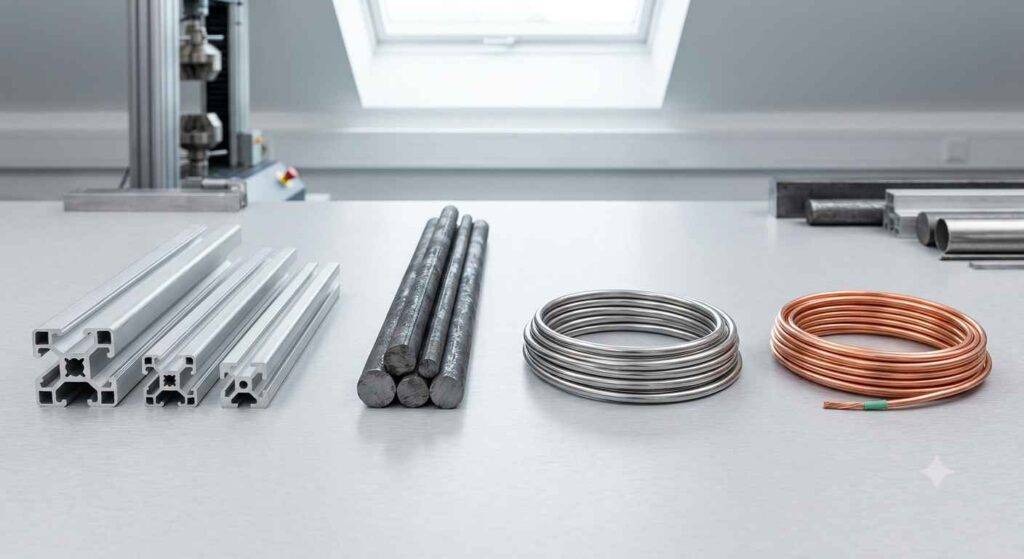
Comparing aluminum with other engineering metals makes its magnetic behavior easier to understand.
| Material | Magnetic? | Magnetic Type | Common Applications |
| Aluminum | No (Paramagnetic) | Paramagnetic | Windows, facades, transportation, electronics |
| Carbon Steel | Yes | Ferromagnetic | Structural frames, machinery |
| Stainless Steel | Depends on grade | Varies | Kitchen equipment, industrial applications |
| Copper | No | Diamagnetic | Electrical wiring |
| Brass | No | Diamagnetic | Plumbing fittings, decorative hardware |
Some grades of stainless steel are magnetic, while others are not, depending on their composition and manufacturing process.
Although aluminum is not magnetic, it remains one of the most versatile engineering materials because of its combination of lightweight strength, durability, and corrosion resistance.
Does Being Non-Magnetic Make Aluminum Better?
Not necessarily. Being non-magnetic is neither an advantage nor a disadvantage on its own. It simply makes aluminum better suited for certain applications than magnetic metals.
In environments where magnetic interference should be minimized, aluminum offers clear benefits. This is one reason it is commonly used in electronics, scientific instruments, medical equipment, and specialized industrial applications.
Its popularity also comes from several other performance advantages:
- Lightweight with excellent structural strength
- Naturally resistant to corrosion
- Easy to extrude into complex shapes
- Highly recyclable
- Excellent strength-to-weight ratio
These characteristics explain why aluminum is widely used in products ranging from Curtain Wall systems and Casement Windows to transportation equipment and consumer electronics.
Can Aluminum Interact with Magnets at All?
Although aluminum is not magnetic, it can still interact with magnetic fields under certain conditions.
When a powerful magnet moves rapidly across an aluminum surface, it generates small electrical currents called eddy currents. These currents create their own magnetic field, which opposes the motion of the magnet.
A well-known example is a strong magnet falling through an aluminum tube. Instead of dropping freely, the magnet descends much more slowly because the eddy currents create a braking effect.
Engineers use this principle in applications such as magnetic braking systems, industrial metal sorting equipment, and certain transportation technologies. While aluminum never becomes magnetic itself, it can still respond to changing magnetic fields in useful ways.
Why Engineers Continue Choosing Aluminum

When selecting a material, engineers rarely focus on magnetism alone.
Factors such as weight, durability, corrosion resistance, thermal performance, and ease of fabrication typically have a much greater influence on material selection.
Because aluminum can be extruded into precise profiles while remaining lightweight, it is widely used for Door Jamb systems, Shop Front installations, structural framing, and many other architectural applications.
Its excellent thermal conductivity also makes it an ideal material for Heatsink products, where efficient heat dissipation is far more important than magnetic properties.
These advantages allow aluminum to support industries ranging from construction and transportation to electronics and advanced manufacturing.
Choosing Aluminum for the Right Application
Rather than asking whether aluminum is magnetic, a more useful question is whether aluminum provides the right combination of properties for your project.
For many architectural and industrial applications, the answer is yes. Aluminum offers lightweight performance, corrosion resistance, long service life, excellent design flexibility, and ease of fabrication. Its non-magnetic nature is simply another characteristic that makes it suitable for a wide range of modern engineering applications.
If you’re looking for high-quality aluminum extrusion and finishing solutions, Exalum Metal provides products for architectural and industrial projects, including windows, doors, facade systems, and custom aluminum profiles. Our team can help you select the right aluminum solution based on your project’s performance and design requirements. Get in touch with our team directly:
Email: [email protected] WhatsApp: +62 811 9429 970 Website: www.exalummetal.com