
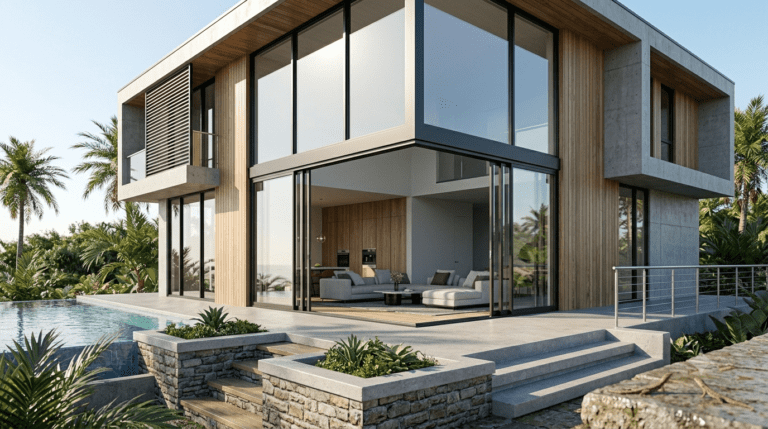
Walk through any modern neighborhood, office district, or commercial center, and you’ll notice that aluminum has become the material of choice for many windows and doors. From minimalist homes with expansive glass openings to high-rise buildings with sleek facades, aluminum frames are now a familiar sight.
This shift didn’t happen by chance. For many years, timber and steel were the dominant materials for window and door systems, while uPVC later emerged as a popular alternative for residential projects. Today, however, aluminum is widely preferred because it offers an effective balance of strength, durability, design flexibility, and low maintenance.
If you’re planning a new building or renovating an existing one, understanding how these materials compare can help you choose a solution that performs well for years to come.
Why the Frame Material Matters
Windows and doors do much more than let people enter a building or bring in natural light. Their frames support the glass, withstand changing weather conditions, and contribute to the building’s overall appearance.
The right material can influence how long a window lasts, how much maintenance it requires, and even how much daylight can enter a room. This is why architects and builders carefully evaluate the material before selecting a window or door system.
Rather than asking which material is “best,” the more useful question is which material best suits the needs of a particular project.
Aluminum, Timber, uPVC, or Steel: What’s the Difference?
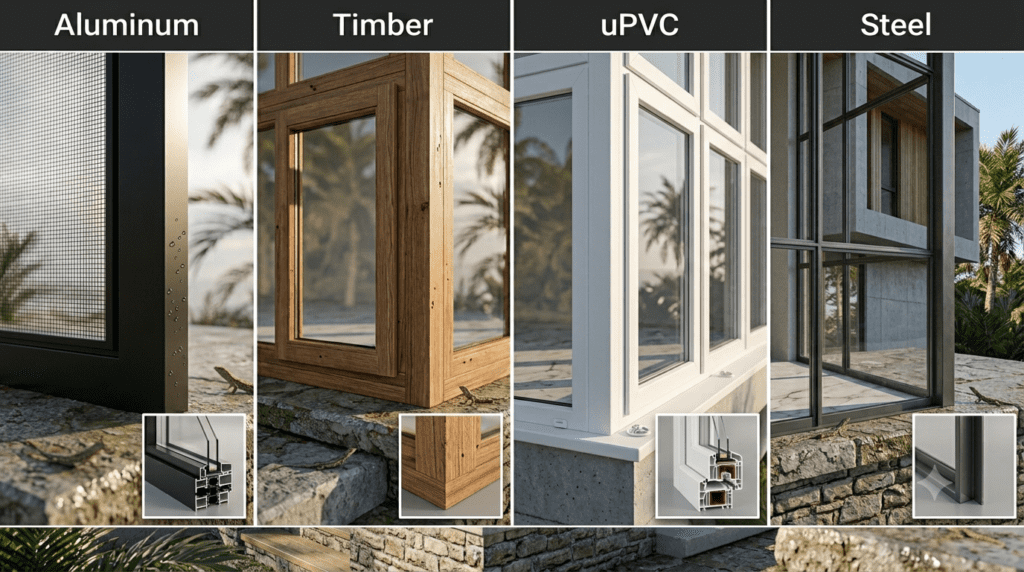
Each material offers its own strengths, and each is suited to different applications.
| Feature | Aluminum | Timber | uPVC | Steel |
| Strength | Excellent | Good | Moderate | Excellent |
| Weight | Lightweight | Moderate | Lightweight | Heavy |
| Corrosion Resistance | Excellent | Requires regular protection | Excellent | May rust without proper treatment |
| Maintenance | Low | High | Low | Moderate |
| Large Glass Support | Excellent | Moderate | Limited | Excellent |
| Design Flexibility | Excellent | Moderate | Limited | Moderate |
Timber has long been appreciated for its natural warmth and classic appearance. It remains a popular option for traditional homes and heritage buildings. However, because it is a natural material, timber generally requires regular painting or sealing to protect it from moisture, sunlight, and insects.
uPVC has become a common choice for residential properties thanks to its affordability and low maintenance requirements. While it performs well in many homes, its structural strength can become a limitation when projects require larger windows or slimmer frames.
Steel is exceptionally strong and is often selected for industrial buildings or projects that require a bold architectural appearance. However, its heavier weight and potential for corrosion mean it usually requires more maintenance than aluminum.
Aluminum combines many of the advantages of these materials while avoiding several of their limitations. It offers high strength without excessive weight, excellent corrosion resistance, and the flexibility to support a wide range of architectural designs.
How Climate Influences Window and Door Material Choices
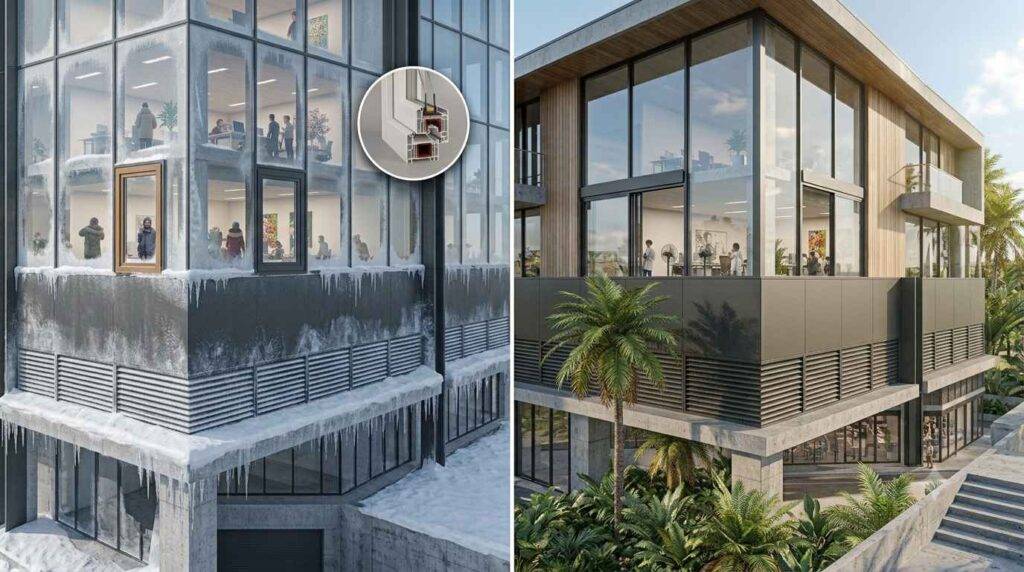
Climate plays an important role in determining how well window and door materials perform over time. Temperature fluctuations, humidity, rainfall, UV exposure, and even salty coastal air all influence durability, maintenance requirements, and long-term performance.
This is one reason why material preferences vary across different regions of the world. While architectural style influences design decisions, local climate and building regulations often play an equally important role in determining whether builders choose timber, uPVC, steel, or aluminum.
North America: Balancing Energy Efficiency and Durability
In many parts of North America, buildings experience both hot summers and freezing winters. Window and door frames must withstand repeated expansion and contraction while maintaining their structural integrity and energy efficiency throughout the year.
For this reason, uPVC has long been a popular choice for many residential homes because of its insulating properties and relatively low maintenance requirements. However, aluminum has become increasingly common in modern houses, apartment buildings, and commercial developments, particularly where larger glass panels, slimmer frames, and contemporary architectural designs are desired. The adoption of thermal break technology has also significantly improved aluminum’s thermal performance, making it well suited to colder climates.
Europe: Modern Design Meets High Performance
Across Europe, building regulations often place strong emphasis on energy efficiency, sustainability, and long-term durability. While material preferences vary between countries, aluminum has become increasingly common in offices, commercial buildings, and modern residential developments.
Its ability to support large glazing systems while maintaining slim, elegant profiles makes it particularly well suited to contemporary European architecture. Timber continues to be valued in traditional homes and heritage buildings, especially in Northern and Central Europe, where its natural appearance complements historic architectural styles. At the same time, aluminum is widely specified for new developments that prioritize durability, minimal maintenance, and modern aesthetics.
Tropical and Coastal Regions: Why Aluminum Stands Out
Buildings in tropical regions, including Southeast Asia, face a different set of environmental challenges. High humidity, frequent rainfall, intense sunlight, and exposure to salty coastal air can accelerate the deterioration of certain construction materials.
These conditions make corrosion resistance particularly important. Aluminum naturally forms a protective oxide layer that helps resist corrosion, and when combined with anodizing or powder coating, it can maintain both its appearance and structural performance for many years with relatively little maintenance.
This is why aluminum is widely used for residential developments, commercial buildings, and architectural systems such as Curtain Wall installations in regions where durability and weather resistance are essential.
Choosing the Right Material for Your Climate
There is no single material that is ideal for every building. Architects and builders typically evaluate the local climate, project requirements, and design objectives before selecting a window or door system.
Timber remains an excellent choice when natural aesthetics are the priority, while uPVC continues to offer a practical solution for many residential applications. Steel is still selected where exceptional structural strength is required.
However, for projects that require durability, corrosion resistance, design flexibility, and consistent performance across a wide range of climates, aluminum has become one of the most versatile choices. This helps explain why modern Sliding Windows and Casement Windows continue to gain popularity in residential and commercial developments around the world.
Why Aluminum Has Become the Preferred Choice
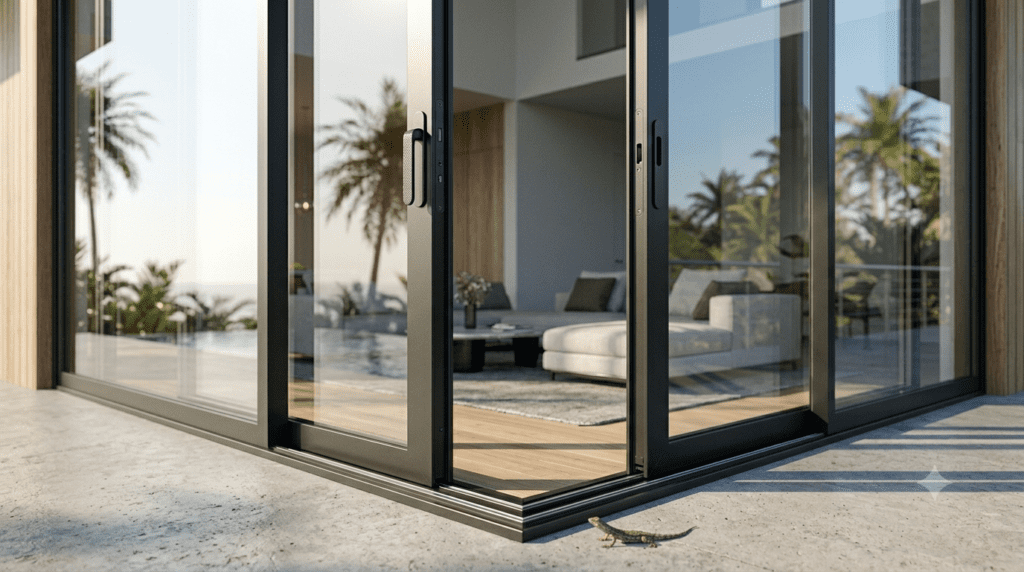
One of aluminum’s biggest advantages is its strength-to-weight ratio. Although it is much lighter than steel, it remains strong enough to support large glass panels without requiring thick, bulky frames.
This allows architects to create brighter interiors with wider openings and slimmer profiles. It’s one reason why Sliding Windows and Casement Windows have become popular choices in contemporary homes, where maximizing natural light is often a key design objective.
Aluminum also performs well outdoors. Unlike steel, it naturally forms a protective oxide layer that helps resist corrosion. When combined with finishing processes such as anodizing or powder coating, aluminum can maintain both its appearance and performance even after years of exposure to sunlight, rain, and humidity.
Another advantage is its low maintenance. Unlike timber, aluminum does not need regular repainting or sealing to maintain its durability. Routine cleaning is typically enough to keep the frames looking their best, making aluminum an attractive long-term option for both homeowners and building managers.
Why Architects Choose Aluminum for Modern Buildings
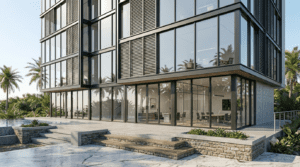
Modern architecture increasingly emphasizes open spaces, larger windows, and cleaner building lines. These design trends require materials that are both strong and visually refined.
Because aluminum can be extruded into precise profiles, it supports slim framing without sacrificing structural performance. This flexibility makes it suitable for a wide range of architectural applications, from residential windows to large-scale Curtain Wall systems and commercial Shop Front installations.
Its ability to combine structural performance with a clean, contemporary appearance explains why aluminum has become a standard material in many modern construction projects.
Where Aluminum Windows and Doors Are Commonly Used
Today, aluminum window and door systems can be found across a wide variety of buildings.
In residential projects, they are commonly used for homes, apartments, and townhouses where homeowners want durable frames with minimal maintenance. In commercial developments such as offices, hotels, hospitals, and retail centers, aluminum provides the strength needed for larger glazing systems while maintaining a modern appearance.
Many projects also integrate aluminum with architectural components such as Door Jamb profiles, Partition systems, and Spandrel panels to create a consistent facade and interior design.
Is Aluminum Always the Right Choice?
Every material has its place.
Timber remains an excellent choice when natural aesthetics are the highest priority. uPVC can provide a practical and cost-effective solution for many residential applications, while steel continues to perform well where maximum structural strength is required.
However, when a project demands durability, low maintenance, corrosion resistance, and the ability to support modern architectural designs, aluminum often provides the most balanced solution. Its versatility allows it to perform equally well in homes, commercial buildings, and large-scale facade systems.
Choosing the Right Aluminum System
Selecting the right window or door system involves more than choosing a material. Frame design, finishing method, building location, and long-term performance should all be considered to ensure the system meets both functional and aesthetic requirements.
At Exalum Metal, we provide aluminum extrusion and finishing solutions for a wide range of architectural applications, including windows, doors, and facade systems. Whether your project involves residential developments or commercial buildings, our team can help you find aluminum solutions that combine lasting performance with modern design. Get in touch with our team directly:
Email: [email protected] WhatsApp: +62 811 9429 970 Website: www.exalummetal.com