
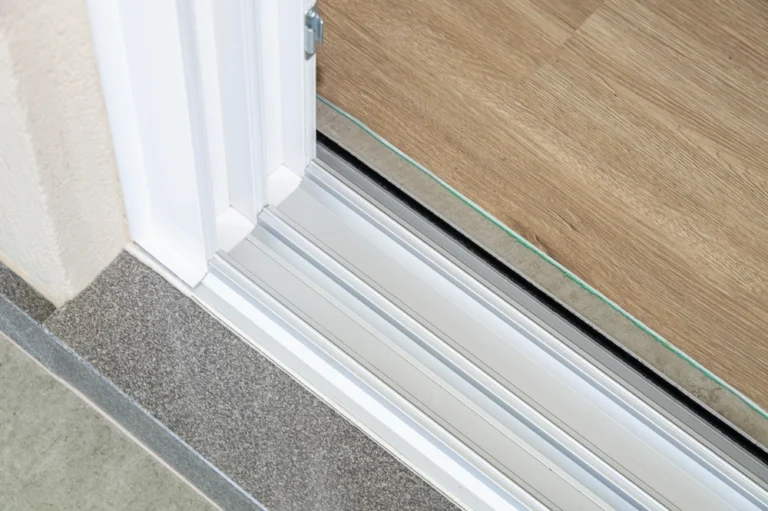
A sliding door is only as good as the track it runs on. You notice a great track by not noticing it at all, the door glides open with a fingertip and closes without a sound. You notice a bad one every single day, when the door sticks halfway, jumps the rail, drags, or rattles in its channel. The difference between those two experiences comes down almost entirely to the track, and more specifically to the material and precision behind it.
For door manufacturers, cabinet makers, builders, and anyone specifying sliding systems, here’s what separates a track that performs for years from one that frustrates from the first week, and why aluminum has become the material of choice.
What a Sliding Door Track Actually Does
A sliding door track is the rail that guides and supports a door as it slides open and closed. Depending on the system, it does this in one of two ways, and the distinction shapes everything about how the track is built.
A top-hung system carries the full weight of the door from an overhead track, with rollers or carriers running inside the track and the door suspended below. The bottom of the door is only guided, not supported. This is the smoothest, quietest arrangement, which is why it’s used for quality interior doors, wardrobes, and architectural sliding systems.
A bottom-rolling system supports the door’s weight on a track at the floor, with the top channel acting only as a guide. This puts the load at the bottom, which works for heavier doors and some patio systems, though it requires keeping the floor track clear of debris.
Either way, the track has to do three things at once: carry or guide the load, provide a precisely shaped running surface for the rollers, and hold its alignment over the full length of travel. Get any of those wrong and the door tells you immediately.
Why Aluminum Is the Track Material of Choice
Track has been made from steel, plastic, and aluminum, and aluminum has steadily won the field for good reasons.
The running surface stays true. Aluminum extrudes into a precise, consistent internal profile, which gives rollers a smooth, accurate surface to travel along. That precision is what makes a door glide instead of stutter, and it holds up over years of use.
It resists corrosion without maintenance. Aluminum’s natural oxide layer means the track won’t rust, which matters for exterior doors, bathroom and kitchen installations, and any humid environment where a steel track would eventually seize.
It’s light but strong. Aluminum track is easy to handle and install while carrying real door weight, and top-hung aluminum tracks support surprisingly heavy doors when the profile is properly engineered.
It finishes cleanly. Anodized and powder-coated aluminum track looks intentional in visible installations and resists the wear that rollers inflict over thousands of cycles.
For the combination of smooth running, durability, and clean appearance, aluminum is hard to beat as a track material.
Matching the Track to the Door
The most common sliding door problems come from a mismatch between the track and the door it’s carrying, so a few decisions matter before anything else. Door weight sets the track strength. A lightweight cabinet door and a heavy glass wardrobe door need very different tracks. The track and its rollers have to be rated for the actual door weight with margin to spare, or the system wears out fast and runs poorly.
Door thickness and size affect the channel dimensions. The track has to suit the door panel it guides, with the right channel width and depth for the panel and its hardware.
Mounting context determines the profile. A track mounted to a ceiling, recessed into a soffit, surface-mounted to a wall, or set into a floor each calls for a different track geometry and mounting feature. Roller compatibility is non-negotiable. The track’s internal running surface has to match the roller or carrier system exactly. A mismatch here is the single most common cause of doors that bind, jump, or run noisily. Getting these right at the specification stage prevents nearly all the problems that show up after installation.
The Difference Between a Smooth Track and a Sticky One
Two sliding door tracks can look almost identical and perform completely differently. The difference lives in details most buyers never see.
The internal running surface has to be dimensionally consistent along the entire length. Even small variation in the channel where the rollers travel causes the door to speed up, slow down, or catch as it slides. A track extruded with tight tolerance runs evenly from end to end.
The track has to be straight. A rail that bows or twists, whether from poor extrusion or rough handling, will never let a door run smoothly, because the rollers fight the misalignment the whole way.
The surface has to resist wear. Rollers pass over the same track surface thousands of times. A track in a soft or poorly finished condition wears a groove and starts to drag, while a properly specified and finished track keeps its running surface for years.
All three trace back to the extrusion quality and material control at the manufacturer, which is why the source of the track matters as much as the design of the door.
Where Sliding Door Tracks Get Used
The applications run across residential, commercial, and industrial settings:Interior doors use sliding tracks for room dividers, pocket doors, and space-saving passage doors where a swinging door would waste floor space.
Wardrobes and closets rely on top-hung sliding tracks for the large panel doors that have become standard in modern storage.Cabinetry and furniture use smaller sliding tracks for cabinet doors, media units, and display fixtures. Commercial and retail spaces use sliding tracks for partition systems, display cases, and storefront elements. Patio and exterior doors use heavier sliding systems engineered for weather exposure and larger glass panels.
Industrial and agricultural buildings use heavy-duty sliding tracks for large barn-style and warehouse doors. Each of these has its own weight, size, and environmental demands, which is what drives the choice of track profile and material.
How This Connects to Exalum
Sliding systems are squarely within the range Exalum produces, built on extrusion control that keeps running surfaces true and tracks straight, the two things a sliding door depends on most. The 20,000 m² vertically integrated facility in Indonesia handles alloy, extrusion, and finishing as one chain, so the track profile arrives dimensionally consistent and ready to run.
Several profile families serve sliding door systems and the openings they fit into:
- Sliding Doors profiles including the tracks and channels engineered for top-hung and bottom-rolling door systems
- Curtain Track for related overhead running systems in partition and divider applications
- Door Jamb and Doors profiles for the door frames and openings that sliding systems integrate with
- Unequal Channel for guide channels, track mounting, and panel capture
- Equal Angle and Unequal Angle for track brackets, mounting hardware, and structural support
- Flat Bars for mounting plates, splice connectors, and adjustment hardware
- Tubing Pipes for suspension supports and structural framing of larger sliding installations
- Windows Wall for fenestration systems that combine sliding elements with fixed glazing
For systems that need a specific channel geometry or a track matched to a particular roller, custom extrusion can produce the exact profile a sliding design requires, finished in-house with anodizing or powder coating for a running surface that lasts.
Specifying a Track You Can Rely On
A sliding door is a daily-use mechanism, and the track is the part that makes or breaks the experience. Match the track to the door’s weight and size, confirm the roller compatibility, choose aluminum for its smooth running and corrosion resistance, and source from a manufacturer whose extrusion runs true. Do that, and the door glides the way it should, quietly and effortlessly, for years.
Exalum Metal has supplied sliding, track, and architectural extrusions to fabricators, door manufacturers, and builders since 2009, with the dimensional precision that smooth-running systems require.
Whether you need standard profiles or custom cross-sections designed for your specific sliding system, Exalum Metal has the capacity and expertise to deliver.
Ready to discuss your project or request material specifications? Get in touch with the Exalum Metal team directly:
Email: [email protected] WhatsApp: +62 811 9429 970 Website: www.exalummetal.comWhen the door has to glide every time, start with a track you can trust. Make Exalum Metal your standard.