
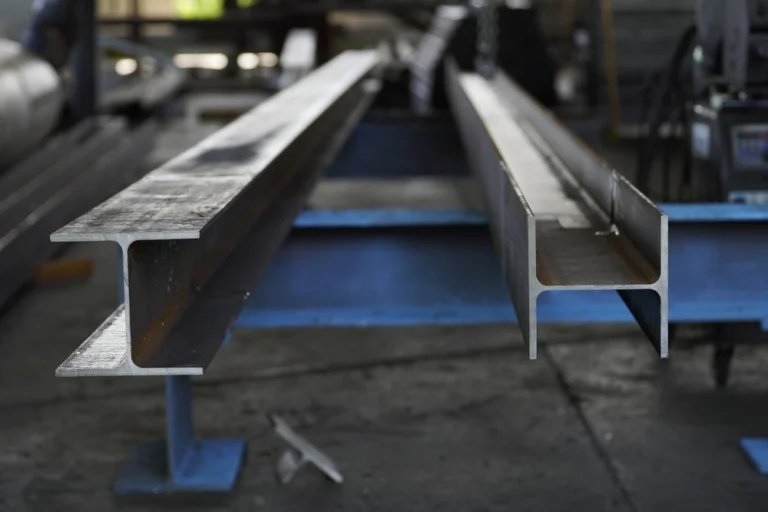
Few decisions shape a fabrication project as much as the choice between aluminum and steel. Both are excellent engineering materials with long track records, and both have earned their place in industry for good reasons. The honest answer to “which is better” is that it depends entirely on what you’re building. But for a growing share of modern applications, the balance has been tipping toward aluminum, and it’s worth understanding exactly why.
This is a fair look at how the two metals compare, where each one shines, and the specific situations where aluminum’s particular strengths make it the smarter specification.
Two Great Materials, Different Strengths
Steel has been the backbone of heavy construction and manufacturing for over a century, and for good reason. It offers tremendous strength at a low material cost, exceptional stiffness, and a familiarity that runs deep in every trade. For massive structural spans, heavy load-bearing frames, and applications where raw strength per dollar is the priority, steel remains a superb choice that’s hard to beat.
Aluminum brings a different set of advantages to the table. It’s lightweight, naturally corrosion-resistant, easy to work, and endlessly recyclable. Rather than competing with steel on raw strength, aluminum wins on the combination of properties it delivers, which turn out to be exactly what a huge range of modern applications need.
The smart approach isn’t to declare one metal the winner. It’s to understand what each does best and match the material to the job. More and more often, that match turns out to be aluminum.
Weight Is Where Aluminum Changes the Game
The single biggest difference between the two metals is weight. Aluminum is roughly one-third the density of steel, and that fact ripples through an entire project in ways that go far beyond the material itself.
A lighter structure is easier to handle, which means faster installation, fewer workers, less lifting equipment, and lower labor costs. It ships for less, because freight is priced by weight. It puts less dead load on whatever supports it, which can let a building use lighter foundations and supporting structures. And in any application that moves, from vehicles to aircraft to portable equipment, every kilogram saved is energy saved for the life of the product.
This is why aluminum dominates aerospace, transport, and portable systems. When weight is a cost, aluminum’s lightness pays back every single day the product is in service. Engineers describe this as strength-to-weight ratio, and the best aluminum alloys deliver structural performance approaching steel at a fraction of the weight.
Corrosion Resistance That Takes Care of Itself
Steel is strong, and with proper coating and maintenance it performs beautifully for decades. Aluminum simply makes the corrosion question easier.
When aluminum meets air, it instantly forms a thin, tough oxide layer that seals the surface and protects the metal underneath. Scratch it, cut it, or drill it, and the freshly exposed aluminum immediately forms a new protective layer. This self-healing behavior means aluminum resists rust in outdoor, humid, coastal, and chemical environments without paint, galvanizing, or ongoing maintenance.
For projects near saltwater, in wet processing environments, or anywhere maintenance access is difficult and expensive, this property alone often justifies choosing aluminum. The metal protects itself for the life of the structure, which removes a recurring cost and a recurring worry from the project.
Aluminum Is Easier and Faster to Work
Aluminum’s workability is one of its quietest advantages, and one of the most valuable on the shop floor.
It cuts faster, drills easier, and machines more cleanly than steel, with less tool wear and less power. It can be extruded into complex, precise cross-sections that would be impractical to achieve in steel, which lets designers integrate features like mounting slots, screw bosses, and snap fits directly into a single profile. And it takes anodizing and powder coating exceptionally well, giving a durable, attractive finish in any color the project needs.
Faster fabrication means lower labor cost and shorter lead times. Complex extruded profiles mean fewer parts, simpler assembly, and cleaner designs. For projects where time and design freedom matter, aluminum’s workability translates directly into a better, faster, more elegant result.
A Recyclable Material for a Sustainable Future
Both metals are recyclable, which is genuinely good news for industry. Aluminum stands out in how efficiently it recycles. Remelting aluminum uses a small fraction of the energy needed to produce it from raw ore, and the metal can be recycled repeatedly without losing its properties.
As sustainability moves from a nice-to-have to a procurement requirement across more and more industries, aluminum’s recyclability has become a real asset rather than just an environmental footnote. Choosing aluminum lets a project tell a credible sustainability story backed by the material’s genuine performance.
Where Each Metal Naturally Fits
Matching the metal to the application is what separates good engineering from habit, and both metals have territory where they clearly belong.
Steel is the natural choice for heavy structural construction, large building frames, and applications where maximum strength at minimum material cost is the driving requirement. Its stiffness and strength per dollar are genuinely hard to beat for big, heavy, static structures.
Aluminum is the natural choice almost everywhere weight, corrosion, workability, or finish matters. That covers architectural facades and windows, transport and automotive components, marine fittings, solar mounting, electronics housings, conveyor and machine framing, signage, furniture, and the vast world of extruded profiles that modern building and manufacturing depend on.
The trend across industry is clear. As designs prioritize weight savings, corrosion resistance, faster installation, and sustainability, more applications that once defaulted to steel are moving to aluminum, and finding that the switch improves the product.
The Detail That Makes Aluminum Perform
Choosing aluminum is the first decision. Choosing the right aluminum is the one that determines whether the project succeeds.
Aluminum’s performance depends entirely on its alloy and temper. The right alloy in the right temper delivers the strength, corrosion resistance, and workability the application needs, while a mismatch disappoints. A structural frame wants a strong alloy like 6061 in T6 temper. An architectural profile that will be anodized wants 6063 in T5. Getting that specification right, and sourcing material that genuinely meets it, is what turns aluminum’s theoretical advantages into real-world performance.
This is where the manufacturer behind the metal becomes part of the engineering. A profile whose alloy chemistry and temper are properly controlled performs exactly as the spec promises. One that cuts corners on either falls short in ways that only show up under load or over time.
How This Connects to Exalum
Exalum specializes in exactly the part of the aluminum advantage that matters most to fabricators, the extruded profiles where aluminum’s lightness, corrosion resistance, and design freedom come together. The 20,000 m² vertically integrated facility in Indonesia controls alloy preparation, extrusion, and heat treatment as one chain, which is what makes the alloy and temper on the certificate match the metal in the part.
The catalog covers the applications where aluminum tends to win over steel:
- Square Hollow and Rectangular Hollow for lightweight structural framing that would be far heavier in steel
- Equal Angle, Unequal Angle, and Unequal Channel for bracing and connections that resist corrosion without coating
- Flat Bars and Round Bars for machined components and structural connections
- Tubing Pipes for railings, frames, and fluid handling in corrosive environments
- Heat Sinks that use aluminum’s natural thermal conductivity, something steel can’t match
- Curtain Wall, Casement Windows, Doors, and Sliding Doors for architectural work where aluminum’s finish and weight advantages are decisive
- Conveyor, Automotive, and Furniture profiles for the industries moving fastest toward aluminum
For applications where the lightness, longevity, and finish of aluminum make it the right material, the profile range and the extrusion control behind it turn that choice into a finished product that performs.
Choosing With Confidence
Aluminum and steel are both excellent materials, and the best engineers respect what each one does well. But for the growing list of applications where weight, corrosion resistance, workability, finish, and sustainability matter, aluminum delivers a combination that’s genuinely hard to match. The key is choosing the right alloy and temper, and sourcing from a manufacturer who can prove the material meets its spec.
Exalum Metal has supplied extruded aluminum to fabricators, builders, and manufacturers since 2009, with the vertical control that makes aluminum’s advantages real in the finished part.
Whether you need standard profiles or custom cross-sections designed for your specific requirements, Exalum Metal has the capacity and expertise to deliver.
Ready to discuss your project or request material specifications? Get in touch with the Exalum Metal team directly:
Email: [email protected] WhatsApp: +62 811 9429 970 Website: www.exalummetal.com. When your project calls for the advantages aluminum delivers, start with extrusion you can trust. Make Exalum Metal your standard.