
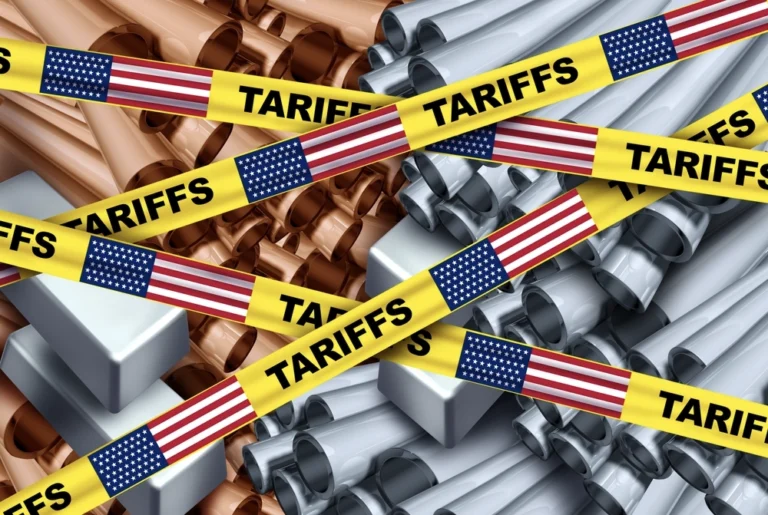
If you run a fabrication shop, manage industrial procurement, or specify aluminum profiles for any kind of US manufacturing operation, you’ve already felt the weight of the Section 232 tariffs. The 50% duty on aluminum articles has reshaped how American buyers source raw material, and the April 2026 restructuring added new layers of complexity around content disclosure, derivative products, and full customs value treatment. The good news is that the rules are actually clearer than the headlines suggest, and fabricators who understand them well are using the moment to build stronger, smarter supply relationships rather than scrambling.
This article walks through what the current Section 232 tariff actually says, how content disclosure works, what’s changed in 2026, and how confident sourcing is still very much possible.
What Section 232 Aluminum Tariffs Cover Today
Section 232 of the Trade Expansion Act of 1962 allows the US government to impose tariffs on imports that affect national security. Aluminum has been one of the most actively regulated categories under this authority since 2018, with the rate climbing from the original 10% to today’s 50% on most aluminum articles.
The April 2, 2026 presidential proclamation restructured the entire framework. As of April 6, 2026, the tariff rules look like this:
- A 50% tariff applies to raw aluminum articles and the derivative products listed in Annex I-A. This covers aluminum bars, plates, sheets, profiles, castings, wire, and the manufactured goods made substantially of aluminum that fall into this annex.
- A 25% tariff applies to derivative products listed in Annex I-B. These are products substantially made of aluminum that don’t fall into the 50% category.
- A 15% combined rate applies temporarily to metal-intensive industrial equipment and electrical grid equipment listed in Annex III, in effect through December 31, 2027.
Removed from scope: Some products previously classified as aluminum derivatives are no longer subject to Section 232 tariffs at all. These appear in Annex II and revert to standard duty treatment.
Preferential rates are available for qualifying imports from the UK, EU, Japan, and South Korea under existing trade agreements.
Russian-origin aluminum continues to face the 200% tariff established in 2023, regardless of where the final product is manufactured.
The Most Important Change: Full Customs Value Treatment
The single biggest shift in 2026 is how the tariff is calculated. Before April 6, many derivative products were taxed only on the value of their metal content. That approach is gone. The current rule applies the Section 232 tariff to the full customs value of covered articles, not just the aluminum portion.
This change matters because it eliminates the gray area that previously surrounded mixed-material products. It also means that documentation and content disclosure now directly determine which tier of duty applies, and at what value.
How Content Disclosure Works Under the New Rules
US Customs and Border Protection enforces strict requirements on declared aluminum content within imported goods. The rules are designed to prevent under-declaration of metal content and the duty avoidance that comes with it.
Three principles drive content disclosure today:
- Declared content must be documented. Importers need to substantiate the aluminum content of any product entering the US, with mill certificates, alloy specifications, and supplier documentation that holds up to CBP scrutiny.
- Unknown content defaults to maximum duty. If the value of aluminum content within a product is unknown or undocumented, the 50% duty is applied to the entire customs value of the goods. This is the rule that punishes vague paperwork and rewards transparency.
- The 15% metal-by-weight threshold applies to derivative articles classified outside HTSUS Chapters 72, 73, 74, and 76. Products where aluminum makes up less than 15% of total weight may fall outside Section 232 coverage entirely, but the burden of proof is on the importer.
For US fabricators sourcing finished aluminum profiles, the practical takeaway is straightforward: work with suppliers who provide complete, accurate documentation of alloy, temper, and content. Suppliers who can’t or won’t document their material expose buyers to maximum-duty treatment that’s entirely preventable with the right paperwork.
What This Means for US Aluminum Buyers
The new tariff landscape rewards thoughtful sourcing rather than rushed decisions. Three patterns are emerging among US fabricators who are managing the shift well:
Consolidation toward documentation-strong suppliers. Buyers are moving away from suppliers who provide loose specifications or incomplete paperwork toward those who deliver full alloy traceability, temper certification, and clean customs documentation with every shipment. The marginal cost of a better-documented supplier is far smaller than the cost of an unexpected duty reclassification.
Total landed cost focus. Smart procurement teams are running total cost analyses that include duty, freight, lead time, and quality consistency, rather than chasing the lowest unit price. A supplier whose material lands at predictable, well-documented duty rates often beats one whose lower headline price comes with documentation surprises.
Closer supplier relationships. The buyers thriving in this environment have built direct relationships with their material suppliers, with clear communication channels for documentation questions, alloy specifications, and lead time planning. Arms-length transactional sourcing is being replaced by genuine supply partnerships.
Why International Sourcing Still Makes Sense
The 50% tariff doesn’t end international aluminum sourcing for US fabricators. It changes how to do it well.
A well-documented import from a vertically integrated manufacturer, with full alloy traceability and clean customs paperwork, lands at the appropriate tier rate with no surprises. The total landed cost is often still competitive with domestic supply, especially for specialty profiles, custom extrusions, or volumes that domestic mills can’t fulfill quickly.
What’s changed is that the supplier behind the import now matters more than ever. The right international partner provides:
- Complete material certificates with alloy, temper, and chemical composition
- HTSUS classification guidance based on actual product specifications
- Consistent documentation across every shipment
- Direct communication with the manufacturer rather than through layers of brokers
- Vertical integration that ensures every claim about the material is verifiable
These are the qualities that turn international sourcing from a tariff risk into a tariff-managed certainty.
The Indonesia Advantage: A Trade Partnership Built for Stability
For US fabricators evaluating where to source aluminum profiles internationally, Indonesia has emerged as one of the most strategically aligned origins. The Agreement on Reciprocal Trade signed between the United States and Indonesia in February 2026 created a structured trade relationship that benefits both sides, with Indonesia eliminating tariff barriers on approximately 99 percent of US industrial and agricultural products, and the United States establishing a 19 percent reciprocal tariff rate for Indonesian goods, with certain product categories qualifying for further reductions.
The agreement reflects a deliberate effort by both governments to strengthen supply chain stability and bilateral economic cooperation. For US fabricators, this matters because it places Indonesian aluminum suppliers within a clearly defined, government-supported trade framework rather than the uncertainty that surrounds origins without similar agreements. The Council of Trade and Investment established under the agreement provides a forum for addressing trade and investment issues directly between the two nations, reducing the friction that often complicates international sourcing decisions.
Indonesia’s position as Southeast Asia’s largest economy, with established aluminum extrusion capacity and a workforce skilled in industrial manufacturing, makes it a natural sourcing partner for US fabricators looking to diversify away from origins with higher tariff exposure or geopolitical risk. The 50 percent Section 232 tariff still applies to aluminum articles regardless of country of origin, but the broader trade framework with Indonesia provides the kind of predictability that procurement teams value.
Sourcing From Indonesia: What Exalum Metal Brings to US Fabricators
Exalum Metal Indo has supplied aluminum extrusion to international fabricators since 2009, with a 20,000 m² vertically integrated facility in Indonesia producing the complete profile range required by serious fabrication operations. The vertical integration model is what makes Exalum particularly well-suited to US buyers working under the new tariff regime: every product is traced from billet through extrusion to finishing under one roof, with complete documentation supporting accurate HTSUS classification and content disclosure.
Several product categories deliver strong value for US fabricators sourcing from Exalum under the current tariff structure:
Custom extrusions and specialty profiles where domestic production capacity is limited or lead times are long, and where a well-documented import can be timed and priced for predictable landed cost.
Architectural aluminum including curtain wall sections, window and door profiles, and decorative profiles where Exalum’s design and finishing capabilities justify the duty.
Structural profiles like Square Hollow, Rectangular Hollow, Equal Angles, Unequal Angles, and Channels for fabrication work where volume requirements and tight tolerances favor a manufacturer with full process control.
Finished products with documented finishing like anodized or powder-coated profiles where Exalum’s in-house finishing eliminates third-party transit risk and produces consistent surface specifications across every shipment.
In each case, the formula is the same: strong documentation, clear specifications, and a supplier relationship that supports the buyer’s tariff compliance work.
Exalum’s product catalog covers the structural and architectural categories US fabricators source most commonly, also including Tubing Pipes, Flat Bars, Round Bars, Heat Sinks, and a full range of architectural and decorative profiles. The combination of Indonesia’s trade partnership with the US and Exalum’s vertical integration creates the kind of supply relationship that turns tariff complexity into manageable, predictable sourcing.
For US fabricators looking to source aluminum confidently under the current Section 232 framework, the foundation is straightforward: clear specifications, clean documentation, and a manufacturer who stands behind every product. The tariff rate matters, but so does the relationship that makes the rate predictable.
Whether you need standard profiles or custom cross-sections designed for your specific fabrication requirements, Exalum Metal has the capacity and expertise to deliver.
Ready to discuss your sourcing requirements or request material documentation samples? Get in touch with the Exalum Metal team directly:
Email: [email protected] WhatsApp: +62 811 9429 970 Website: www.exalummetal.com. Your next fabrication project deserves material you can count on, and a supplier relationship that supports your compliance work. Make aluminum profiles from Exalum Metal your standard.