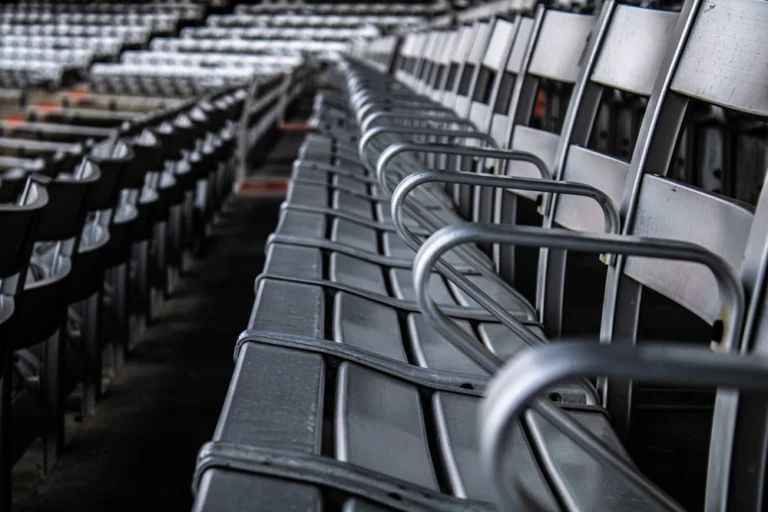
Walk into almost any stadium, school gymnasium, sports field, or community arena and look closely at what you’re sitting on. The bleacher seats that hold thousands of spectators, season after season, through rain, sun, and crowds, are almost always aluminum. There’s a reason grandstand builders settled on this material decades ago and never looked back. Bleacher seating has to be strong enough to carry a packed crowd, light enough to install and reconfigure, and tough enough to survive years of weather and wear without rusting or rotting. Aluminum does all three.
For seating manufacturers, facility managers, sports complex builders, and anyone specifying bleacher seating, here’s why aluminum became the standard and what goes into building seats that last.
What Bleacher Seats Have to Survive
Bleacher seating lives a harder life than most furniture ever will. Understanding what it endures explains why the material choice matters so much. The loads are serious. A full set of bleachers carries the combined weight of a packed crowd, plus the dynamic forces of people standing, stamping, and moving in unison. The seating planks and the structure beneath them have to handle that load safely with a comfortable margin, every event, for decades.
The exposure is relentless. Outdoor bleachers sit in direct sun, driving rain, snow, and temperature swings year-round, with no shelter and little maintenance. Indoor bleachers face spills, humidity, and constant contact wear. Either way, the material has to shrug it off.
The use is heavy and repetitive. Thousands of people climb, sit, and slide across bleacher planks over a season. The surface has to resist wear, stay safe underfoot, and avoid splinters, cracks, or corrosion that could injure a spectator.
Wood rots and splinters. Untreated steel rusts. The material that handles all three demands cleanly, year after year, is aluminum.
Why Aluminum Became the Standard for Grandstand Seating
Aluminum earned its place in bleacher construction by solving every one of those challenges at once.
It carries the load. Structural aluminum alloys deliver the strength needed to support packed crowds safely, with the engineering margin that public seating demands.
It refuses to rust. Aluminum forms its own protective oxide layer, so bleacher seats survive decades of outdoor weather without rusting, even at cut edges and fastener holes where steel would corrode first. This is the single biggest reason aluminum dominates outdoor seating.
It stays light. Aluminum planks and framing are a fraction of the weight of equivalent steel, which makes bleachers easier to ship, faster to install, and practical to build as portable or retractable systems that can be moved and reconfigured.
It stays cooler and safer than alternatives. Aluminum planks can be extruded with ribbed, non-slip surfaces and rounded edges that keep spectators safe, and anodized or finished surfaces that resist the heat buildup and glare of bare metal in the sun.
It lasts and recycles. A well-built aluminum bleacher system serves for decades, and at the end of its long life the aluminum is fully recyclable, which matters increasingly to schools and municipalities making sustainable purchasing decisions.
The Parts of a Bleacher That Aluminum Builds
A bleacher system is more than just the seat you sit on. Aluminum extrusion goes into nearly every part of it.
The seat planks are the most visible component, extruded as wide, ribbed profiles that combine a comfortable sitting surface with the structural strength to span between supports without flexing. The ribbing adds stiffness and grip while keeping the plank light. The foot planks and walkways use similar extruded profiles, engineered with non-slip surfaces to keep spectators safe as they climb and move through the seating.
The structural framing, the understructure of beams, posts, and braces that holds the whole system up, relies on strong hollow and angle profiles to carry the crowd load down to the ground or the supporting structure.
The railings and guardrails that keep spectators safe at the edges and aisles use tube and angle profiles, combining strength with the corrosion resistance the application demands.
The trim, end caps, and connection hardware tie the system together with profiles shaped for clean assembly and safe edges.
Every one of these is a candidate for aluminum extrusion, which is why a manufacturer with a broad profile range can supply most of what a bleacher system needs.
What Goes Into a Quality Aluminum Bleacher Plank
The seat plank is where material quality shows up most directly, because it’s the part carrying the load and taking the wear. A few things separate a plank that lasts from one that doesn’t.
The alloy and temper have to match the structural demand. Bleacher planks need an alloy with the strength to span supports under crowd load without permanent deflection, which points to the stronger structural aluminum tempers rather than soft architectural ones.
The wall thickness and rib design determine stiffness. A well-engineered plank profile uses internal ribs and wall geometry to maximize stiffness while keeping weight and material cost reasonable, so the plank feels solid underfoot without sagging.
The surface has to be safe. Extruded grip ribs, rounded edges, and a finish that resists heat and glare turn a structural profile into a seat that’s genuinely safe and comfortable for the public.
The dimensional consistency has to hold across long runs. Planks that vary in dimension won’t align cleanly across a long bleacher row, so consistent extrusion across the full production run matters for both appearance and assembly.
These come down to the alloy control and extrusion precision of the manufacturer, which is why the source of the aluminum is as important as the design of the plank.
How This Connects to Exalum
Building bleacher seating draws on exactly the kind of structural extrusion Exalum produces. The 20,000 m² vertically integrated facility in Indonesia controls alloy preparation, extrusion, and heat treatment as one chain, which delivers the structural strength, dimensional consistency, and reliable temper that public seating demands.
The profile range covers the components a bleacher system is built from:
- Flat Bars and wide extruded sections for seat and foot plank profiles
- Square Hollow and Rectangular Hollow for the structural understructure of beams, posts, and frames
- Equal Angle and Unequal Angle for bracing, brackets, and the right-angle connections that hold the structure together
- Tubing Pipes for railings, guardrails, and aisle handrails
- Round Bars for connection hardware, pins, and structural fasteners
- Unequal Channel for edge framing, trim, and plank capture
- Ladder profiles for the access steps and stair systems that serve the seating
For seating manufacturers who need a specific plank profile, rib pattern, or structural section, custom extrusion can produce exactly the cross-section a bleacher design calls for, rather than forcing the design to fit a stock shape. With in-house anodizing and powder coating, the finished planks and framing arrive with the safe, durable, weather-ready surface that grandstand seating requires.
Building Seating That Lasts Generations
Bleacher seats are a long-term investment that a school, stadium, or community lives with for decades. Getting the material right at the start is what determines whether that investment delivers safe, comfortable seating for one generation or several. Aluminum’s combination of strength, corrosion resistance, light weight, and safe finishing is why it became the standard, and why it remains the smart choice for any new seating project.
Exalum Metal has supplied structural and architectural extrusions to fabricators and manufacturers since 2009, with the strength, consistency, and finishing capability that demanding public applications require.
Whether you need standard profiles or custom cross-sections designed for your specific seating requirements, Exalum Metal has the capacity and expertise to deliver.
Ready to discuss your project or request material specifications? Get in touch with the Exalum Metal team directly:
Email: [email protected] WhatsApp: +62 811 9429 970 Website: www.exalummetal.com. When the seating has to carry a crowd and last for decades, start with aluminum you can trust. Make Exalum Metal your standard.