
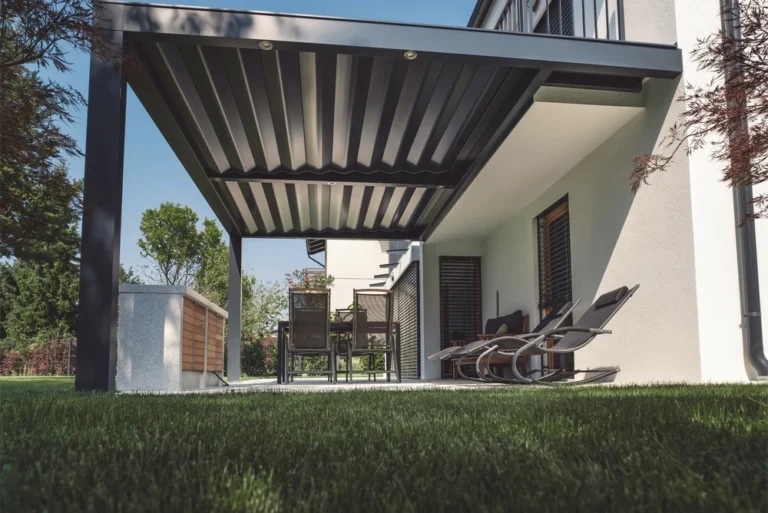
Every decking material makes promises when it’s new. Wood looks warm and natural. Composite promises low maintenance. But walk back to those same decks a decade later and the story changes. The wood has greyed, warped, and started to splinter. The composite has faded and sagged between joists. The aluminum deck, meanwhile, looks almost exactly as it did the day it was installed. That longevity is why aluminum has carved out a serious place in decking, especially for the projects where failure isn’t an option.
For builders, deck contractors, marine and dock fabricators, and homeowners weighing a long-term investment, here’s why aluminum decking performs the way it does, and what goes into a deck that genuinely lasts.
What Aluminum Decking Is
Aluminum decking is a system of extruded aluminum planks that interlock to form a deck surface, supported by an aluminum or compatible framing structure beneath. The planks are engineered profiles, not solid slabs, with internal ribs and hollow chambers that give them strength while keeping them light, and interlocking edges that lock plank to plank for a continuous, rigid surface.
Many aluminum decking systems are designed to be watertight, channeling rainwater away through the interlocked seams and built-in drainage so the space below the deck stays dry and usable. That waterproof capability is something neither wood nor composite can match, and it’s one of the reasons aluminum decking shows up on elevated decks, balconies, and rooftop spaces.
Why Aluminum Outperforms Wood and Composite
Each decking material has its appeal, but aluminum solves the problems that eventually catch up with the alternatives.
It never rots, warps, or splinters. Wood is beautiful and natural, but it’s organic, so moisture, insects, and sun slowly break it down no matter how well it’s sealed. Aluminum is immune to all of it, staying flat, solid, and splinter-free for the life of the deck.
It doesn’t sag or fade like composite. Composite decking improved on wood’s maintenance, but many composites soften in heat, sag between joists over time, and lose their color under UV. Aluminum holds its shape and its finish through the same conditions.
It resists fire. Aluminum is non-combustible, which matters enormously in wildfire-prone regions where wood and composite decks are a known fire risk. A growing number of fire codes now favor or require non-combustible decking, and aluminum meets that standard naturally.
It shrugs off weather and corrosion. Aluminum’s protective oxide layer means it survives rain, snow, salt air, and humidity without rusting or degrading, which is why it’s a favorite for docks, marine decks, and coastal homes.
It stays cooler and safer than you’d expect. Quality aluminum decking is finished with textured, slip-resistant coatings that resist heat buildup and provide secure footing, addressing the two concerns people raise most about metal underfoot.
The Long View on Cost
Aluminum decking costs more up front than wood and often more than composite, and an honest look at decking has to acknowledge that. The case for aluminum is a long-term one.
A wood deck needs cleaning, sealing, and staining on a regular cycle, plus board replacement as pieces rot or split, and most wood decks need significant rehabilitation or replacement within fifteen to twenty years. Composite reduces the maintenance but still fades and can need replacement as it degrades.
An aluminum deck needs almost no maintenance beyond occasional cleaning, doesn’t require sealing or staining, and routinely lasts decades without board replacement. Spread the cost across the real service life, factor in the maintenance never spent, and the up-front premium often turns into the lower lifetime cost. For a deck meant to last, aluminum frequently wins the long math.
Where Aluminum Decking Earns Its Place
Aluminum decking makes the most sense where its durability and weather resistance matter most: Elevated decks and balconies benefit from the waterproof, drainage capability that keeps the space below dry and usable.
Rooftop decks and terraces use aluminum for its light weight, which reduces structural load, and its weather resistance on a fully exposed surface.
Docks, marinas, and waterfront structures rely on aluminum because it survives constant moisture and salt exposure that would destroy wood and corrode steel.
Fire-prone regions increasingly specify aluminum decking to meet non-combustible requirements and reduce wildfire risk.
Commercial and high-traffic decks use aluminum for its durability under heavy, constant use where wood and composite wear out faster.
Pool surrounds and wet areas use aluminum for its corrosion resistance and slip-resistant finishing in constantly damp conditions. Each of these plays to exactly the properties that make aluminum decking worth its premium.
What Goes Into a Quality Aluminum Deck
The performance of an aluminum deck depends on more than just the planks. A few elements separate a deck that lasts from one that disappoints.
The plank profile has to be properly engineered. The internal ribs and chambers of the extruded plank determine how much load it carries and how far it can span between joists without flexing. A well-designed profile feels solid underfoot; a thin one feels hollow and bouncy.
The alloy and temper have to suit the structural demand. Decking planks carry foot traffic, furniture, and crowd loads, so they need a structural aluminum alloy with the strength to span supports safely.
The interlock has to be precise. The edges where planks lock together create the watertight seal and the continuous rigid surface, so dimensional consistency across every plank is what makes the system fit and seal correctly.
The finish has to handle the conditions. A durable, slip-resistant, UV-stable finish is what makes the deck safe underfoot and keeps it looking good through years of exposure.
The supporting structure has to match. Aluminum framing beneath the deck keeps the whole system corrosion-free and dimensionally stable, completing a deck that won’t rust out from underneath the surface.
These come down to the alloy control and extrusion precision behind the planks and framing, which is why the manufacturer matters as much as the design.
How This Connects to Exalum
Building aluminum decking draws on the structural extrusion that Exalum produces, with the strength, dimensional consistency, and finishing that an exposed, load-bearing surface demands. The 20,000 m² vertically integrated facility in Indonesia controls alloy, extrusion, and finishing as one chain, which is exactly what a waterproof, interlocking deck system relies on.
The profile range covers the components an aluminum deck is built from:
- Flat Bars and wide extruded sections for deck plank profiles
- Square Hollow and Rectangular Hollow for the joists, beams, and structural framing beneath the deck
- Equal Angle and Unequal Angle for ledgers, brackets, and the connections that tie the structure together
- Unequal Channel for edge framing, fascia, and plank capture at the deck perimeter
- Tubing Pipes for railing posts and the guardrail systems decks require
- Round Bars for balusters, connection hardware, and structural fasteners
- Handrails and Ladder profiles for stairs and access where the deck meets grade
For decking systems that need a specific interlocking plank profile or a custom structural section, profiles can be extruded to the exact geometry a deck design calls for, then finished in-house with the durable, slip-resistant, weather-ready surface that decking requires.
Building a Deck That Lasts Decades
A deck is one of the longer-lived investments a property makes, and the material chosen at the start determines whether it’s a one-time build or a recurring project. Aluminum’s resistance to rot, rust, fire, and weather, combined with its light weight and minimal maintenance, is why it has earned its place as the material for decks meant to last. The key is a properly engineered plank, the right alloy, a precise interlock, and a manufacturer whose extrusion you can rely on.
Exalum Metal has supplied structural and architectural extrusions to fabricators and builders since 2009, with the strength, consistency, and finishing capability that demanding outdoor applications require.
Whether you need standard profiles or custom cross-sections designed for your specific decking system, Exalum Metal has the capacity and expertise to deliver.
Ready to discuss your project or request material specifications? Get in touch with the Exalum Metal team directly:
Email: [email protected] WhatsApp: +62 811 9429 970 Website: www.exalummetal.com. When the deck has to last through every season, start with aluminum you can trust. Make Exalum Metal your standard.